







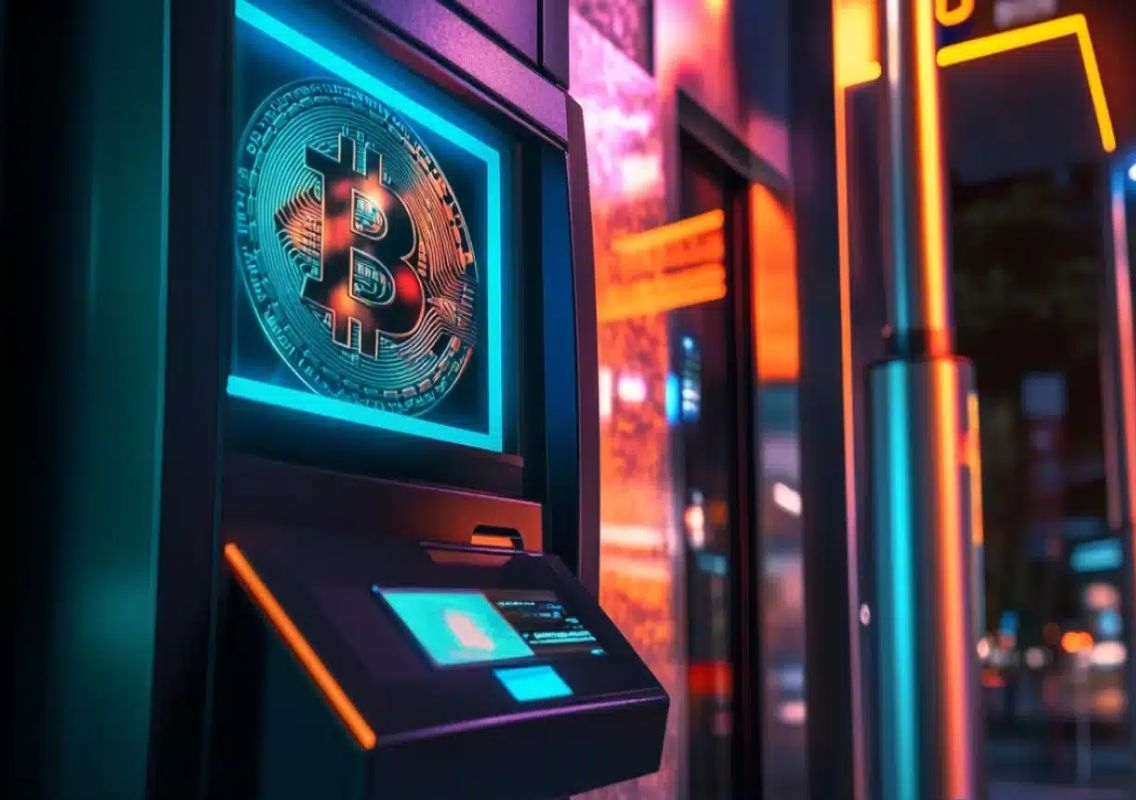


Honolulu: Hawaii will prohibit cryptocurrency ATM operators from accepting US currency in exchange for digital assets from October 1, 2026, under a new state law aimed at curbing scams involving crypto kiosks. The measure does not amount to a complete ban on cryptocurrency ATMs, as machines can continue to support certain other transactions.
The law, House Bill 1642, was signed by Hawaii Governor Josh Green on July 9 as Act 224. It specifically targets the cash-to-crypto function of digital-asset kiosks, following concerns that scammers have increasingly used these machines to persuade victims to convert cash into cryptocurrency and send it to criminal-controlled wallets.
The change is significant for Hawaii’s crypto market because the state had 57 cryptocurrency ATMs and kiosks operating across four major islands as of August 12. Operators will have to disable the affected function or stop offering machines that accept US dollars for cryptocurrency before the October deadline.
Hawaii targets cash deposits, not all crypto ATM services
Despite headlines describing the measure as a cryptocurrency ATM ban, the legislation is narrower than that.
Under Act 224, operators cannot run a kiosk that accepts US currency in exchange for a digital financial asset. In practical terms, Hawaii residents will no longer be able to walk up to a qualifying machine, insert cash and use that money to purchase Bitcoin or another cryptocurrency after October 1.
However, other services can continue.
Operators may still provide transactions involving cryptocurrency exchanged for another digital asset or US currency, provided the transactions comply with the new law. This means that selling cryptocurrency for dollars at an eligible machine is not prohibited by the legislation.
The law also does not prevent residents from buying, selling or holding cryptocurrency through online platforms that remain legally available in Hawaii.
This distinction is important because the new rules are aimed primarily at the payment method that regulators say has been exploited by fraudsters, rather than at cryptocurrency ownership itself.
Why Hawaii is taking action
The legislation was driven largely by concerns about cryptocurrency-related scams.
According to findings cited by Hawaii lawmakers, criminals frequently impersonate government officials, bank employees, technical-support workers or company representatives. They then instruct victims to withdraw cash and deposit it into a cryptocurrency kiosk.
In some cases, scammers reportedly remain on the telephone with victims while they use the machine. They may provide a cryptocurrency wallet address or QR code and even tell victims how to get around warnings displayed by the kiosk operator.
Once the transaction is completed, the cryptocurrency can be transferred through multiple wallets or offshore platforms. That can make it extremely difficult for victims to recover their money.
The problem is particularly concerning because cryptocurrency transactions generally cannot be reversed in the same way as many conventional financial transactions.
Lawmakers cited investigations by attorneys general in Iowa and the District of Columbia, which found that fraudulent activity accounted for a substantial share of transactions at some cryptocurrency kiosk operators. The investigations cited rates as high as 90% in certain cases, although that figure does not apply to every crypto ATM or transaction in the US.
FBI data shows millions in losses
The concerns in Hawaii are supported by data from the Federal Bureau of Investigation’s Internet Crime Complaint Center, or IC3.
In 2025, Hawaii residents filed 92 complaints involving cryptocurrency kiosks, with adjusted losses of approximately $3.85 million.
The numbers were considerably larger nationwide. The FBI recorded 13,460 complaints involving cryptocurrency kiosks across the US during 2025, with adjusted losses of about $388.98 million. Complaint numbers increased 23% from 2024, while reported losses jumped 58%.
Older Americans were particularly affected. More than half of the complaints recorded in 2025 came from people aged over 50, and their reported losses exceeded $302 million.
The FBI has cautioned consumers against sending cryptocurrency to people they know only through telephone calls or online messages. It has also warned people not to scan QR codes supplied by strangers or send money to callers claiming to represent government agencies, banks or companies without independently verifying their identities.
Hawaii had 57 crypto ATMs before the ban
The new law could have a noticeable effect on Hawaii’s cryptocurrency kiosk network.
Data from CoinATMRadar showed 57 cryptocurrency ATMs and kiosks operating across four main Hawaiian islands as of August 12.
Not all of those machines will necessarily disappear after October 1. Operators can potentially continue operating machines if they disable the prohibited cash-to-crypto function and retain services permitted under the new legislation.
For businesses operating affected kiosks, however, the deadline creates a clear compliance requirement. Continuing to process prohibited cash-to-crypto transactions after October 1 could result in separate violations for each transaction.
Each prohibited transaction can be treated separately
Hawaii has placed the new provision under Chapter 481B of its Revised Statutes, which deals with unfair and deceptive business practices.
The legislation treats each prohibited cash-to-crypto transaction as a separate offence. This means an operator could potentially face consequences for individual transactions rather than having continued operation treated as one single violation.
The final version of the law also avoided requiring a complete shutdown of machines that can support permitted cryptocurrency services.
That gives operators an option to adapt their businesses rather than necessarily removing every kiosk from public locations.
Other US states are also tightening crypto ATM rules
Hawaii is not alone in taking action against cryptocurrency kiosks.
Several US states have moved towards stronger restrictions as authorities respond to rising crypto-enabled fraud.
Minnesota introduced a statewide prohibition that took effect on August 1, while existing machines must be removed from public access by December 31. Tennessee began enforcing its own prohibition on July 1. Indiana’s ban had already taken effect in March.
Georgia has adopted a different approach. Rather than completely prohibiting cryptocurrency ATMs, the state has retained them under measures including transaction caps, customer warnings and refund obligations for certain fraud cases.
Meanwhile, lawmakers in Delaware and New Jersey have advanced proposals to prohibit crypto ATMs, although those proposals had not become law as of August.
The different approaches show that US states are still experimenting with ways to address cryptocurrency kiosk fraud.
Some jurisdictions are choosing outright bans, while others are retaining the machines but imposing stricter limits, warnings and consumer protections.
Federal rules still apply to crypto kiosk operators
State restrictions are being introduced alongside existing federal requirements.
Cryptocurrency kiosk operators that qualify as money services businesses are subject to requirements administered by the Financial Crimes Enforcement Network, or FinCEN.
These requirements include anti-money laundering programmes, transaction records, suspicious activity reporting and sanctions controls. However, federal registration and compliance requirements do not prevent individual states from imposing stricter restrictions on how cryptocurrency kiosks operate.
For Hawaii, the new legislation therefore adds another layer of regulation specifically targeting cash-to-crypto transactions.
What the new law means for Hawaii residents
For ordinary cryptocurrency users in Hawaii, the most immediate change will be the inability to use cash at a crypto kiosk to purchase digital assets from October 1.
People will still be able to access cryptocurrency through other legally available methods, including online platforms. The legislation does not prohibit residents from holding digital assets.
The law instead focuses on a transaction method that lawmakers believe has become particularly attractive to scammers.
The move also highlights the growing challenge facing regulators as cryptocurrency becomes more mainstream. While digital assets can provide new financial and technological opportunities, their speed and relative irreversibility can make them attractive to criminals who manipulate victims into transferring funds.
Conclusion
Hawaii’s October 1 measure is not a complete cryptocurrency ATM ban. Instead, it prohibits the use of US currency to purchase digital assets through crypto kiosks.
The decision follows 92 crypto-kiosk-related complaints and approximately $3.85 million in adjusted losses reported by Hawaii residents in 2025. With 57 cryptocurrency ATMs and kiosks operating across the state’s major islands as of August 12, operators now have until October 1 to comply with the new rules.
The move reflects a broader US trend towards tighter regulation of cryptocurrency kiosks as authorities attempt to reduce fraud. For Hawaii consumers, the key takeaway is simple: cash-to-crypto ATM purchases will no longer be permitted from October 1, but cryptocurrency itself remains legal and other permitted transactions can continue.