







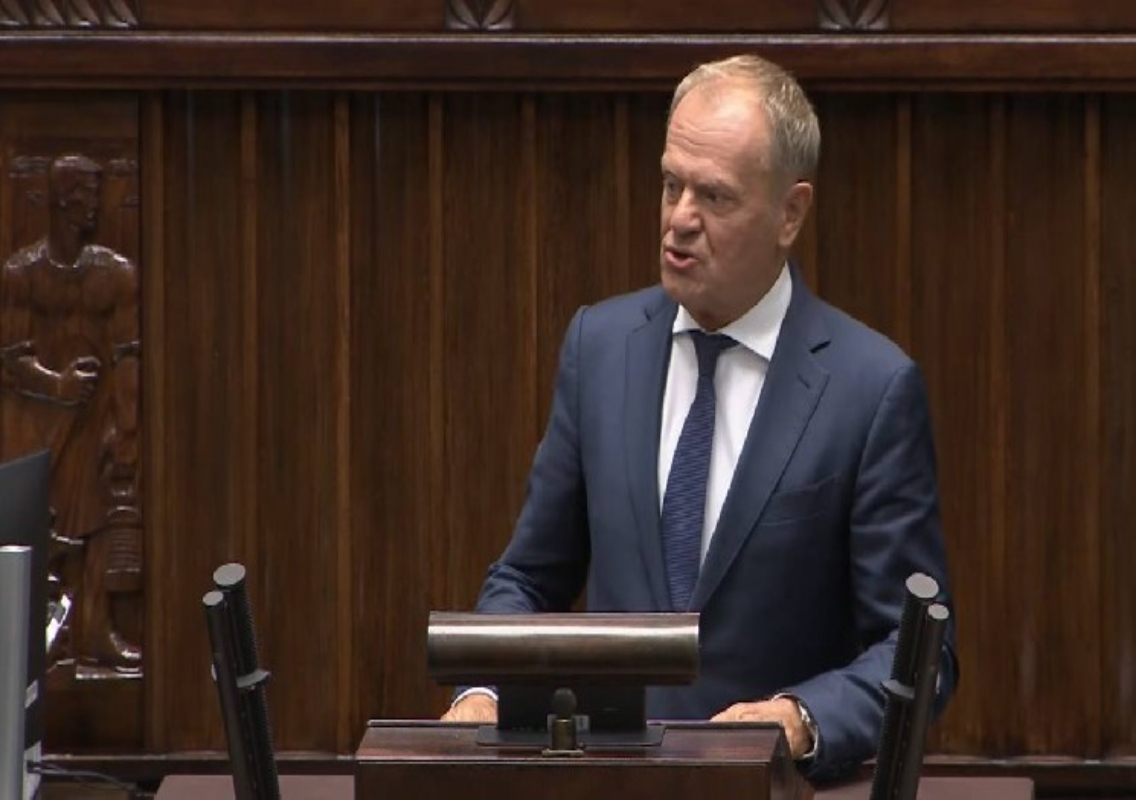


Warsaw: Poland’s lower house of Parliament has failed to overturn President Karol Nawrocki’s veto of a cryptocurrency regulation bill, leaving the country without the proposed domestic framework for supervising the digital-asset market. The Sejm needed 266 votes to override the veto but secured only 241, with 198 lawmakers voting against and three abstaining.
The vote marks another setback for Poland’s efforts to establish a comprehensive regulatory framework for crypto-assets and align domestic supervision with the European Union’s Markets in Crypto-Assets Regulation (MiCA).
Crypto bill falls 25 votes short
The latest vote was held after the Polish government sought to revive legislation that had already faced repeated presidential objections. Parliamentary records show that the bill, known as the Crypto-Asset Market Act, was passed by the Sejm in May 2026 and subsequently sent to President Nawrocki for consideration.
Nawrocki vetoed the legislation in June. The Sejm then attempted to reconsider the presidential decision, but lawmakers were unable to obtain the three-fifths majority required to override it.
During the latest vote, 241 MPs supported overturning the veto, while 198 opposed the move and three abstained. With 442 lawmakers present, the required threshold was 266 votes. The proposal therefore fell 25 votes short.
The unsuccessful vote means the presidential veto remains in force and the legislation cannot take effect in its current form.
What the proposed crypto law would have changed
The legislation was intended to create a clearer national regulatory structure for Poland’s cryptocurrency and digital-asset industry while implementing the EU’s MiCA framework.
A central feature of the proposal was to give Poland’s Financial Supervision Authority, known as KNF, a stronger role in supervising crypto-asset service providers.
Under the proposed framework, KNF would have received powers to supervise digital-asset businesses, impose financial penalties and take action against suspicious or potentially unlawful activities. The proposed legislation also included powers relating to blocking accounts and temporarily halting transactions under specified circumstances.
Supporters of the legislation argued that clearer domestic rules would strengthen consumer protection and provide greater certainty for companies operating in Poland’s crypto sector.
The Polish government has also argued that the absence of a comprehensive national framework creates difficulties for authorities trying to monitor financial flows and protect investors.
President warns against over-regulation
President Nawrocki has not rejected cryptocurrency regulation altogether. His objections have centred on the structure and scope of the proposed legislation.
He has argued that the bill could place excessive regulatory burdens on the crypto industry and potentially encourage Polish companies to move their operations to other jurisdictions.
The president has therefore called for changes to the proposed framework rather than accepting the legislation in its existing form.
The disagreement highlights a broader policy debate in Poland over how aggressively the government should regulate digital assets while keeping the country attractive to crypto businesses.
Zondacrypto controversy adds political pressure
The parliamentary dispute has unfolded alongside a major controversy surrounding Zondacrypto, a prominent Polish cryptocurrency exchange.
The exchange has become the subject of an investigation involving alleged financial losses and political connections. Reports have put the losses associated with the case at more than $80 million, while other reports have cited figures approaching $94 million. Allegations surrounding the investigation remain subject to legal proceedings and should not be treated as established criminal findings.
The investigation has also drawn prominent political figures into the controversy.
Polish Olympic Committee President Radosław Piesiewicz was detained in August in connection with the investigation. Authorities are examining alleged links between Piesiewicz and Przemysław Kral, a former Zondacrypto executive. The detention itself does not establish criminal liability, and allegations remain part of an ongoing investigation.
Prime Minister Donald Tusk referred to the Zondacrypto investigation while arguing in favour of stronger regulation. He accused political opponents of allowing people associated with the exchange to gain influence within Polish institutions.
Those accusations have intensified the political battle surrounding the cryptocurrency bill.
MiCA compliance remains a challenge
The failed vote comes as Poland continues to face pressure to establish a domestic framework for implementing the EU’s crypto regulations.
MiCA provides a common regulatory framework for crypto-assets across the European Union. While EU-wide rules are already applicable, individual countries still need effective domestic supervisory arrangements to administer and enforce them.
The proposed Polish legislation was designed to give KNF a formal and expanded role in that process. Without the bill, Poland’s crypto industry continues to operate in a more complicated regulatory environment.
Industry participants could therefore face continued uncertainty over licensing, supervision and compliance requirements.
What happens next for Poland’s crypto industry?
The failed override does not end the debate over cryptocurrency regulation in Poland. Instead, it leaves lawmakers with the task of finding a compromise that addresses both regulatory concerns and the president’s objections.
The government may seek to introduce a revised version of the legislation, while President Nawrocki is likely to continue demanding changes aimed at reducing what he considers excessive regulatory burdens.
For crypto companies, the immediate consequence is continued uncertainty. A clearer domestic framework could make regulatory responsibilities easier to understand, but disagreements over how much authority should be given to the financial regulator remain unresolved.
The latest vote also demonstrates how the Zondacrypto controversy has become intertwined with Poland’s broader debate over digital-asset regulation.
For now, the 241-198 vote means President Nawrocki’s veto remains intact, and Poland’s proposed crypto regulatory framework remains blocked.