







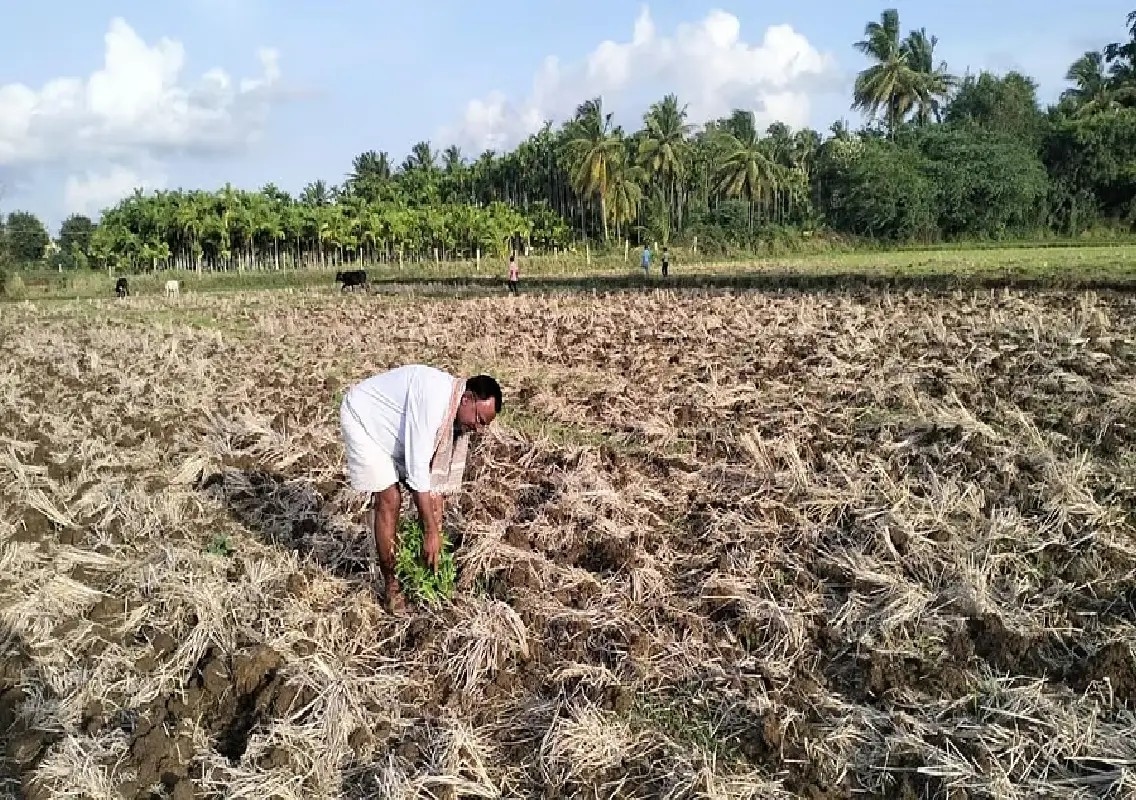


Davangere: Deficient rainfall has left areca growers in the non-traditional areca-growing belts of Chitradurga, Davangere and Tumakuru districts struggling to protect their plantations, with farmers increasingly depending on water tankers and borewells to keep the crop alive.
Areca is cultivated across around 2.91 lakh hectares in the three districts. With rainfall remaining inadequate, farmers are being forced to look for alternative sources of water to irrigate their plantations.
Several growers are reportedly hiring water tankers to supply water to areca gardens, while others are diverting borewell water that would otherwise be used for crops such as paddy, ragi, maize, vegetables and groundnut.
The growing dependence on limited groundwater resources could have wider implications for agricultural production in the region, as water being diverted towards areca plantations may reduce the availability of irrigation for other crops.
Rainfall shortage puts areca plantations under pressure
Areca requires regular water availability, particularly when rainfall is insufficient. The deficient monsoon has therefore become a major concern for farmers cultivating the crop in areas that do not traditionally receive the high rainfall associated with established areca-growing regions.
Farmers in Chitradurga, Davangere and Tumakuru are now facing the difficult task of maintaining their plantations with limited water resources.
For many growers, allowing areca trees to suffer prolonged water stress could affect the health and productivity of the plantations. As a result, some farmers are spending additional money on tanker water to ensure that their trees receive adequate moisture.
The cost of transporting water to agricultural land is adding to the financial burden on growers already dealing with uncertain weather conditions.
Farmers who have access to borewells are also relying heavily on groundwater. However, in several cases, borewell water that could have been used for other agricultural crops is being diverted to areca plantations.
Other crops face irrigation concerns
The diversion of scarce water towards areca plantations is expected to affect the cultivation of several other important crops in the region.
Paddy, ragi, maize, vegetables and groundnut are among the crops that could face reduced production if water availability remains inadequate.
The situation highlights the difficult choices confronting farmers during a deficient monsoon. While areca plantations are perennial crops that require continued maintenance, seasonal crops also depend on timely rainfall and irrigation during the kharif season.
Farmers therefore face pressure to prioritise available water resources, particularly in areas where groundwater levels and rainfall are insufficient to meet the requirements of all crops.
Large area remains uncultivated
Agriculture Department data indicates that the rainfall shortage has already had a significant impact on kharif cultivation in the three districts.
In Davangere district, around 45% of agricultural land has remained uncultivated during the kharif season, according to department officials.
The situation is more severe in neighbouring districts. In Chitradurga, sowing had not been undertaken on 56% of the agricultural land as per data available until mid-August.
Tumakuru recorded an even higher figure, with 74% of the agricultural land yet to be sown during the same period.
The figures indicate the extent to which inadequate rainfall has disrupted normal agricultural activity across the region.
Delayed sowing can reduce the crop-growing period and may ultimately affect yields, particularly if adequate rainfall does not arrive during the remaining part of the season.
Farmers forced to depend on tankers
For areca growers, the immediate priority is to prevent damage to existing plantations. Unlike seasonal crops that can be abandoned or replanted, established areca gardens represent a long-term investment.
Farmers who are hiring tankers have to bear the additional cost of purchasing and transporting water to their plantations.
The situation is particularly challenging for growers with larger areas under areca, as maintaining the required water supply across extensive plantations can quickly become expensive.
The use of borewell water provides an alternative for some farmers, but excessive dependence on groundwater could create longer-term concerns if the monsoon deficit persists.
At the same time, farmers are being forced to balance the water requirements of areca with those of other crops cultivated on their land.
Farmers await improvement in rainfall
B G Dhananjay, a farmer from Nittur in Harihar taluk, said he and his brother own around 25 acres of agricultural land.
The experience of farmers such as Dhananjay reflects the growing concerns among cultivators who depend on adequate rainfall and irrigation to maintain their crops.
With large portions of agricultural land yet to be sown across the three districts, farmers are hoping for an improvement in rainfall conditions.
A continuation of deficient rainfall could further increase dependence on groundwater and tanker supplies while putting additional pressure on agricultural production.
The situation also highlights the vulnerability of non-traditional areca-growing areas to water shortages. While areca cultivation has expanded significantly in these districts, sustaining plantations during periods of deficient rainfall remains a major challenge.
Unless rainfall improves and water availability increases, farmers may continue to face difficult decisions over how to allocate limited irrigation resources between areca plantations and seasonal food and commercial crops.