









Mangaluru: Engineering education and careers are undergoing a fundamental transformation as technology increasingly blurs the boundaries between electronics, semiconductors, and computer engineering. Tomorrow’s jobs, industry leaders argue, will demand engineers who can seamlessly integrate physical hardware with computational intelligence, making interdisciplinary learning no longer optional but essential.
In the early phases of industrialisation, engineering largely revolved around mechanical systems and structural design. As technology evolved, electronics introduced sensing, control, and actuation, while computing added automation, data processing, and intelligent decision-making. Today, innovation is driven not by isolated disciplines but by their convergence, giving rise to an integrated engineering frontier that combines electronics, semiconductor technologies, and computer engineering to meet real-world needs.
Modern smart devices — from electric vehicles and medical equipment to industrial automation systems — reflect this convergence. Instead of treating electronics and computing as separate silos, leading industries view them as complementary domains working together to enhance productivity, safety, and quality of life.
Why integrated skills are becoming essential
The systems that define everyday life increasingly rely on both physical hardware and embedded intelligence. In electric vehicles, for instance, electronic sensors and power electronics manage real-time measurements, while software algorithms optimise battery usage, braking, and control logic. In healthcare, electronic sensors capture physiological signals, while computing tools interpret them for diagnosis and clinical decision-making. Smartphones combine complex circuits with advanced artificial intelligence for facial recognition and language processing.
Industrial automation offers another example, where electronic sensing and signal conditioning work alongside software-driven control systems to achieve precision manufacturing. These realities explain why employers now seek engineers with integrated expertise rather than narrow specialisation in a single domain.
In India, this shift is being acknowledged at the policy level. Industry discussions have highlighted that India’s semiconductor progress is not a temporary surge but a structural transformation, requiring capabilities that extend well beyond conventional manufacturing roles and demand a blend of electronics and computing skills.
Semiconductors at the centre of global strategy
Semiconductors form the backbone of modern electronics, powering everything from consumer gadgets and medical devices to aerospace and defence platforms. Because they sit at the intersection of materials science, microelectronics, and computational design, countries increasingly treat them as strategic assets.
Globally, nations such as the United States, Japan, South Korea, Taiwan, and members of the European Union have built robust semiconductor ecosystems that integrate fabrication capacity, research, and education aligned with industry needs. Leading companies including TSMC, Intel, Samsung Electronics, Qualcomm, NVIDIA, Texas Instruments, and others emphasise innovation across design, advanced process nodes, and computing acceleration. All of these areas require engineers comfortable with both hardware and software frameworks.
The importance of semiconductors in enabling digital economies is widely discussed in global technology discourse, including explanations of what Semiconductor technology underpins in modern life.
India’s strategic response and investments
Recognising the strategic importance of semiconductors, the Government of India has launched multiple initiatives to build domestic capability across the value chain. Key programmes include the India Semiconductor Mission with an outlay of ₹76,000 crore, Production Linked Incentive schemes for electronics manufacturing, Design Linked Incentives for chip design, and targeted incentives for assembly, testing, marking, and packaging.
Major investments have followed, including semiconductor fabrication and packaging facilities in Gujarat, Assam, Uttar Pradesh, Tamil Nadu, and Karnataka. These projects span fabrication, advanced packaging, testing, research, and training infrastructure, collectively contributing to an end-to-end semiconductor ecosystem.
Coastal Karnataka’s role in the ecosystem
While large fabrication plants are coming up in several states, regions such as coastal Karnataka are emerging as important hubs for supporting industries. Embedded systems, automation, intelligent hardware, and product engineering companies in the region contribute to semiconductor readiness through design, testing, and integration workflows.
Initiatives such as regional innovation programmes and industry–academia collaborations are helping connect local talent to national semiconductor objectives, creating pathways for students to enter high-growth technology domains. Coverage of such regional industry–academia developments is regularly featured on Newskarnataka.com, highlighting how local ecosystems align with national priorities.
Workforce demand and future opportunities
Industry projections suggest strong workforce demand in semiconductor-linked sectors. India’s semiconductor market is expected to reach USD 100–110 billion by 2030, with over 4 lakh professionals needed across design, manufacturing, testing, and related domains. Additional indirect employment is expected through supply chains, automation, and allied industries.
These roles extend beyond chip fabrication to embedded systems, real-time computing, verification, automation, and intelligent product development — areas where integrated electronics and computing skills are critical.
Academic preparation for industry realities
To prepare students for this evolving landscape, academic programmes must emphasise integrated learning. Essential competencies include electronics and computer science fundamentals, algorithms and data structures, hardware description languages, semiconductor physics, scripting and automation, embedded systems, and AI integration.
Hardware enables sensing and action, while software provides intelligence and control. Together, they transform devices into meaningful systems. Programming plays a central role in semiconductor work, supporting design automation, testing, verification, embedded firmware, optimisation, and data analysis.
Pathways for students and higher studies
Graduates with integrated foundations can pursue careers in VLSI design, packaging and testing, embedded systems, robotics, automotive electronics, industrial automation, and medical electronics. While undergraduate education builds the base, postgraduate specialisation in areas such as VLSI or embedded systems remains valuable for advanced and leadership roles.
Conclusion
India’s semiconductor growth strategy reflects a long-term national direction backed by policy, investment, and workforce planning. As regional ecosystems like coastal Karnataka align with this vision, the demand for engineers who understand both electronics and computing is becoming increasingly clear.
Electronics, semiconductors, and computer engineering together represent not just a new academic pathway but an essential direction aligned with how modern technology is built. The future belongs to engineers who can integrate circuits and code to design intelligent, reliable systems that serve society.
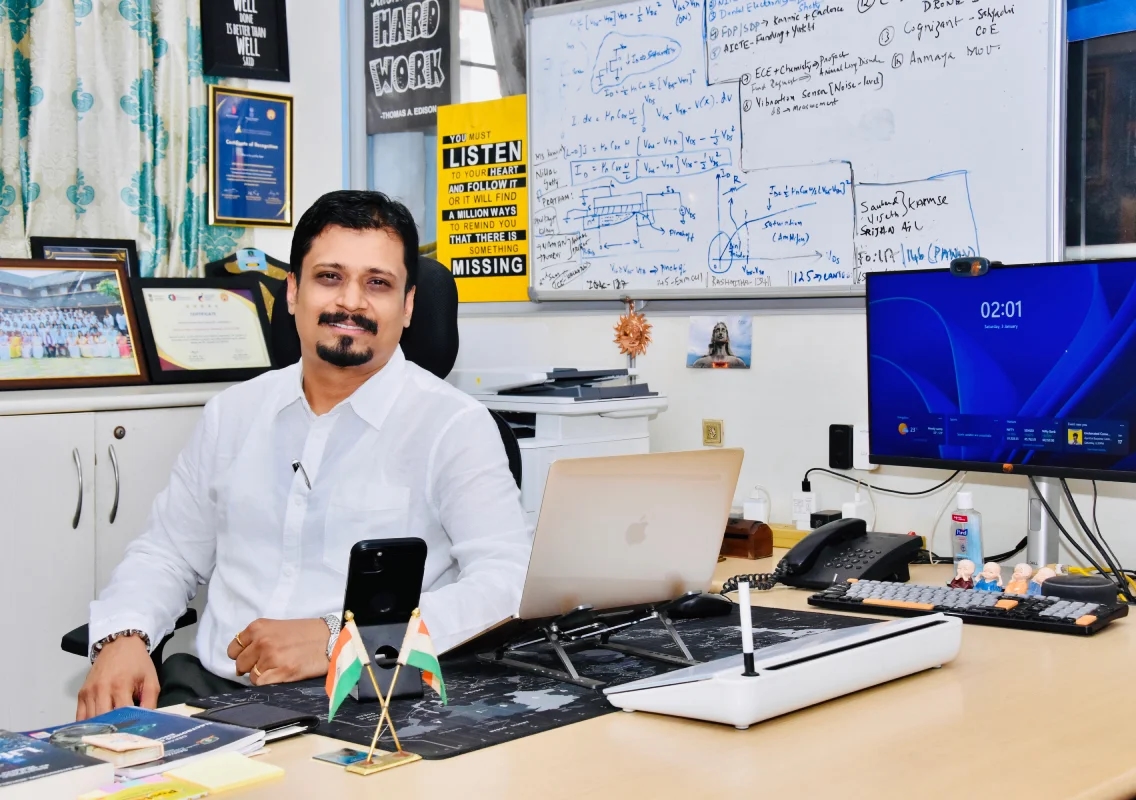
By Dr. Anush Bekal — Head of the Department, Electronics & Communication Engineering, Sahyadri College of Engineering & Management, Mangaluru, Karnataka
Email: [email protected]