









Every year, thousands of graduates look for a career that offers stability, a good salary, work-life balance, and long-term growth. While many aspirants focus on UPSC, SSC, banking, or private-sector jobs, the RBI Grade B Officer position remains one of the most sought-after career options after graduation.
But is RBI Grade B really the right career choice for you?
In this article, we will discuss the job profile, salary, career growth, work-life balance, and the pros and cons of becoming an RBI Grade B Officer so that you can make an informed decision.
What Is RBI Grade B?
RBI Grade B is an officer-level position in the Reserve Bank of India (RBI), the country’s central bank.
RBI Grade B Officers are involved in:
- Monetary policy implementation
- Banking regulation and supervision
- Currency management
- Financial market operations
- Economic research and analysis
- Government debt management
- Financial inclusion initiatives
It is considered one of the most prestigious jobs in the banking and finance sector. If you are considering this exam, please check the RBI Grade B Previous Year Paper.
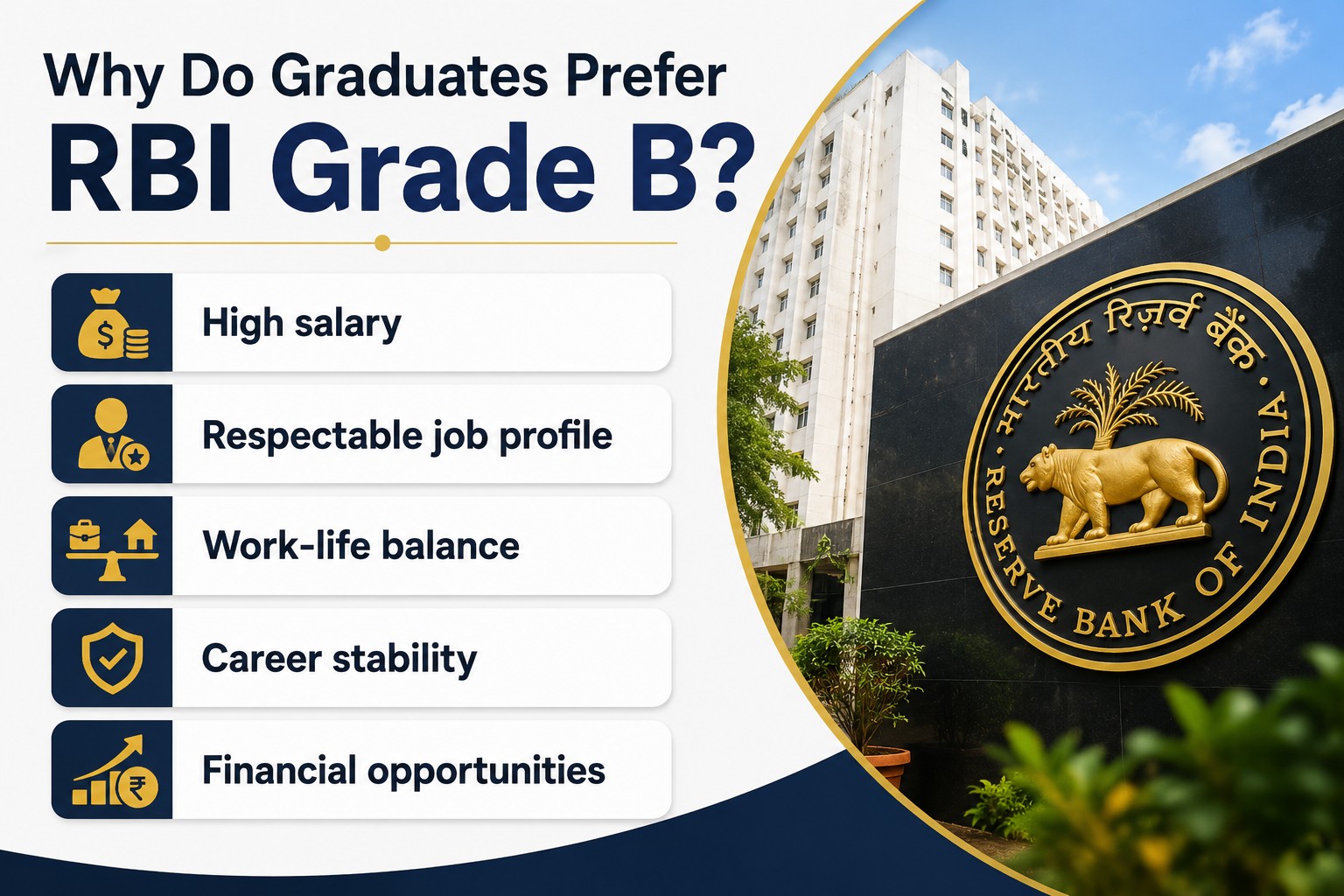
Why Do Graduates Prefer RBI Grade B?
Many graduates choose RBI Grade B because it offers a unique combination of:
- High salary
- Respectable job profile
- Work-life balance
- Career stability
- Opportunities to work on national-level financial policies
Unlike many government jobs, RBI Grade B provides exposure to economics, finance, banking, and policymaking.
RBI Grade B Salary and Benefits
One of the biggest attractions of RBI Grade B is its salary package.
Salary Highlights
- Basic Pay: ₹55,200 per month
- Gross Monthly Salary: Around ₹1.2–1.5 lakh
- Annual CTC: Approximately ₹25 lakh
- In-hand Salary: Around ₹90,000–₹1,10,000 per month (depending on location and deductions)
Additional Benefits
RBI employees also receive:
- House Rent Allowance (HRA)
- Medical facilities
- Leave Fare Concession (LFC)
- Education allowance
- Newspaper allowance
- Housing loan benefits
- Pension and retirement benefits
Compared to many other government jobs, the overall compensation is highly competitive.
What Is the Work-Life Balance Like?
Work-life balance is one of the strongest reasons candidates choose RBI Grade B.
Typical Working Hours
- Usually 9:30 AM to 5:30 PM
- Five-day work week
- Limited overtime in most departments
Benefits of Better Work-Life Balance
- Time for family and personal life
- Opportunities to pursue higher studies
- Better mental well-being
- Scope to develop additional skills
While some departments may experience workload during specific periods, RBI generally offers a healthier work environment than many banking and corporate jobs.
Career Growth in RBI
RBI Grade B is not just a job; it can become a long-term career.
Promotion Hierarchy
A typical career path is:
- Grade B Officer
- Assistant Manager
- Manager
- Assistant General Manager (AGM)
- Deputy General Manager (DGM)
- General Manager (GM)
- Chief General Manager (CGM)
- Executive Director
- Deputy Governor (in rare cases)
Promotions depend on:
- Experience
- Performance
- Internal examinations
- Vacancies
Learning Opportunities
RBI officers regularly receive:
- Training programs
- International exposure
- Deputation opportunities
- Higher education sponsorships in some cases
This continuous learning helps officers grow professionally throughout their careers.
Who Should Consider RBI Grade B?
RBI Grade B can be an excellent choice for candidates who:
Have an Interest in Economics and Finance
You do not need an economics background, but having an interest in:
- Banking
- Financial markets
- Public policy
- Economic developments
can make the job more enjoyable.
Want a Stable Career
If job security is important to you, RBI Grade B offers:
- Stable employment
- Strong institutional reputation
- Predictable career progression
Value Work-Life Balance
Candidates looking for a balance between professional success and personal life often find RBI Grade B attractive.
Prefer Analytical Work
The role suits individuals who enjoy:
- Reading reports
- Analysing data
- Understanding policies
- Solving complex problems
RBI Grade B vs Other Popular Career Options
RBI Grade B vs SBI PO
RBI Grade B
- Better work-life balance
- Higher salary
- Policy-oriented work
- Five-day work week
SBI PO
- Faster promotions initially
- More customer-facing responsibilities
- Higher transfers and workload
RBI Grade B vs UPSC Civil Services
RBI Grade B
- Better work-life balance
- Shorter preparation cycle
- Finance-focused career
UPSC Civil Services
- Wider administrative authority
- Greater public impact
- Larger syllabus and tougher competition
RBI Grade B vs Private Sector Jobs
RBI Grade B
- Job security
- Stable career growth
- Strong benefits
Private Sector
- Potentially higher salaries
- Faster career progression
- Higher performance pressure
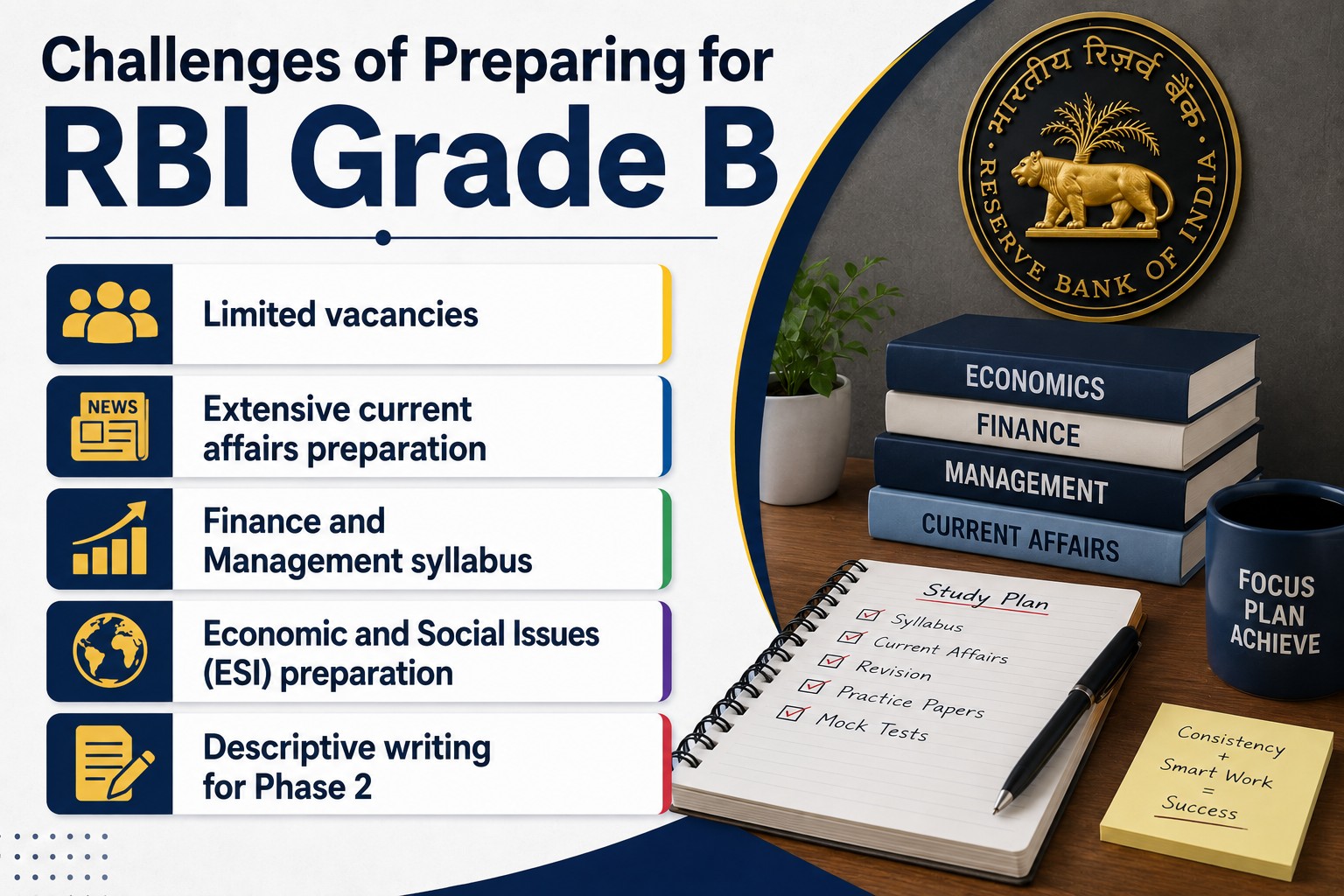
Challenges of Preparing for RBI Grade B
Before choosing this career path, it is important to understand the competition.
Common Challenges
- Limited vacancies
- Extensive current affairs preparation
- Finance and Management syllabus
- Economic and Social Issues (ESI) preparation
- Descriptive writing for Phase 2
However, candidates who prepare consistently can clear the exam even without a finance or economics background.
Is RBI Grade B a Good Career for Fresh Graduates?
For most graduates, the answer is yes.
RBI Grade B offers:
- Excellent salary
- Strong job security
- Good work-life balance
- Meaningful work
- Long-term career growth
- Prestige of working with India’s central bank
It is particularly suitable for graduates who want a stable and intellectually rewarding career rather than a highly aggressive corporate lifestyle.
Conclusion
RBI Grade B is one of the best career options available after graduation for candidates seeking a combination of salary, stability, learning opportunities, and work-life balance.
While the exam is competitive, the rewards are substantial. If you are interested in economics, finance, banking, public policy, or regulatory work, RBI Grade B can provide a fulfilling and prestigious career path.
Before making your decision, assess your interests, career goals, and preferred work environment. If your priorities align with what RBI offers, preparing for RBI Grade B could be one of the smartest career decisions you make after graduation.