







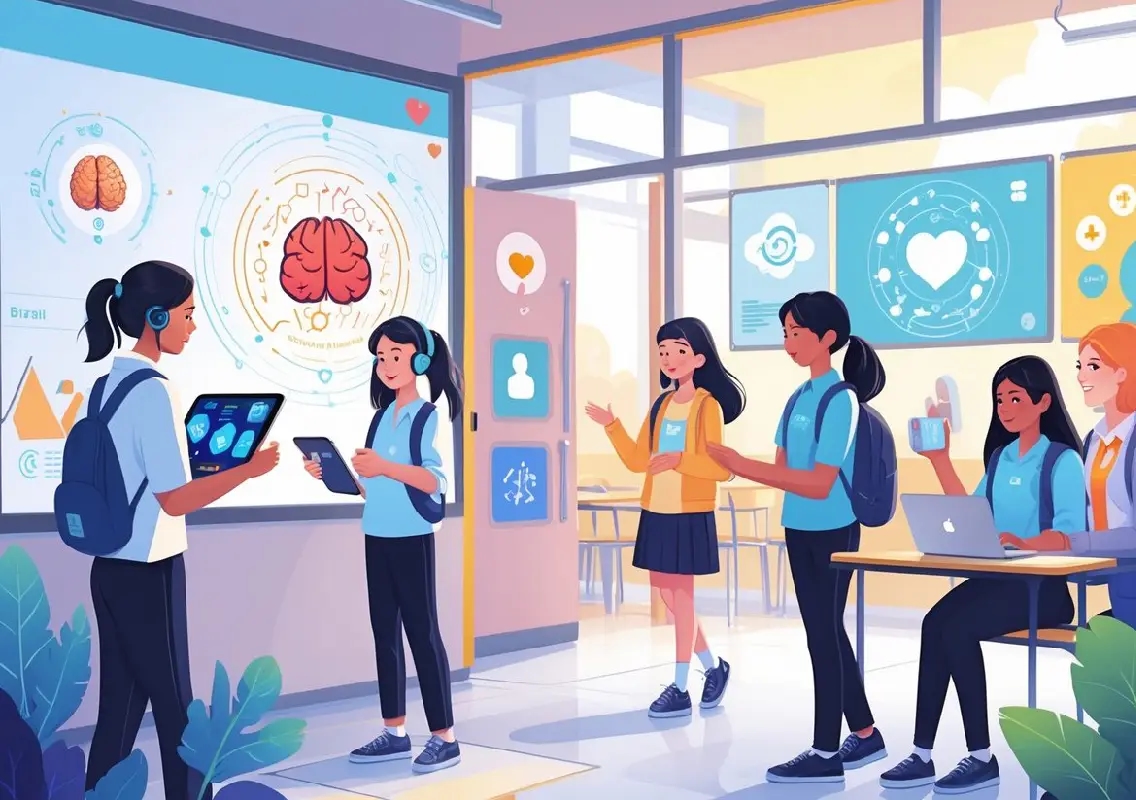


Schools in the United States are increasingly using artificial intelligence tools to monitor students’ mental health, helping counsellors detect potential crises early but also raising concerns about privacy and overreliance on technology.
At Interlachen Jr-Sr High School in Putnam County, Florida, counsellor Brittani Phillips recently received a “severe alert” from an AI-based therapy platform used by students after school hours. The system flagged a conversation with an eighth-grade student who appeared to be at risk of harming himself.
Phillips immediately contacted the student’s mother and local authorities to assess the situation. The intervention proved crucial. The student later returned to school safely and is now continuing his studies.
AI monitoring in schools
The school district has been using an AI-powered mental health platform called Alongside for the past three years.
The tool allows students to chat with a virtual assistant that helps them discuss personal problems and develop emotional coping skills. The system analyses the conversation and alerts school counsellors if it detects signs of distress or crisis.
According to the company, the platform is now used by more than 200 schools across the United States, particularly in districts struggling with limited mental health staff.
For counsellors like Phillips, the system helps identify problems early while allowing them to focus more attention on students facing serious issues.
Concerns about reliance on AI
Despite the benefits, experts caution that AI should not replace human counsellors.
Mental health professionals say artificial intelligence cannot fully understand emotional nuances, body language, or tone of voice that trained therapists rely on when assessing students.
“You can’t replace human connection and human judgment,” experts warn.
Some advocates are also concerned that students may form emotional attachments to AI chatbots, a phenomenon known as a “parasocial relationship,” where individuals develop one-sided emotional bonds with digital systems.
Privacy and ethical questions
Privacy experts also highlight potential risks because conversations with AI chatbots do not have the same legal protections as discussions with licensed therapists.
Additionally, AI systems may sometimes generate false alarms when students test the technology by typing exaggerated or joking messages.
Still, counsellors say human supervision remains essential to ensure alerts are properly evaluated.
A tool, not a replacement
Supporters of the technology argue that AI can serve as a first line of defence, helping identify struggling students who might otherwise remain unnoticed.
The goal, experts say, is to guide students toward real human support, rather than replacing it.
As schools continue to explore AI tools in education and mental health care, the debate highlights the challenge of balancing technological innovation with the need for human connection in supporting young people.