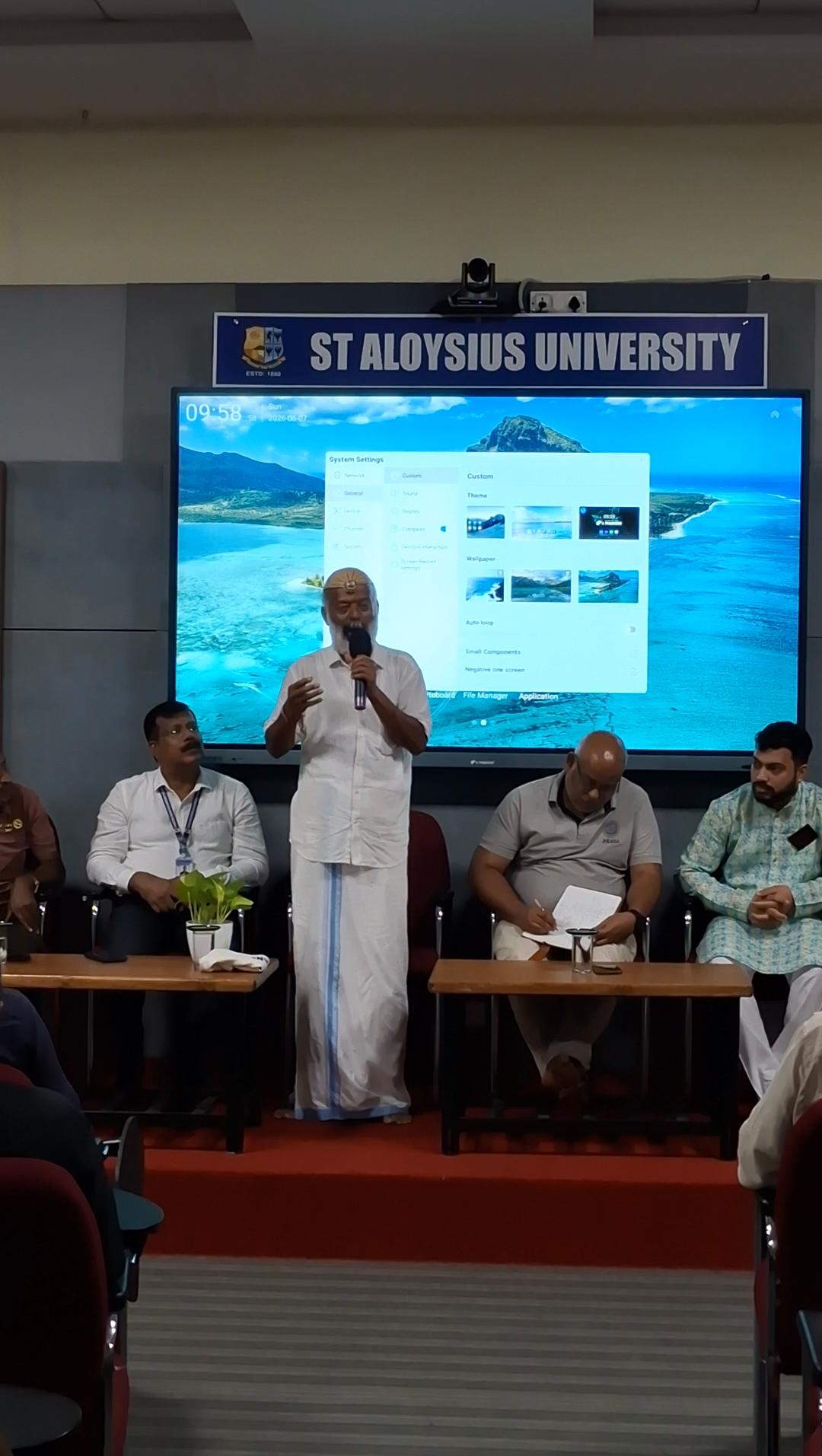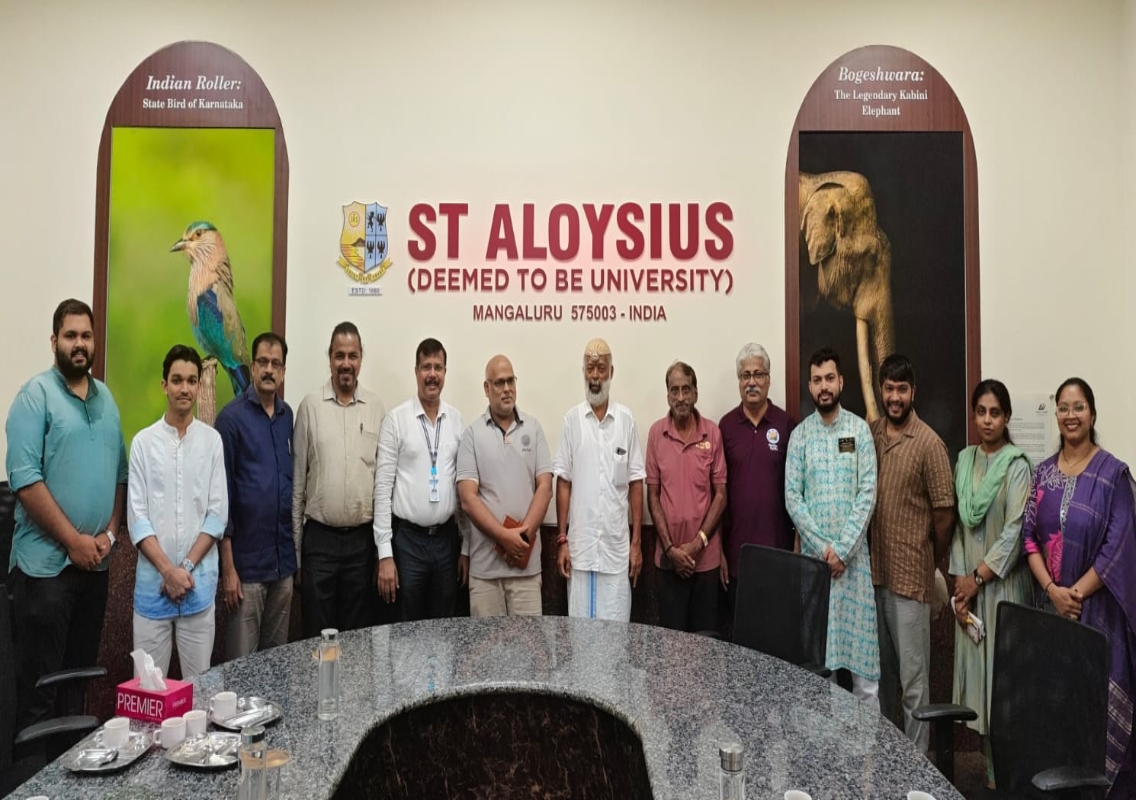


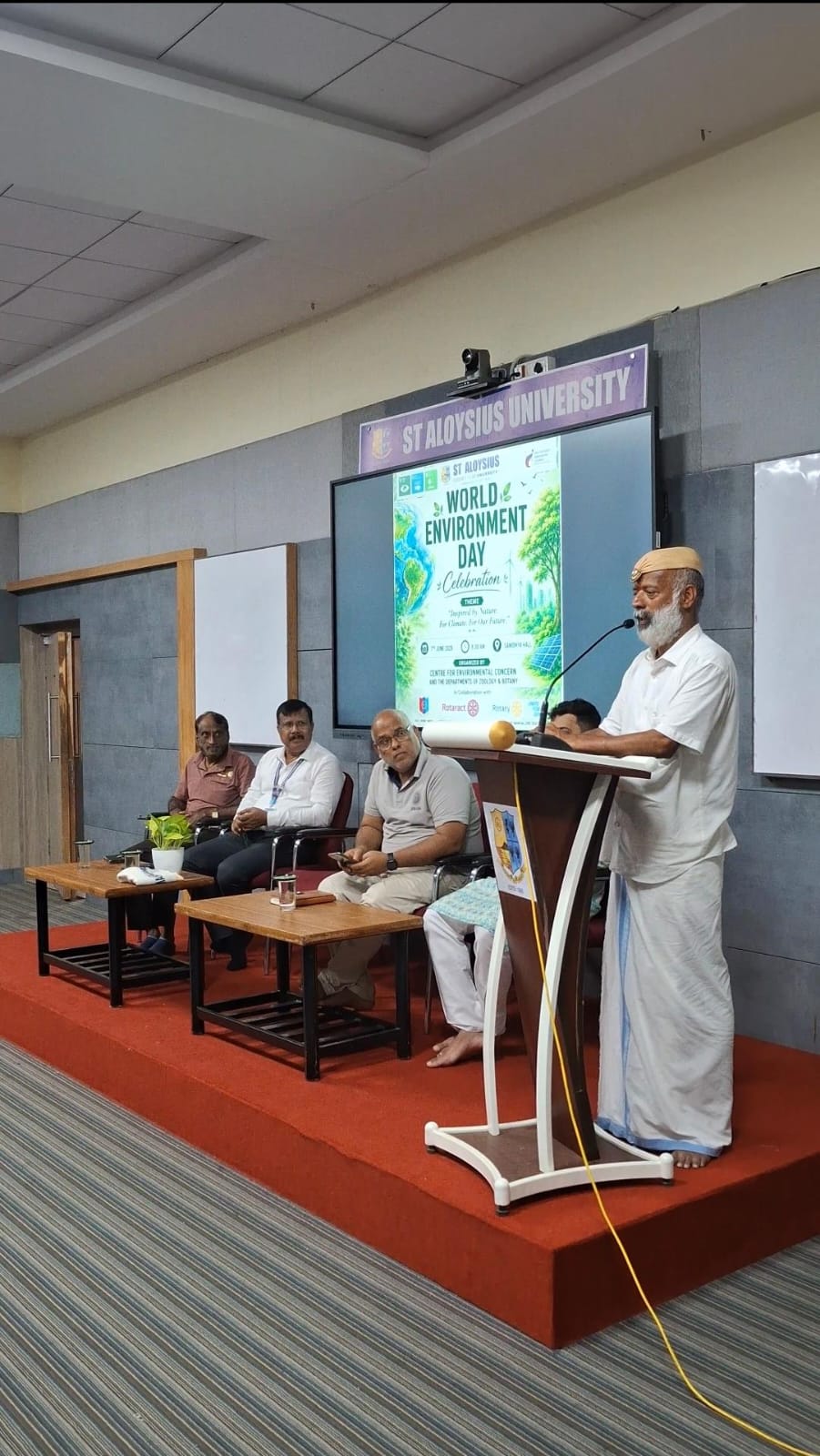
Mangaluru: The Centre for Environmental Concern of St Aloysius (Deemed to be University), in association with the Departments of Zoology and Botany, celebrated World Environment Day 2026 at Sanidhya Hall on June 7 under the global theme, “Inspired by Nature. For Climate. For Our Future.”
The programme was organised in collaboration with the NCC Army Wing, Rotary Club of Mangalore Central, and the Rotaract Club of Mangalore City.
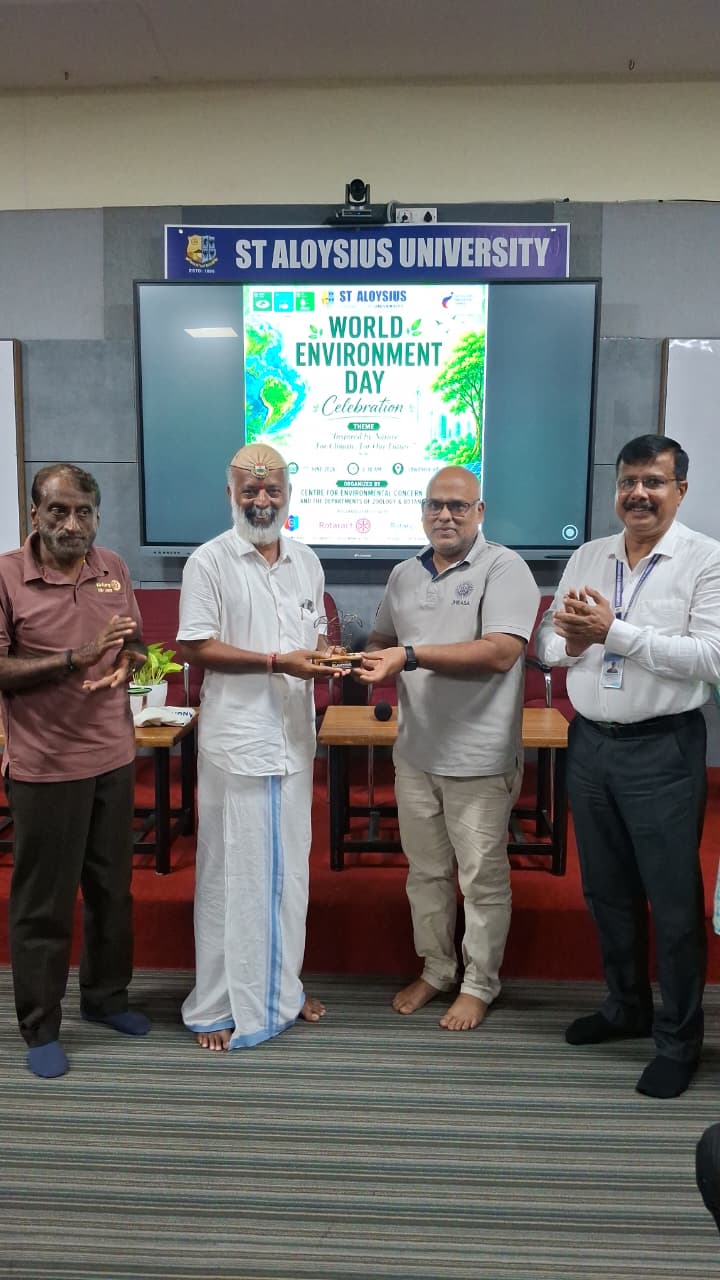
The event highlighted the importance of biodiversity conservation, ecological restoration, and sustainable environmental practices in addressing climate challenges and securing a greener future.
Dr R. K. Nair delivers keynote address
The programme was presided over by Rev. Dr. Melwyn D’Cunha SJ, Pro Vice Chancellor of the university.
Renowned environmentalist and afforestation expert Dr. R. K. Nair, popularly known as the “Green Hero of India,” attended as the chief guest and delivered the keynote address.
Addressing the gathering, Dr. Nair emphasised the urgent need for environmental conservation, biodiversity protection, and ecosystem restoration. He explained how degraded landscapes and barren lands can be transformed into thriving ecosystems through scientifically planned afforestation initiatives.
He stressed that environmental restoration is not merely about planting trees but about creating sustainable ecosystems that support biodiversity and long-term ecological balance.
Bharat Vann model highlighted
A major focus of Dr. Nair’s presentation was “Bharat Vann,” an innovative afforestation model developed specifically for India’s diverse climatic conditions, soil types, and geological environments.
He explained that the model promotes the creation of dense, self-sustaining forests using native plant species and has proven effective in restoring degraded ecosystems across the country.
According to Dr. Nair, even small plots of land can be transformed into vibrant green spaces when planned and implemented scientifically.
He highlighted that forests composed of diverse native species provide significantly greater ecological benefits than monoculture plantations by supporting a wide range of wildlife and improving ecosystem resilience.
Successful restoration projects showcased
During his address, Dr. Nair shared examples of successful environmental restoration projects, including the transformation of Smritivan in Kutch, Gujarat.
Developed in an area devastated by the 2001 Gujarat earthquake, Smritivan has evolved from a barren landscape into a thriving green ecosystem through extensive afforestation efforts.
He also outlined his vision for restoring lands that have remained barren for centuries through carefully designed afforestation projects tailored to local environmental conditions.
Dr. Nair reiterated that forests are complex ecosystems that play a vital role in conserving biodiversity, improving air and water quality, regulating climate, and supporting life.
He encouraged students and citizens to actively participate in environmental conservation initiatives and contribute to ecological restoration efforts.
Sapling planted on campus
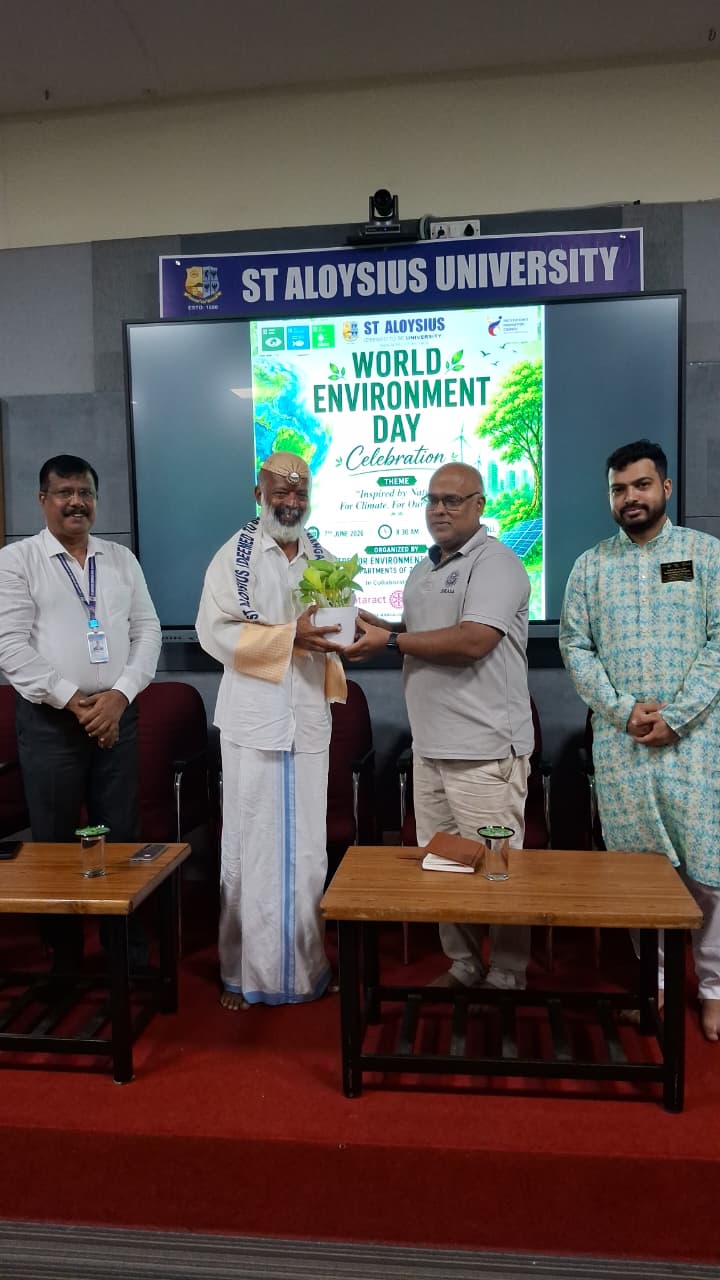
Following the programme, Dr. Nair planted a sapling on the university campus as a symbol of the institution’s commitment to environmental stewardship and sustainability.
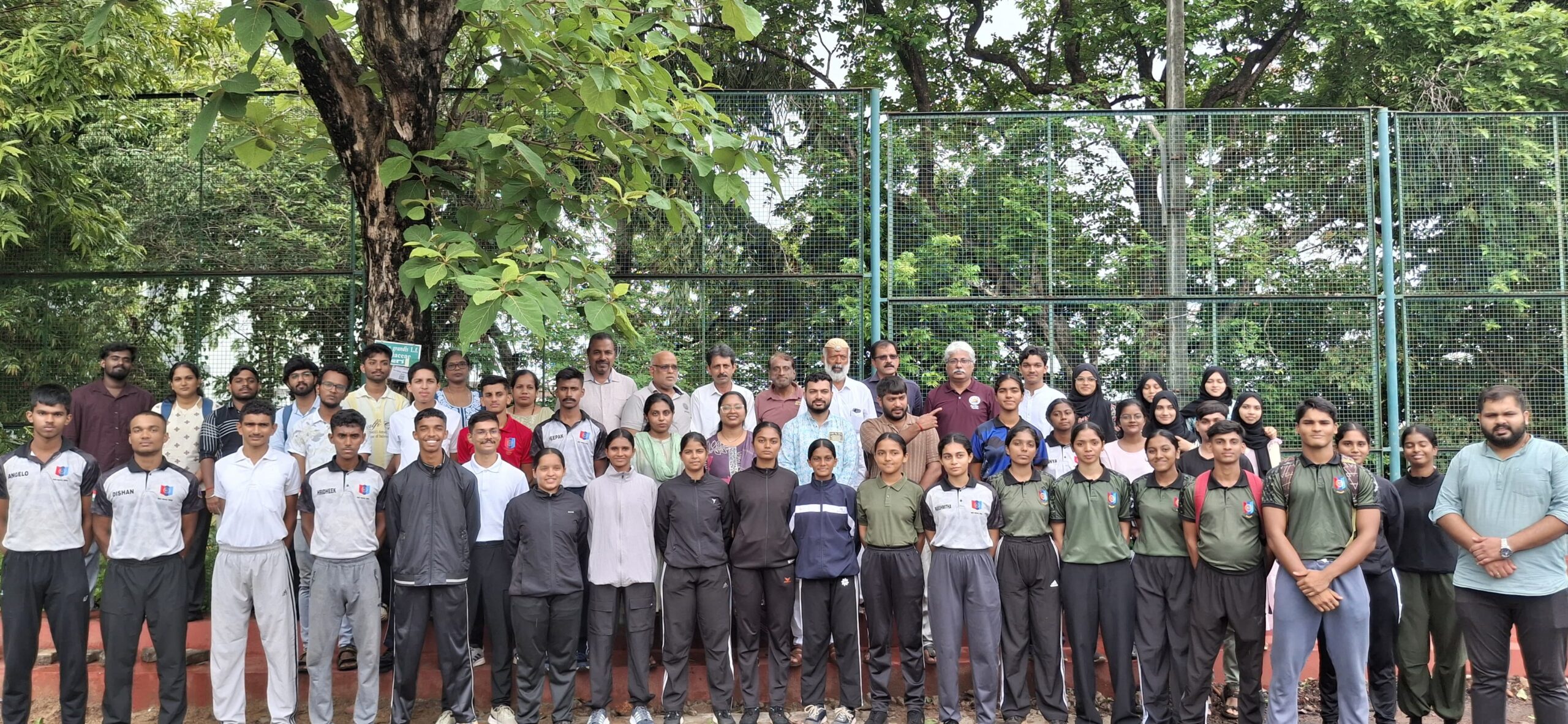
The plantation activity reinforced the day’s message and highlighted the importance of collective action in building a greener and more sustainable future.
The event witnessed enthusiastic participation from students, faculty members, NCC cadets, Rotarians, and environmental enthusiasts.
Among those present were Dr. Ronald Nazareth, Registrar of St Aloysius University; Rtn. Bhaskar Rao Katta, President of Rotary Club of Mangalore Central; Rtn. PHF Darryl S. D’Souza, RSMDIO President; Mr. Umanath Kotekar, Secretary of Ambamaheshwari Seva Trust; Mr. Pushparaj B. N., President of the Dakshina Kannada Working Journalists’ Association; Mr. Glavin Thomas Rodrigues, Chief Coordinator of the Centre for Environmental Concern; and Dr. Sana Sheikh, Head of the Department of Botany.
The programme reaffirmed the university’s commitment to sustainability, biodiversity conservation, and responsible environmental action.