







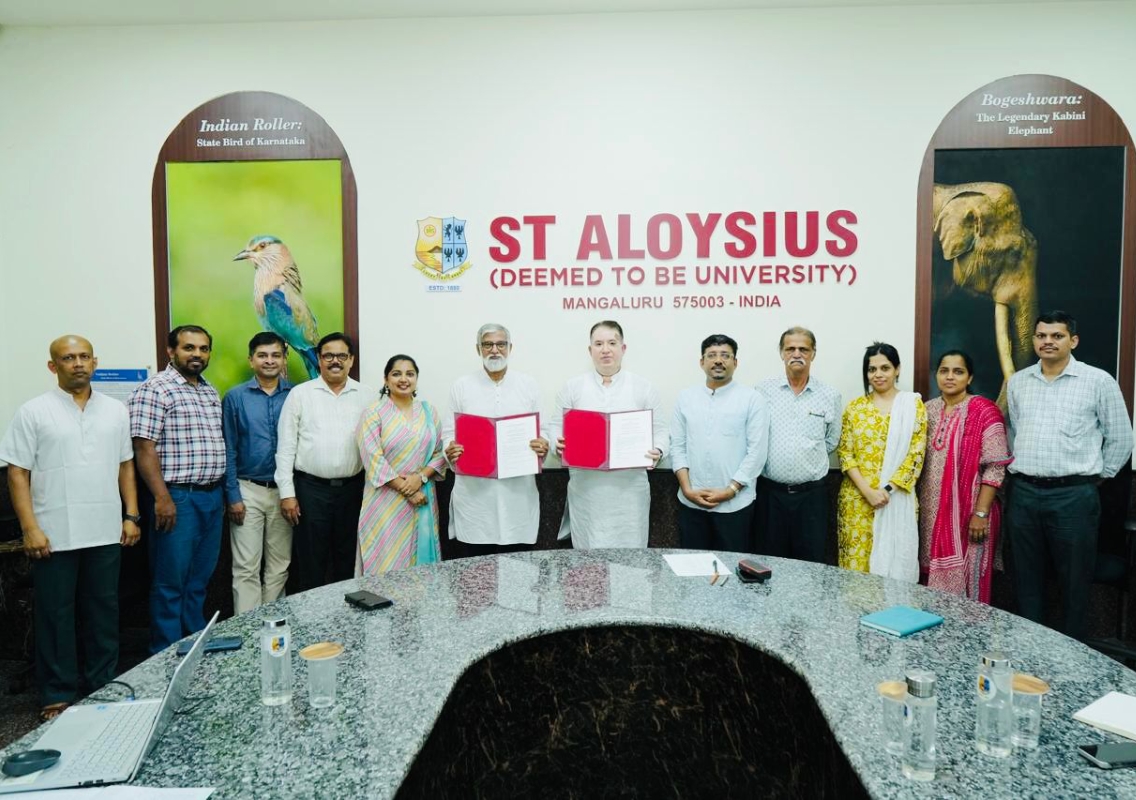


Mangaluru: St Aloysius (Deemed to be University) signed a Memorandum of Understanding (MoU) with Karnataka Theological College, Mangalore, on May 5, 2026, marking the first step towards establishing the Centre for Religion and Culture (CRC) at the university.
The initiative aims to promote academic engagement, interfaith dialogue, and research on religion and culture in nation-building.
MoU signed in presence of dignitaries
The MoU signing ceremony was held in the presence of Rev. Dr. Praveen Martis SJ, Hon’ble Vice Chancellor of St Aloysius University, and Rev. Dr. Watson, Principal of Karnataka Theological College.
Also present were Rev. Fr. William Marcel, Director of Radio Sarang and Secretary of the Centre for Religion and Culture (CRC), along with members of the CRC Advisory Board.
Initiative led by academic leadership
The initiative was spearheaded by Dr. Mona Mendonca, Head of the Department of History and Joint Secretary of the Centre for Religion and Culture.
The collaboration reflects the university’s commitment to creating platforms for meaningful academic and social dialogue.
Focus on interfaith dialogue and research
The proposed Centre for Religion and Culture will focus on encouraging research and discussions related to religion, culture, and their role in shaping society and national development.
A special emphasis will be placed on understanding and documenting the contributions of the Christian community to nation-building.
Strengthening academic collaboration
The partnership with Karnataka Theological College is expected to facilitate collaborative programmes, seminars, research projects, and discussions on cultural and religious harmony.
The initiative also seeks to promote mutual understanding and constructive engagement among different faith communities.
Promoting inclusive learning
By establishing the CRC, St Aloysius University aims to provide students and researchers with opportunities to explore themes of religion, ethics, culture, and social transformation in an academic setting.
The centre is expected to become a platform for intellectual exchange and inclusive dialogue.
Conclusion
The signing of the MoU marks an important step in strengthening academic collaboration and fostering deeper understanding of religion and culture in contemporary society.
The Centre for Religion and Culture is expected to contribute meaningfully towards promoting harmony, research, and nation-building initiatives.