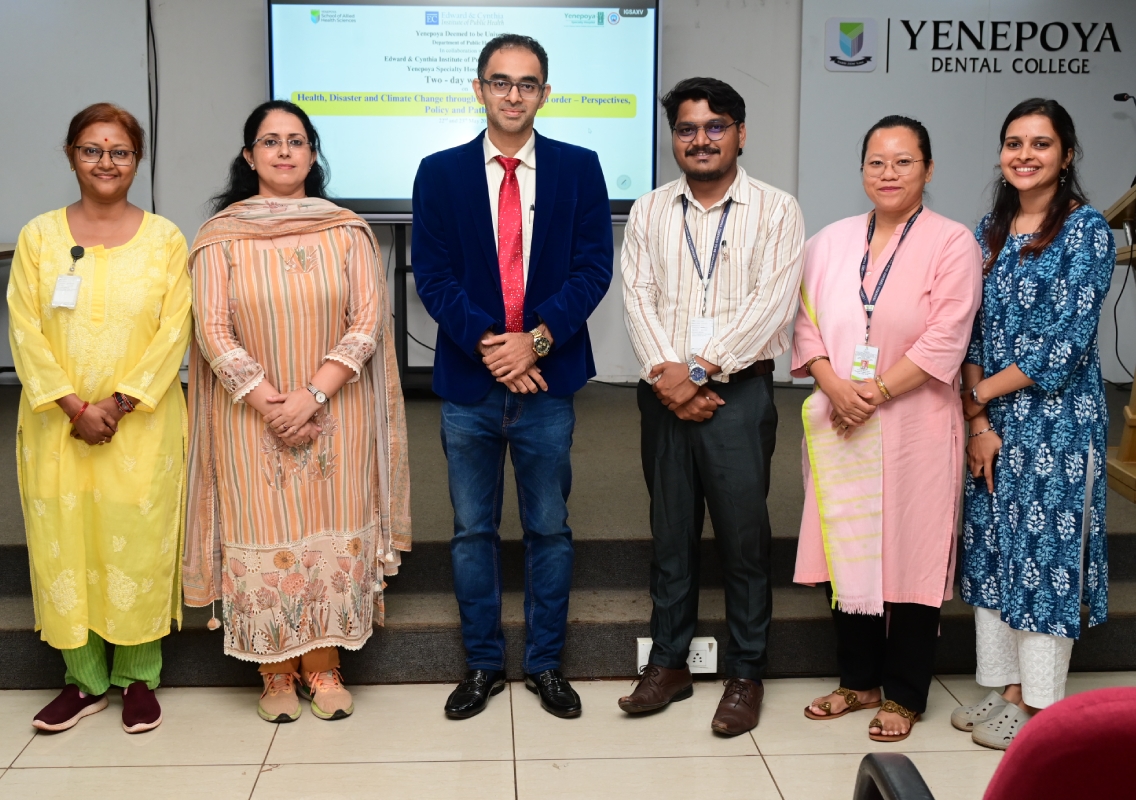


Mangaluru: The Department of Public Health at Yenepoya Deemed to be University, in association with the Edward & Cynthia Institute of Public Health and Yenepoya Specialty Hospital, organised a two-day training workshop on “Health, Disaster and Climate Change through an Emerging World Order – Perspectives, Policy and Pathways.”
The workshop focused on strengthening knowledge and preparedness among doctors, public health specialists, and healthcare professionals regarding disaster response, climate change challenges, and health systems resilience.
Experts lead sessions on climate and disaster preparedness
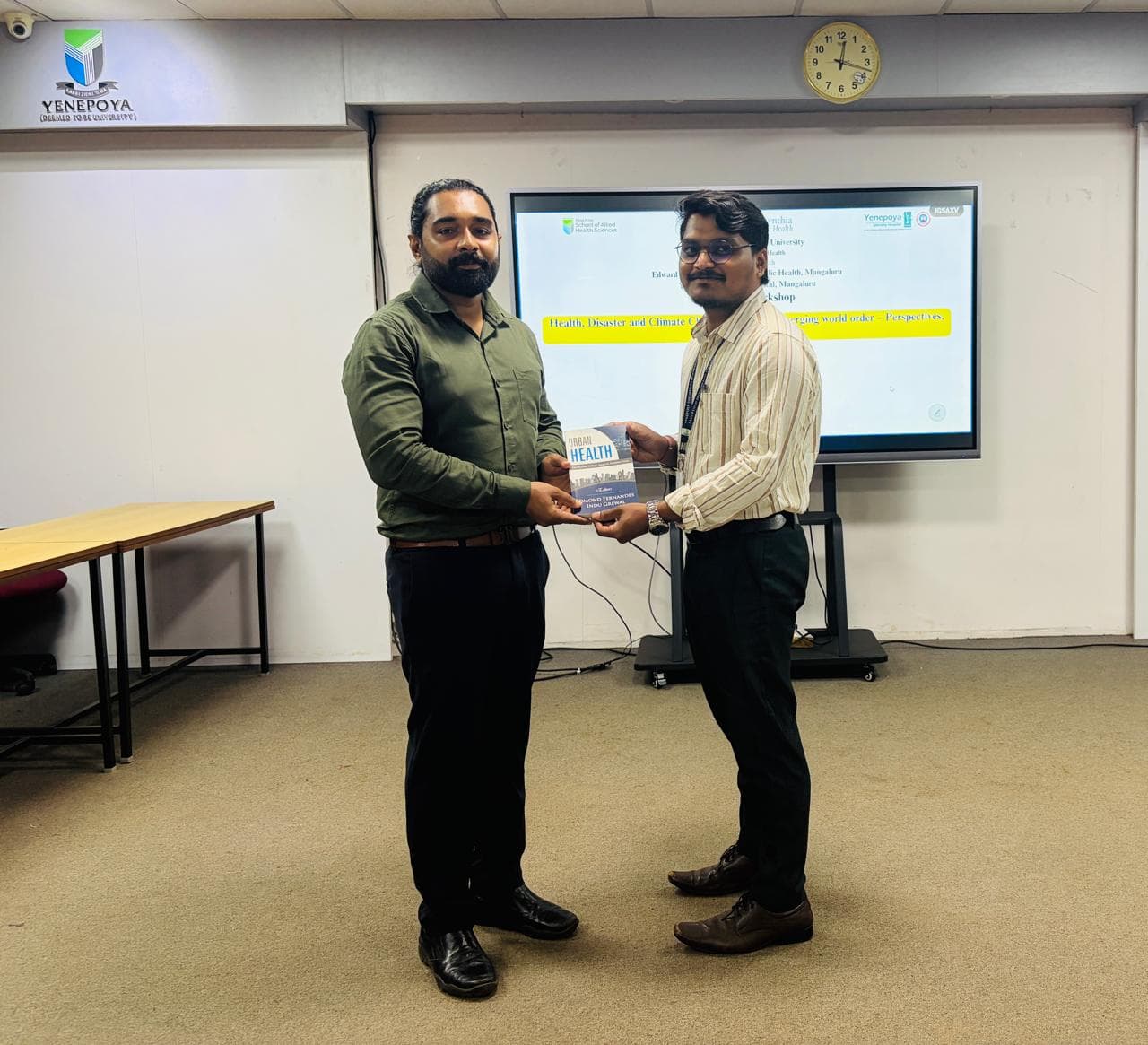
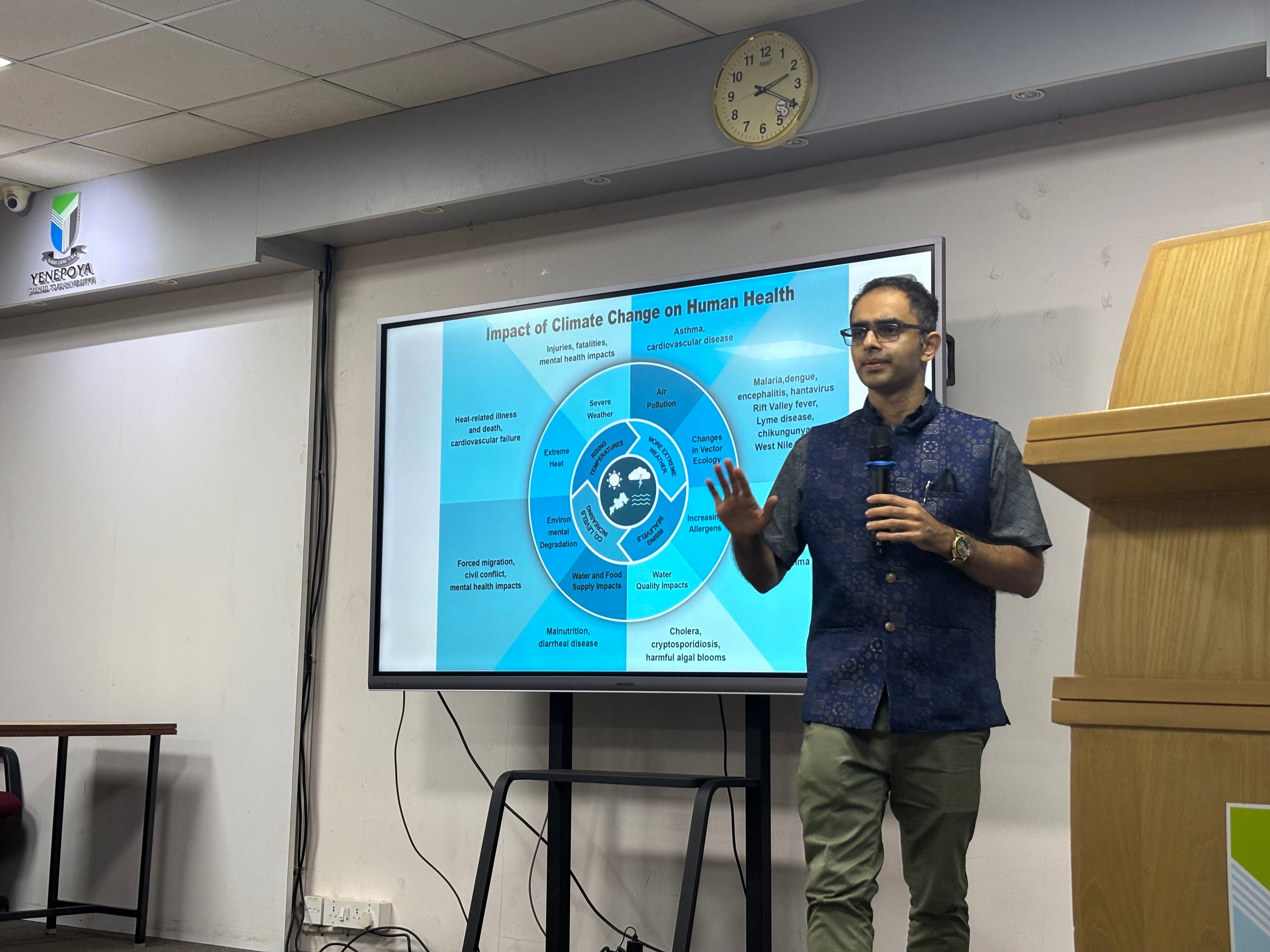
The workshop was primarily conducted by Dr. Edmond Fernandes, Consultant in Preventive Medicine and World Economic Forum Young Global Leader, along with Dr. Chetna Arora.
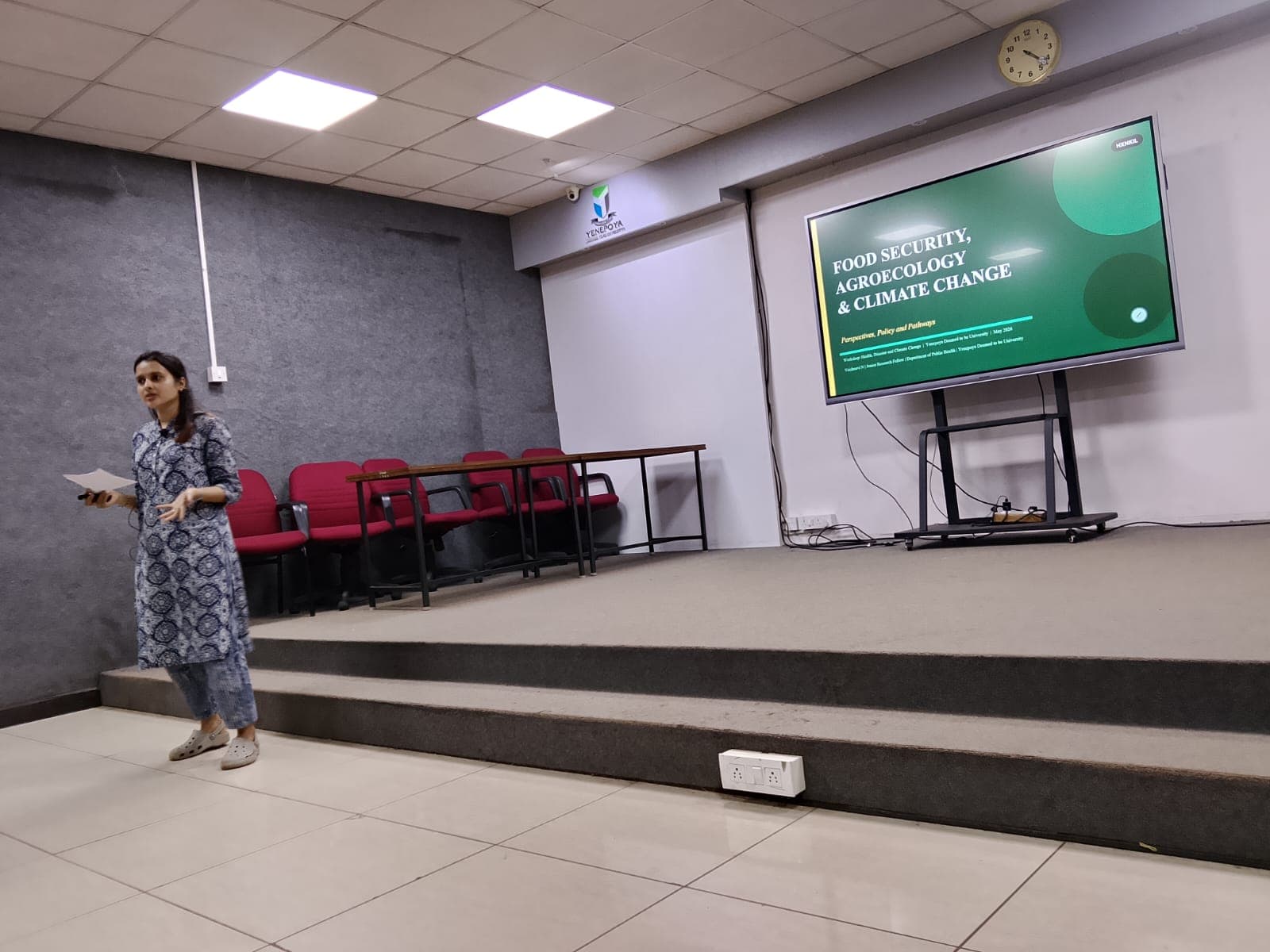
Guest sessions were delivered by Dr. Nikhil Paul, Assistant Professor of Emergency Medicine at Manipal Academy of Higher Education (MAHE); Srinivas Bishoyi, Junior Research Fellow at the Department of Public Health, Yenepoya Deemed to be University; and Vaishnavi N., Junior Research Fellow at the same department.
The sessions focused on emerging global health challenges, disaster management frameworks, climate policies, and strengthening healthcare systems to respond effectively to crises.
Participants trained in disaster response and health resilience
A total of 38 participants attended the workshop and underwent training aimed at improving competencies in disaster preparedness, emergency response systems, climate adaptation policies, and sectoral convergence in healthcare delivery.
Organisers stated that the programme aimed to equip healthcare professionals with practical knowledge and interdisciplinary approaches required to strengthen resilience within public health systems.
The workshop also highlighted the growing importance of integrating climate considerations into healthcare planning and policy implementation.
Experts stressed that increasing climate-related disasters and global health emergencies require coordinated efforts between healthcare institutions, policymakers, and community stakeholders to ensure sustainable and resilient health systems.
Officials from the Department of Public Health noted that such initiatives are essential in preparing healthcare professionals to address future public health emergencies and environmental health challenges effectively.
The workshop concluded with interactive discussions, collaborative learning sessions, and exchanges on policy pathways for strengthening climate-responsive healthcare systems.