







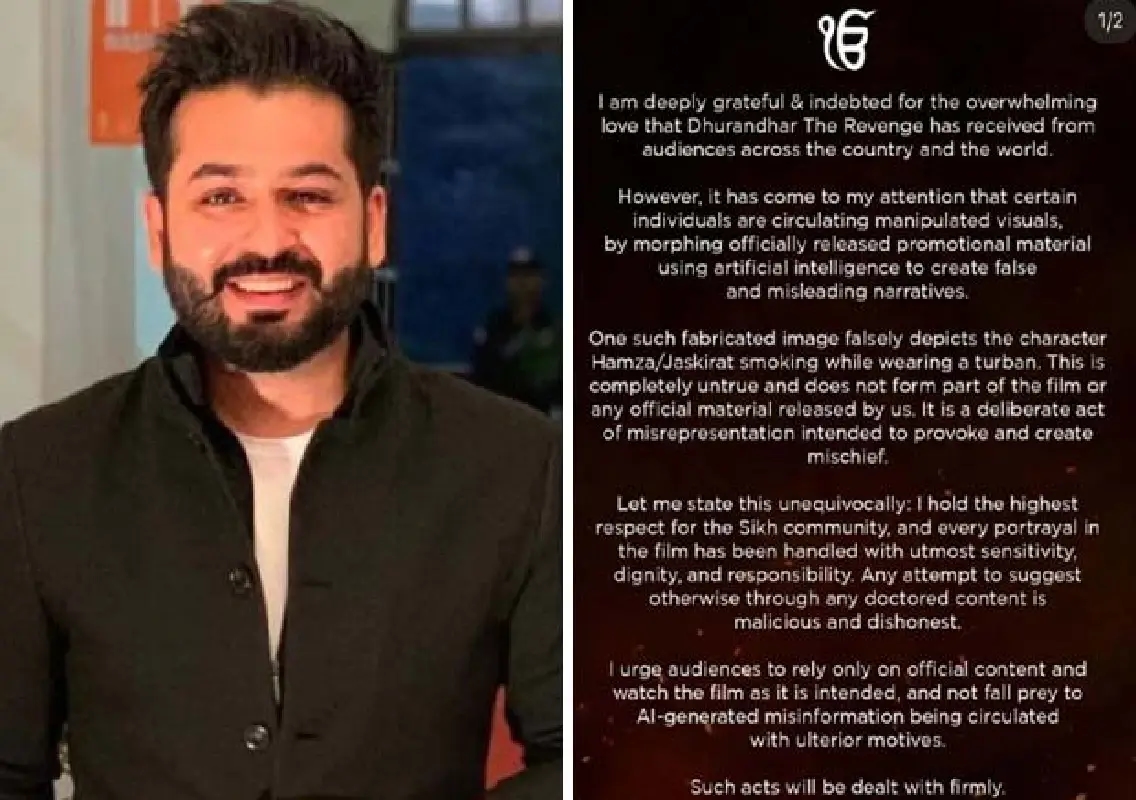


Mumbai: Filmmaker Aditya Dhar has issued a strong clarification addressing the circulation of AI-manipulated visuals related to his film Dhurandhar: The Revenge. Taking to Instagram, the director warned audiences against misleading content being spread online using altered promotional material.
The statement comes at a time when concerns are growing within the film industry over the misuse of artificial intelligence to distort visuals and misrepresent narratives.
Director calls visuals ‘malicious and misleading’
In his message, Aditya Dhar expressed gratitude for the response the film has received but raised serious concerns about fabricated images circulating on social media.
“I am deeply grateful for the overwhelming love the film has received,” he said, while cautioning that certain visuals being shared online are not authentic and have been deliberately manipulated.
He described such content as “malicious and misleading,” emphasising that it misrepresents both the film and its intent.
Controversial image clarified
Highlighting a specific instance, Dhar referred to a viral image that falsely depicts a character—Hamza/Jaskirat—smoking while wearing a turban. He categorically denied its authenticity.
According to him, the image is not part of the film or any official promotional material and has been created to provoke and mislead audiences.
“This is completely untrue and a deliberate act of misrepresentation intended to create mischief,” he clarified.
Emphasis on cultural sensitivity
Dhar also underlined his respect for the Sikh community, stating that all portrayals in the film have been handled with sensitivity and responsibility.
He reiterated that the film does not include any content that disrespects cultural or religious sentiments and urged viewers not to believe unverified visuals circulating online.
Appeal to audiences
The director appealed to audiences to rely only on official sources and verified promotional material related to Dhurandhar: The Revenge. He encouraged viewers to watch the film in its intended form rather than forming opinions based on manipulated content.
“I urge audiences to trust only official content and not fall prey to AI-generated misinformation,” he stated.
He also warned that those responsible for spreading such fabricated content would face consequences, indicating that the issue is being taken seriously.
Growing concern over AI misuse in cinema
The incident highlights a broader issue facing the entertainment industry—the increasing misuse of artificial intelligence to alter images, videos, and promotional content.
With AI tools becoming more accessible, filmmakers and studios are facing challenges in controlling misinformation and protecting the integrity of their work. Industry experts have pointed out that such incidents can damage reputations, spark unnecessary controversies, and mislead audiences.
This case adds to a growing list of instances where AI-generated or doctored content has created confusion or backlash around films and public figures.
Conclusion
Aditya Dhar’s clarification serves as a reminder of the importance of verifying information in the digital age. As AI-generated content becomes more sophisticated, audiences are increasingly required to distinguish between authentic and manipulated media.
By addressing the issue promptly, the filmmaker has attempted to safeguard the film’s image while urging viewers to rely on credible sources. The development also underscores the need for greater awareness and accountability in the use of emerging technologies in the entertainment space.