







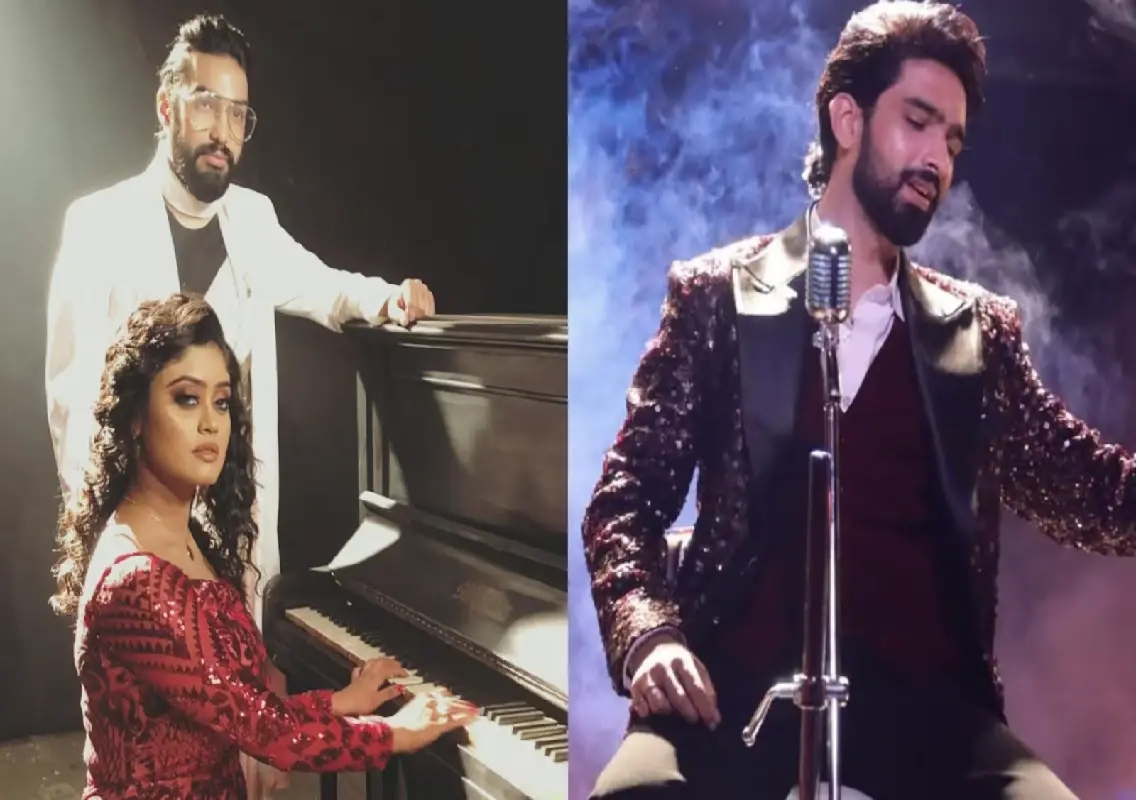


New Delhi: The ongoing public feud between music composer Amaal Mallik and popular composer duo Sachet–Parampara has escalated further, with Amaal firmly rejecting allegations that he wrongfully claimed credit for the hit song Bekhayali from filmmaker Sandeep Reddy Vanga’s 2019 film Kabir Singh.
Amaal breaks silence on allegations
Reacting to the allegations in an interview with Zoom, Amaal Mallik asserted that he has never taken credit for work that does not belong to him. Responding to the accusations levelled by Sachet–Parampara, the composer said he was willing to face criticism but would not compromise on the truth.
“I’ll take the bullet but speak the truth. If someone wants to malign my name within the industry, which they do, if someone wants to say through interviews, ‘ki usne bhi remix kiya toh kiya’. Kaise kiya voh bhi aap dekho,” Amaal said, hinting at what he described as selective targeting and misrepresentation of facts.
‘I have always given due credit’
Amaal stressed that he has consistently ensured proper attribution in his work, whether original compositions or recreated tracks. He said he has never claimed ownership of songs he did not create.
“Kisika credit khaya? Nahi. Kabhi bola ki yeh gaana mera hai ya bola ki recreate nahi kiya? People put their names on others’ songs and say ‘maine banaya’. Never done that,” he said.
The composer further argued that none of the original creators of songs he has recreated have publicly accused him of destroying or misrepresenting their work. “Has any composer whose song I have recreated woken up and said he has destroyed my song? Never. You go and see what has happened before,” he added.
Questioning public handling of dispute
Amaal also questioned why the issue was being played out on social media rather than being addressed through formal channels. According to him, airing grievances online without legal follow-up undermines the seriousness of such claims.
“They never say this on my face because half of them are afraid of me, and that is the truth. They will never come and talk to me. They will say it on Instagram and not do a court case,” he said.
He challenged his critics to pursue legal action if they believed their work had been misused. “If anyone has a problem, go to the court straight up. Do a case of defamation if you feel I have copied your music,” Amaal stated.
Origins of the Bekhayali controversy
The dispute dates back to July, when Amaal Mallik, during an interview with podcaster and television host Siddharth Kannan, alleged that Bekhayali was derived from musical references he had shared earlier. Amaal claimed that he had sent reference compositions related to Bekhayali via WhatsApp, which were later broken down into elements and used to create the final song that appeared in Kabir Singh.
During the same interaction, Amaal had also criticised music label T-Series, accusing it of perpetuating industry politics that, according to him, favour select artists. His remarks triggered widespread debate within the Hindi film music industry and among fans, given the massive popularity of Bekhayali, which went on to become one of the biggest chartbusters of the year.
Sachet–Parampara’s response
In December, Sachet–Parampara addressed Amaal’s claims through a statement on Instagram. The duo rejected the allegations and said Amaal believed such situations arose because certain artists were “favourites” of music labels.
Responding specifically to the WhatsApp reference claim, Sachet–Parampara described themselves as outsiders in the industry and questioned why they would be given preferential treatment by any major label. They also demanded a public apology from Amaal Mallik, stating that the allegations had unfairly tarnished their reputation and undermined their creative work.
Industry reactions and wider debate
The public back-and-forth has sparked renewed discussion about originality, credit and power dynamics within the Hindi film music industry. While some artists and fans have supported Amaal’s call for transparency and formal dispute resolution, others have criticised the airing of internal industry conflicts on social media platforms.
Music industry observers note that disputes over credits and inspirations are not uncommon, but they are usually resolved behind closed doors or through contractual and legal mechanisms. The Bekhayali controversy, however, has stood out due to its highly public nature and the stature of those involved.
Impact on professional relationships
Despite the controversy, both Amaal Mallik and Sachet–Parampara continue to be among the most sought-after composers in Bollywood, with multiple projects lined up. However, insiders suggest that such public disputes can strain professional relationships and create long-term divisions within the industry.
So far, neither side has indicated any intention to pursue legal action, even as the war of words continues through interviews and social media posts.
Conclusion
With Amaal Mallik standing firm on his claim that he has never taken undue credit and Sachet–Parampara demanding accountability and an apology, the Bekhayali credit row shows no signs of immediate resolution. Whether the matter moves from social media to the courtroom remains to be seen, but for now, the dispute has once again highlighted the complex and often contentious nature of creative credit in the Indian music industry.