


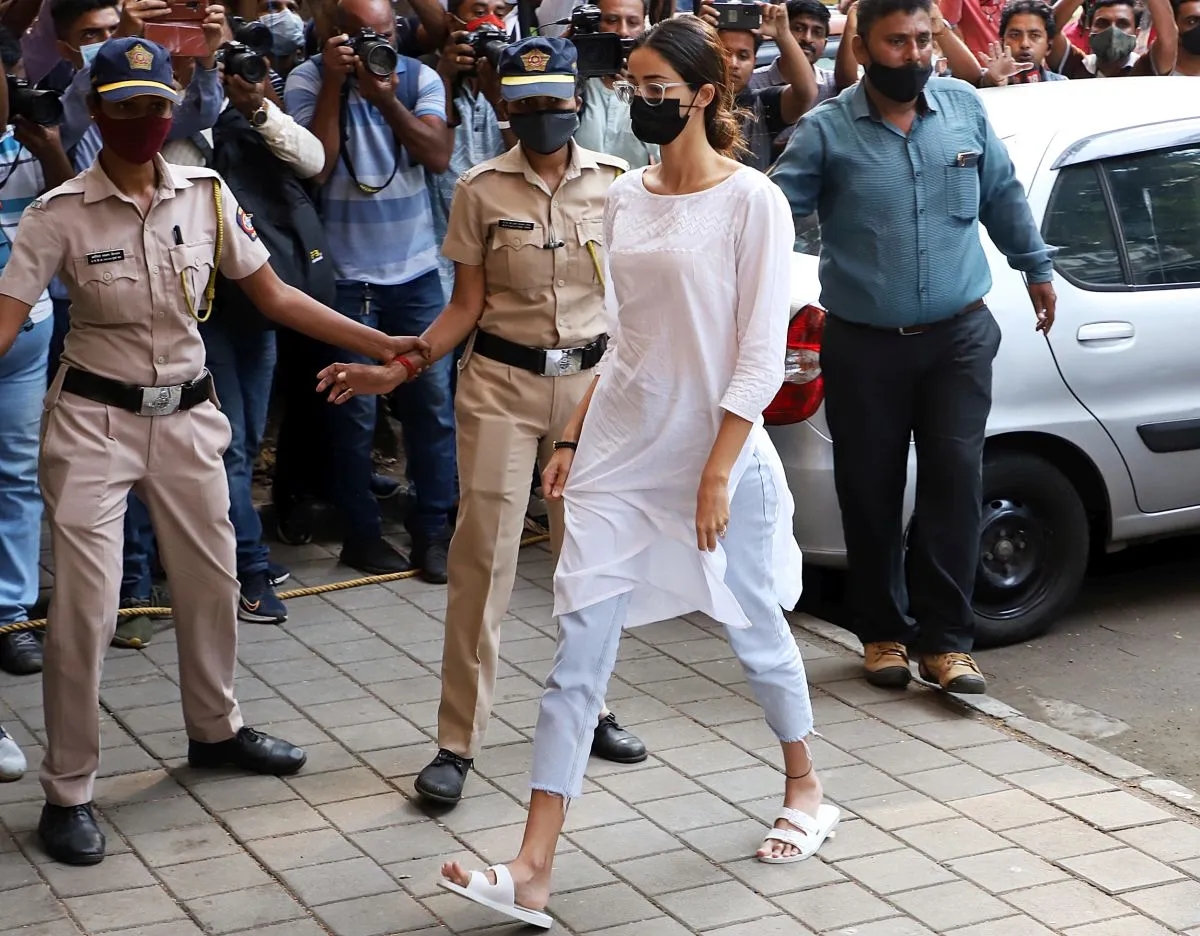


Mumbai: Actor Ananya Panday has received interim relief from the Bombay High Court in her plea seeking protection of her personality rights and privacy. The court has ordered the removal of objectionable online content that allegedly uses her identity and personal attributes without authorisation.
The Call Me Bae actor had approached the court claiming that several businesses and individuals were using her photographs and creating artificial intelligence-generated images and videos featuring her likeness without her consent. She alleged that such material was being used to promote products and services, raising concerns over the unauthorised commercial exploitation of her identity.
Justice Madhav Jamdar issued an ad-interim order after considering the material placed before the court. The judge observed that the content appeared to violate Panday’s rights to privacy, publicity and moral protection, as well as her right to live with dignity.
The order provides relief to the actor as she seeks to prevent the circulation and commercial use of objectionable material associated with her identity. The case also brings renewed attention to the legal challenges faced by public figures as AI tools make it easier to create realistic images, videos and other digital material without their permission.
Ananya Panday seeks protection against AI-generated content
Panday’s legal action centres on the alleged unauthorised use of her photographs and likeness by businesses and other entities. According to her plea, several products and commercial interests were using her identity without obtaining her consent.
The concerns include photographs being used in promotional material and AI-generated images and videos that depict the actor. Such content can create the impression that a celebrity is associated with a particular product, service or campaign even when no such endorsement has been given.
For actors and other public figures, the unauthorised use of their identity can have implications beyond personal privacy. Their names, faces, voices and public images are closely connected to their professional reputation and commercial work. The use of these attributes without permission can also create confusion among audiences about whether a celebrity has endorsed a product or participated in a promotion.
Panday therefore sought judicial protection against the misuse of her personality rights. The Bombay High Court’s interim intervention addresses the objectionable material identified in the proceedings.
The court’s observations on privacy, publicity and dignity are significant to the actor’s plea. However, the order is an ad-interim measure and should not be treated as a final determination of every legal issue raised in the case.
Bombay High Court recognises privacy and publicity concerns
While issuing the ad-interim order, Justice Madhav Jamdar noted that the content appeared to infringe Panday’s rights to privacy, publicity and moral protection.
The right to privacy concerns an individual’s ability to protect personal information and aspects of their identity from unauthorised exposure or use. Publicity rights, meanwhile, relate to the commercial value associated with a person’s identity, including their name, image and other recognisable attributes.
For celebrities, these interests can overlap. A photograph or digitally generated image may not merely reveal personal information but could also be used to suggest an association with a business or product. When such material is created or circulated without permission, it can raise questions about consent, reputation and commercial exploitation.
The court also referred to the actor’s right to live with dignity. This is particularly relevant in cases involving objectionable or manipulated digital material, where a person’s image may be altered or presented in a manner they have not authorised.
The order offers interim protection while the legal proceedings continue. The precise scope of the directions will depend on the terms of the court’s order and the material identified in the case.
Ananya Panday has spoken about celebrities’ right to privacy
Panday has previously spoken about the need to treat celebrities as individuals who deserve privacy and basic human consideration.
In an earlier interview, she highlighted how people sometimes forget that the celebrities they photograph or cover are also human beings. She stressed the importance of maintaining basic standards of decency and humanity while interacting with public figures.
“I think humanity is very important. People often forget that the people you are covering are also humans. So, I think if you just have that in your head you have followed like basic levels of decency and humanity, it’s important to do that,” she said.
Her earlier remarks reflect the broader debate surrounding the boundaries between public interest, celebrity coverage and personal privacy. While actors are public figures whose professional lives attract considerable attention, that visibility does not automatically mean that every use of their photographs or identity is authorised.
The growing use of AI-generated material has added another dimension to the debate. Digital tools can produce images and videos that resemble real people, sometimes making it difficult for audiences to distinguish between genuine material and manipulated content.
Several Bollywood celebrities have approached courts
Panday is among several prominent Indian entertainment personalities who have sought legal protection against the unauthorised use of their names, images, voices and other identifiable attributes.
Actors and public figures, including Salman Khan, Anil Kapoor, Jackie Shroff, Aishwarya Rai Bachchan, Abhishek Bachchan and Nagarjuna, have approached courts in cases involving personality rights. Filmmaker Karan Johar and singers Arijit Singh and Kumar Sanu have also sought legal remedies concerning the use of their identities.
The concerns raised in such cases include fake endorsements, impersonation, manipulated photographs, unauthorised merchandise and AI-generated content. The increasing availability of digital tools has made it easier to reproduce a celebrity’s likeness or voice without direct involvement from the individual concerned.
Some cases have also involved fake social media accounts and content designed to mislead audiences into believing that a public figure has made a statement or endorsed a product.
These legal actions have brought personality rights into sharper focus in India. Courts have been asked to consider how the law should protect an individual’s identity while also taking into account legitimate forms of public expression.
Kriti Sanon receives partial interim protection from Delhi High Court
Panday’s case follows recent legal proceedings involving actor Kriti Sanon, who approached the Delhi High Court seeking protection against the misuse of her personality rights.
In an order dated October 29, 2026, Justice Purushaindra Kumar Kaurav granted Sanon partial interim protection against sexually explicit deepfake content, altered images, fake accounts impersonating her and AI chatbots posing as the actor.
The court directed online platforms to remove specified URLs and ordered authorities to block certain websites. It also restrained other defendants from sharing fake or sexually explicit material involving Sanon.
The order further required platforms to provide user details and IP records within three weeks, as specified by the court.
However, the Delhi High Court declined to grant a blanket restriction on all uses of the actor’s identity. It observed that personality rights could not be treated as one single legal claim and that the protection required consideration of the specific nature of the content and alleged infringement.
The court also clarified that its directions would not prevent legitimate news reports, reviews, criticism, satire, parody or fan-created content.
This distinction is important because personality rights cases involve balancing an individual’s right to protect their identity against the public’s interest in receiving information and expressing opinions. A legal restriction aimed at preventing impersonation or harmful deepfakes does not necessarily extend to every reference to a celebrity.
AI deepfakes raise fresh legal challenges
The cases involving Panday and Sanon underline the growing challenges associated with AI-generated images, videos and impersonation. Technology that can reproduce a person’s face or voice can be used for creative purposes, but it can also enable misleading endorsements, fabricated statements and objectionable material.
For celebrities, the unauthorised use of their likeness can affect both their personal dignity and professional reputation. It may also create financial consequences if businesses use their identities to promote products without permission.
The legal response requires courts to examine the nature of the material, the manner in which it is used and the rights involved. At the same time, restrictions must be framed carefully so that legitimate reporting, criticism and creative expression are not unnecessarily affected.
The Bombay High Court’s interim order gives Panday relief in her effort to stop the circulation of objectionable content allegedly misusing her identity. Together with the recent proceedings involving Sanon, the case adds to the growing body of legal disputes over celebrity privacy and personality rights in the age of artificial intelligence.