







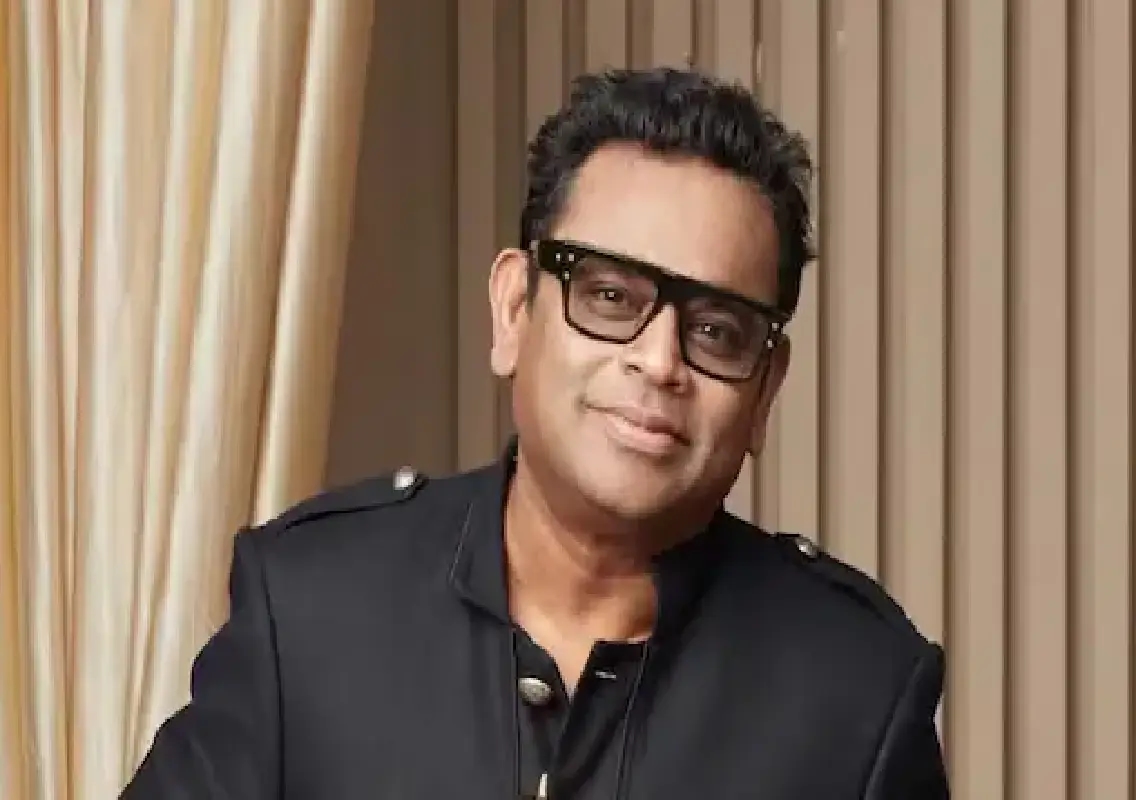


Mumbai: Music composer A.R. Rahman has addressed the controversy surrounding his recent remarks about reduced work in the Hindi film industry, saying his comments were misunderstood and that messages often get “corrupted” as they travel across platforms and cultures. The Oscar-winning composer, who had earlier spoken about a “power shift” and hinted at a possible “communal” factor behind fewer Hindi film assignments over the past eight years, has now clarified his intent in a public conversation.
Rahman said he never meant to hurt anyone and reiterated that his relationship with Indian cinema and culture remains deeply respectful and rooted in unity through music.
What triggered the controversy
The debate began after Rahman, in a recent international media interaction, said that work from the Hindi film industry had slowed for him over the last several years. He attributed this to changing power dynamics in the industry and added that it “might have been a communal thing,” while also noting that such behaviour was never directly visible to him.
He described situations where projects discussed with him did not materialise, allegedly due to decisions taken at other levels. The remarks quickly went viral, triggering intense discussion on social media, with some users interpreting them as an allegation of bias within sections of the industry.
Clips and quotes from the interview circulated widely, often without full context, adding to the controversy.
Rahman speaks about ‘corrupted messages’
Days after the debate escalated, Rahman addressed the issue during an appearance on The Great Indian Kapil Show, where he appeared alongside the cast of the upcoming film Gandhi Talks, including Vijay Sethupathi, Aditi Rao Hydari and Siddharth.
Speaking on the show, Rahman said the episode itself was an example of how information changes form as it spreads.
“This is a good exercise to see how information gets misunderstood. Different states, different cultures. The problem with the world is this: how messages get corrupted on the way,” he said.
His remarks suggested that selective interpretation and fragmented circulation of statements contributed to the backlash.
Earlier Instagram clarification
Before the television appearance, Rahman had already issued a clarification through a video message on Instagram on January 18, seeking to calm the situation and explain his position.
In the video, he emphasised that music has always been his way of connecting with people and cultures, and that he holds India as his inspiration and home.
“Dear friends, music has always been my way of connecting, celebrating, and honoring a culture. India is my inspiration, my teacher, and my home. I understand that intentions can sometimes be misunderstood, but my purpose has always been to uplift, honor, and serve through music. I have never wished to cause pain, and I hope my sincerity is felt,” Rahman said.
The message was widely shared by fans and members of the film fraternity, with many expressing support for the composer.
His comments on industry power shift
In his earlier remarks, Rahman had said that decision-making structures in parts of the industry have changed, with more non-creative stakeholders influencing hiring and project choices. He suggested that composers are sometimes replaced or sidelined after initial discussions due to label or production-level preferences.
He indicated that he took such developments in stride, adding that it gave him more time with family and space to pursue diverse projects across languages and formats.
Rahman did not name any individuals or companies and did not make any formal allegation, but the phrasing of his comments drew sharp reactions online.
Continued work across industries
Despite the discussion around reduced Hindi film assignments, Rahman has remained consistently active across multiple Indian film industries. In recent years, he has composed for several major Tamil films including Ponniyin Selvan: I and II, Pathu Thala, Maamannan, Ayalaan, Lal Salaam, Raayan, Kadhalikka Neramillai and Thug Life.
His Hindi projects in recent years include Shikara, 99 Songs, Dil Bechara, Mimi, Atrangi Re, Heropanti 2 and Tere Ishk Mein. He has also worked in Malayalam cinema with Malayankunju and continues to collaborate on international and independent music projects.
Industry observers note that Rahman has increasingly diversified into global collaborations, live performances, technology-driven music formats and mentoring platforms.
Conclusion
Rahman’s latest clarification underlines his attempt to defuse controversy and reframe the discussion around communication gaps rather than intent. By stressing that his words were misread and amplified without full context, the composer has sought to bring the focus back to his core message — unity through music and creative expression beyond divisions.