







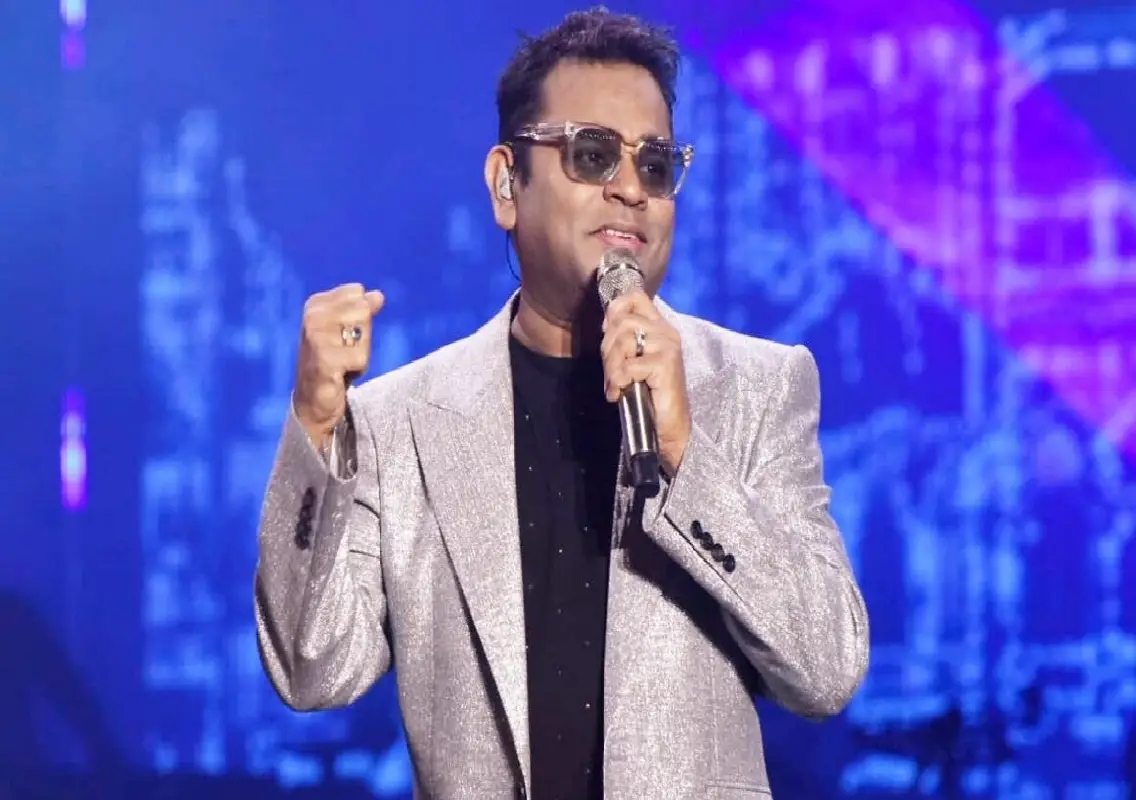


Mumbai: AR Rahman remains the most transformative force Hindi cinema has seen since Amitabh Bachchan, not as an on-screen presence but as the sonic architect who rewired the DNA of Indian film music. Yet, as the composer speaks of shrinking opportunities in Bollywood, the uncomfortable reality is that his fading influence is as much self-inflicted as it is industry-driven.
The Bachchan parallel that once felt inevitable
From 1992 to about 2015, AR Rahman’s name on a Hindi film album carried the same inevitability Amitabh Bachchan’s casting did in the 1970s. It was a seal of cultural dominance. The music would define its era, the songs would outlive the film, and the project itself would enjoy a built-in advantage at the box office.
Rahman did not merely compose hit songs; he shaped emotional memory. His albums soundtracked first loves, heartbreaks, road trips, political awakenings and private grief. From Roja to Bombay, Dil Se to Lagaan, Rang De Basanti to Rockstar, each release felt like an event. Radio stations, weddings, taxis and college hostels all surrendered to his melodies. Hindi cinema, for two decades, bent to his rhythm.
Before Rahman, Bollywood music had hit a creative wall
The magnitude of Rahman’s impact becomes clearer when placed against what came before. By the late 1980s and early 1990s, Hindi film music had slipped into predictability and plagiarism. Lifting tunes from global pop, regional cinema and even Indian classical maestros had become routine.
Ironically, Bollywood hit creative rock bottom by plagiarising Rahman himself. For The Gentleman, Anu Malik lifted from Rahman’s Tamil compositions and infamously dismissed plagiarism allegations with the line: “Why can’t two great men think alike?”
Roja changed everything. The sonic palette expanded overnight. Technology, texture, silence, rhythm and emotion were reimagined. Rahman didn’t just modernise Hindi film music; he globalised it without diluting its soul.
The quiet exit without leaving
And then, something strange happened. Rahman did not leave Bollywood, but he stopped inhabiting it fully.
Post-Tamasha (2015), his Hindi output slipped into alarming inconsistency. Mohenjo Daro was widely panned—generic, dated and lifeless. OK Jaanu, a reworking of OK Kanmani, was pleasant but instantly forgettable. The sense of urgency, obsession and invention was missing.
Every legend faces a phase when even loyalists disengage. For Amitabh Bachchan, that low point came with films like Lal Baadshah. For Rahman’s most devoted followers, the rupture arrived after Tamasha.
The Heropanti 2 moment
If there was a symbolic breaking point, it was Heropanti 2. The album was chaotic, uninspired and impossible to defend—even for die-hard fans. Tracks like Dafa Kar and Jalwanuma felt less like Rahman compositions and more like contractual obligations.
Amar Singh Chamkila offered brief redemption, reminding listeners of his depth and sensitivity. But beyond that, the question becomes unavoidable: which post-2015 Rahman Bollywood album truly lingers in public memory? For most listeners, the answer is silence.
Blaming the system is not enough
In a recent interview, Rahman spoke about corporate dominance, multi-composer albums, outsider status and subtle communal bias shaping Bollywood’s decision-making. These are real, damaging systemic issues. Hindi film music has undeniably been hollowed out by algorithm-chasing, playlist engineering and risk-averse executives.
But structural decay does not fully explain Rahman’s creative drift. It does not explain Heropanti 2. It does not explain why 99 Songs, his deeply personal passion project, failed both commercially and emotionally. At some point, responsibility shifts inward.
The southern contrast tells its own story
What weakens the “Bollywood sidelined me” argument is the continued excellence of Rahman’s work in the South. Ponniyin Selvan I & II (2022–23) were towering achievements—epic, layered and instantly iconic. The difference is not talent; it is context.
In the South, Rahman collaborates with directors who challenge him and treat music as narrative spine, not background filler. In Bollywood, he has too often accepted lazy paycheque projects or indulgent vanity ventures.
The Rahman of the 1990s and 2000s worked relentlessly—five to six films a year, obsessive collaboration with lyricists, constant experimentation, zero complacency. The Rahman of the last decade has been selective to the point of near-invisibility in Hindi cinema, and frequently disengaged when present.
A decline that mirrors Bollywood itself
Rahman’s retreat mirrors Bollywood’s broader creative collapse. Once a factory of timeless melodies, Hindi cinema today produces fragmented noise—multi-composer albums, viral snippets instead of complete songs, remixes without soul. Corporate logic has replaced creative instinct.
But the tragedy is not that Bollywood rejected Rahman. It is that Rahman half-rejected Bollywood first—and then blamed the industry for moving on.
The comeback Hindi cinema still needs
Amitabh Bachchan survived irrelevance by reinvention, transforming from angry young man to elder statesman. Rahman possesses the genius to do the same. But it will require shedding half-measures, rejecting uninspired projects and composing with the hunger that once made every album feel like destiny.
Bollywood’s loss is undeniable, but Rahman’s redemption lies entirely in his hands. The Mozart of Madras does not need sympathy—he needs fire. O Nadaan Parinde, ghar aaja. Hindi cinema is still waiting for its anthems.