







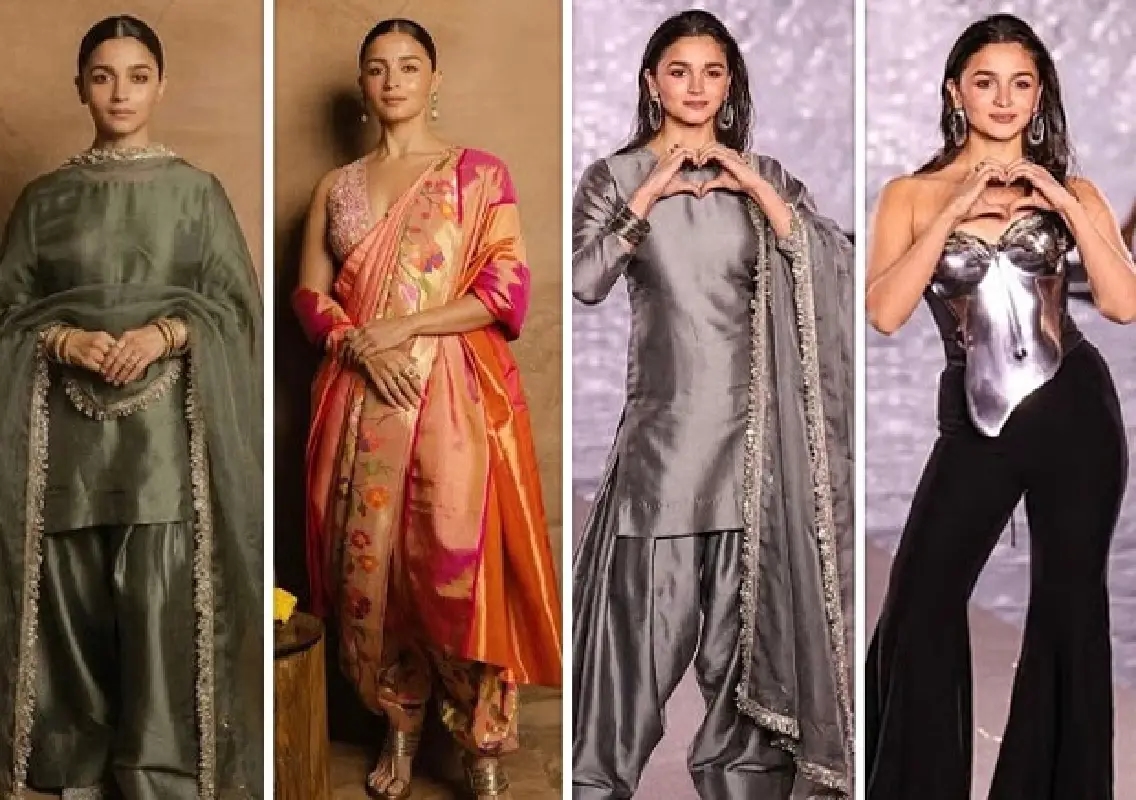


A Pakistan-based fashion label, Wajayesha Official, has come under online scrutiny after sharing AI-edited images of Alia Bhatt to promote its latest collection, raising concerns over consent and digital manipulation.
The controversy erupted after the brand posted visuals appearing to show the actor wearing outfits from its “Pure Sheesha Silk” collection. The caption implied that Bhatt admired the designs and encouraged customers to purchase them.
AI-generated images spark questions
Soon after the post went live, social media users began pointing out inconsistencies in the images. While initially convincing, many noted that the visuals appeared to be AI-generated edits, with the actor’s face and upper body digitally superimposed onto the outfits.
The use of such altered images without clear disclosure led to confusion among viewers, with many questioning whether the actor had authorised the campaign.
Online backlash intensifies
The post quickly attracted criticism, with users raising concerns about potential misuse of a celebrity’s likeness.
Several comments questioned whether Bhatt was aware of the promotion, while others warned the brand about possible legal consequences. One user suggested that using a celebrity’s image without permission could lead to legal action.
In response, the brand appeared to take a lighthearted approach, replying to criticism by encouraging users to make the post go viral so the actor would notice it. The label also dismissed concerns about legal repercussions in its replies.
No response from actor yet
As of now, Alia Bhatt has not issued any public statement regarding the incident or the alleged use of AI-generated images.
Industry observers note that such cases highlight the growing challenges posed by artificial intelligence in advertising and branding, especially when it involves public figures.
Legal and ethical concerns
The episode has reignited debate around the ethical use of AI in marketing. Experts point out that using a celebrity’s likeness without consent—whether through traditional editing or AI—can raise serious legal and reputational issues.
In India and several other jurisdictions, unauthorised commercial use of a person’s image may violate personality rights and lead to legal consequences.
Growing scrutiny of AI in advertising
As AI tools become more advanced and accessible, concerns about deepfakes and manipulated content are increasing. The lack of clear disclosure in such campaigns can mislead consumers and damage trust.
The incident also reflects a broader trend where brands experiment with viral marketing tactics, sometimes pushing ethical boundaries to gain visibility online.
Conclusion
The controversy surrounding the use of AI-generated images of Alia Bhatt underscores the need for clearer guidelines and accountability in digital advertising. As technology continues to evolve, both brands and platforms may face increasing pressure to ensure transparency and respect for individual rights.