







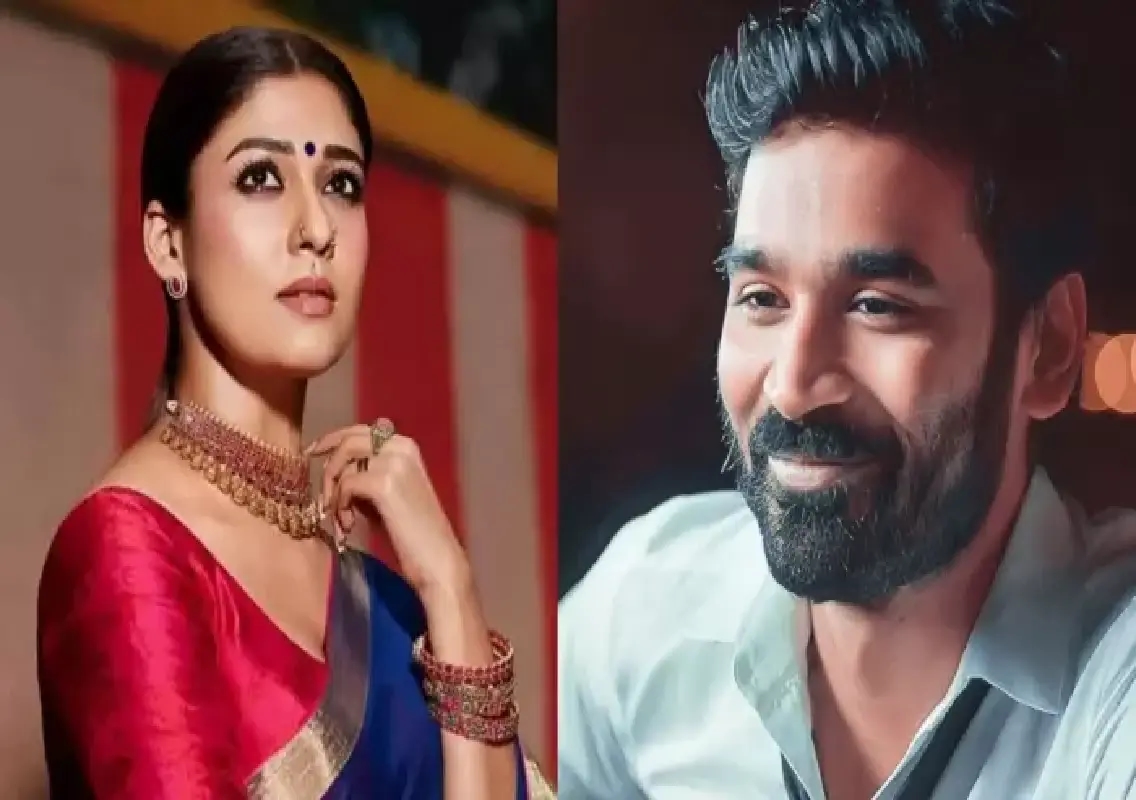


Chennai: A legal dispute between two of Tamil cinema’s biggest names, actor-producer Dhanush and actress Nayanthara, has taken a decisive turn with the Madras High Court ruling in favour of Dhanush. The court has dismissed a petition filed by Netflix seeking to quash a copyright lawsuit initiated by Dhanush over the alleged unauthorised use of footage from his production Naanum Rowdy Dhaan in Nayanthara’s documentary Nayanthara: Beyond The Fairytale.
The verdict comes amid an already heated public exchange between the two actors, with Nayanthara previously accusing Dhanush of harassment and unfair conduct through an open letter that went viral across social media.
The core of the legal dispute
The dispute centres around a three-second behind-the-scenes (BTS) clip from the 2015 Tamil film Naanum Rowdy Dhaan, which was produced by Dhanush under his banner Wunderbar Films. The clip was used in Nayanthara’s Netflix documentary without formal written permission from the producer, according to Dhanush’s legal claim.
Dhanush filed a copyright infringement suit against Nayanthara, her husband and filmmaker Vignesh Shivan, and the makers of the documentary, seeking damages amounting to ₹10 crore. He alleged that the footage was used despite repeated warnings and without securing the necessary rights.
Netflix, which streamed the documentary, approached the Madras High Court seeking dismissal of the suit, arguing that the clip fell under fair use and was not commercially exploitative. However, the court rejected this plea, allowing Dhanush’s lawsuit to proceed, effectively marking a legal win for the actor-producer at this stage.
Court rejects Netflix’s plea
According to reports, the Madras High Court held that copyright ownership cannot be overridden merely on the basis of minimal duration of use, especially when the producer has explicitly denied permission. The court reportedly noted that questions of fair use and intent require detailed examination during trial and cannot be grounds for dismissal at the preliminary stage.
With the dismissal of Netflix’s petition, Dhanush’s copyright infringement case remains valid, and further legal proceedings are expected in the coming months.
Nayanthara’s open letter that sparked outrage
The legal battle gained massive public attention in November 2024 when Nayanthara released a three-page open letter on social media, directly addressing Dhanush. In the letter, the actress accused him of deliberately delaying permissions for over two years, ultimately forcing her team to rely on a short BTS clip to avoid stalling the documentary indefinitely.
Nayanthara claimed that she had made repeated attempts to secure approval to use footage from Naanum Rowdy Dhaan, a film that played a significant role in her career and personal life, as it was during the making of the film that her relationship with Vignesh Shivan began.
She further alleged that Dhanush’s legal notice came as a shock after prolonged indecision and accused him of using his powerful position in the industry to intimidate her. The actress stated that the ₹10 crore lawsuit not only affected her financially but also emotionally impacted the entire team behind the documentary.
Allegations of power imbalance
In her letter, Nayanthara highlighted the struggles faced by actresses in the film industry and urged senior male actors and producers to show empathy and fairness. She argued that her decision to speak publicly was driven by years of silence and the need to stand up for herself.
The letter triggered widespread debate within the film fraternity and among fans, with opinions sharply divided. While some supported Nayanthara for calling out alleged unfair treatment, others defended Dhanush’s legal right as a producer to protect his intellectual property.
Nayanthara explains her decision to speak out
In a subsequent interview with The Hollywood Reporter, Nayanthara elaborated on why she chose to make the dispute public. She said that her open letter stemmed from courage rather than anger and maintained that she had nothing to fear as she was speaking her truth.
The actress added that remaining silent would have meant accepting what she believed was unjust treatment, and that speaking up was necessary not just for herself but for others in similar positions within the industry.
Industry impact and broader implications
The case has once again brought the issue of copyright, fair use, and creative ownership in Indian cinema into sharp focus. With the increasing number of documentaries, biopics, and OTT-driven content, legal clarity on the use of film clips, BTS footage, and archival material has become more critical than ever.
Legal experts note that the outcome of this case could set an important precedent for future disputes involving filmmakers, streaming platforms, and artists, particularly in situations where personal narratives intersect with copyrighted material.
Conclusion
While the Madras High Court’s dismissal of Netflix’s plea marks a significant legal victory for Dhanush, the larger dispute is far from over. As the case proceeds, it is expected to continue drawing attention not only for the celebrity names involved but also for the wider questions it raises about creative rights, consent, and power dynamics in the Indian film industry.