


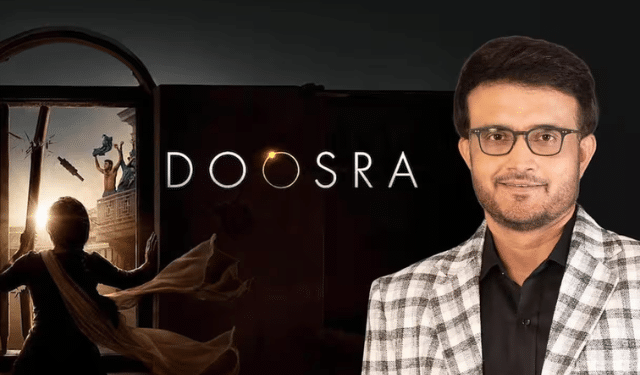


Mumbai: Director Abhinay Deo has clarified that Doosra, which released in theatres on October 23, is not a biopic of former India cricket captain Sourav Ganguly. Instead, the film tells the fictional story of a young woman whose personal struggles are shaped by the inspiration she draws from one of Indian cricket’s most memorable moments.
Starring Plabita Borthakur, Doosra draws inspiration from Ganguly’s iconic shirt-waving celebration at Lord’s in 2002, following India’s historic NatWest Series final victory over England. The film explores how that moment of sporting defiance can inspire an ordinary person to challenge social expectations and fight for her individuality.
In an very recent exclusive interview with News channel, Deo discussed the idea behind the film, its nearly seven-year journey to theatres and the distinction between Doosra and the upcoming Ganguly biopic, Dada, starring Rajkummar Rao.
His comments come amid a legal dispute involving Ganguly and production house Luv Films, who approached the Delhi High Court alleging violations of the former cricketer’s personality rights and seeking to stop the film’s release. The controversy has brought renewed attention to the film’s use of a historic sporting moment associated with Ganguly.
Deo, however, maintained that the two films tell fundamentally different stories.
“Because the feature film talks about Sourav’s life, and this talks about Tara’s life,” he said, explaining why Doosra should not be viewed as a competing biographical project.
Doosra explores the impact of Ganguly’s iconic celebration
The central idea behind Doosra is not to recount Ganguly’s life or career but to examine how his celebrated moment at Lord’s affected people watching it from different backgrounds.
On July 13, 2002, India defeated England in the NatWest Series final at Lord’s after chasing down a target of 326. Ganguly’s decision to wave his shirt from the Lord’s balcony became one of the most recognisable images in Indian cricket, symbolising confidence, defiance and a new sense of belief in the team.
For the makers of Doosra, the moment offered a starting point for a story about inspiration and personal transformation.
The film follows Tara, played by Plabita Borthakur, a young woman from a small town in Rajasthan who struggles with questions surrounding her individuality, sexuality and relationships. The narrative examines how a moment of sporting achievement can encourage someone to confront the limitations imposed by society and take control of their own life.
Deo explained that the filmmakers believed a simple recreation of Ganguly’s celebration would not be enough to tell the story they wanted to explore.
Working with writer Agnello Oswin Dias, the director developed a fictional narrative that shifts the focus from the cricketer to the people inspired by his actions.
“We believed that it would be an incomplete story if you only talk about what that moment was. It’s very important to talk about the effect that moment [had] on a normal person. Like it affected Rohan,” Deo said.
The film therefore uses a real sporting event as the backdrop for a fictional character’s journey, rather than attempting to recreate the life of the former India captain.
How the idea for Doosra originated
Deo revealed that the concept came from Chicago-based producers Rohan Sachde and Mahesh Sachde.
Rohan, who played cricket in Australia during the late 1990s, had experienced racism and prejudice during his playing days. Watching India’s victory in the 2002 NatWest Series final became a turning point in how he viewed his own identity and potential.
The confidence displayed by the Indian team, particularly Ganguly’s celebrated reaction after the win, left a lasting impression on him.
According to Deo, the victory made Rohan believe that people who had faced discrimination could challenge assumptions about their abilities and stand up for themselves.
“He ended up seeing the 2002 match on television and got highly inspired after that moment. And he said, you know what, we are as good, if not better. So this is what the brief given to me was,” the director recalled.
That experience became the foundation for the film’s broader theme: the ability of an iconic public moment to influence an individual’s private life.
The filmmakers subsequently developed Tara’s fictional story to explore the same idea in a different social context. Her struggles are not presented as a retelling of Ganguly’s experiences, but as an independent narrative about identity, self-expression and the courage to challenge expectations.
Did the makers approach Sourav Ganguly?
The use of footage featuring Ganguly has also become an important part of the controversy surrounding Doosra.
During the interview, Deo was asked whether the filmmakers had approached the former cricketer before including archival footage associated with him.
The director said the team had reached out to Ganguly and informed him about the project. He also recalled speaking to the former India captain while working on an advertisement with him.
“Of course, we did reach out. And we did mention that this is what we are doing. And he was very happy,” Deo said.
The director also explained that the team had acquired the archival footage used in the film and had worked to secure the necessary rights.
According to Deo, sourcing and clearing the material was a significant part of the production process. The film relies on a historic sporting moment as an essential narrative element, making the use of archival footage particularly important to its storytelling.
However, the director’s account of the outreach does not by itself settle the legal dispute. The allegations concerning personality rights and the use of Ganguly’s identity remain separate from the filmmakers’ explanation of how the project was developed.
Why did Doosra take nearly seven years to release?
One of the biggest challenges for the makers was bringing Doosra to theatres after a lengthy production and post-production journey.
The film was shot in Rajasthan during 2018 and 2019. Editing took place between 2019 and 2020, with the team initially hoping to release it towards the end of 2020.
However, the COVID-19 pandemic disrupted the original plans, while the process of locating, reviewing and legally clearing archival footage added further delays.
Deo described the task of working through the material as particularly demanding.
“We had something like 3,000 hours of footage that we had to sieve. It was a nightmare,” he said.
The editing process involved people working across India, New York and Chicago, adding logistical complexity to an already extensive undertaking.
The need to identify relevant footage and ensure that the necessary rights were in place also meant that the film could not move towards release as quickly as the team had initially anticipated.
These delays ultimately stretched the project’s journey to theatres to nearly seven years, separating the film’s original production period from its eventual release on October 23, 2026.
Doosra and Dada tell different stories
The release of Doosra has also drawn comparisons with Dada, the separate biographical film about Ganguly starring Rajkummar Rao.
With both projects connected to the former cricketer’s legacy, questions have emerged about the timing of their releases and whether the two films might overlap in their treatment of his life.
Deo dismissed suggestions that Doosra was timed to coincide with the other project. He reiterated that the films have different narrative objectives.
While Dada is intended to tell Ganguly’s life story, Doosra uses one defining moment from his career to examine the experiences of a fictional character.
The distinction is central to Deo’s explanation of the film. Ganguly’s celebration provides the inspiration and historical context, but Tara remains the protagonist whose personal journey drives the narrative.
By focusing on the wider impact of a sporting moment, the filmmakers have attempted to explore how public figures can influence people whose lives unfold far away from the stadium.
Plabita Borthakur leads the fictional narrative
Plabita Borthakur plays Tara, the central character whose struggles with individuality, sexuality and relationships form the emotional core of Doosra.
The film’s premise allows the makers to examine social expectations and personal freedom through the perspective of a woman from a small town in Rajasthan.
Rather than placing Ganguly at the centre of the narrative, the story explores how his confidence and defiance become a source of inspiration for someone dealing with her own challenges.
This approach also gives the film room to develop a fictional story independent of the former cricketer’s biography.
The result is a drama that connects a landmark moment in Indian cricket with themes of identity, prejudice and self-belief. The filmmakers’ intention, as explained by Deo, is to show how the impact of a sporting achievement can extend beyond the game itself.
A cricketing moment becomes a story of personal freedom
For Deo, Doosra is ultimately about the ripple effect of a moment that captured the imagination of millions of cricket fans.
Ganguly’s shirt-waving celebration became a symbol of India’s confidence after a memorable victory. The film takes that symbolism and examines what it might mean to an individual confronting personal and social barriers.
The distinction between a biopic and a fictional drama is therefore at the heart of the director’s defence of the project. While the film draws on a real event, its central character and her experiences are fictional.
Released in theatres on October 23, Doosra has arrived amid a wider discussion about the use of public figures’ identities and historical moments in cinema. The ongoing legal dispute involving Ganguly and Luv Films adds another dimension to that conversation.
Deo’s position remains that the film is about Tara’s life, not Ganguly’s. By focusing on the impact of his celebrated moment rather than recounting his personal journey, the director says the film tells a different story from the forthcoming biopic Dada.