


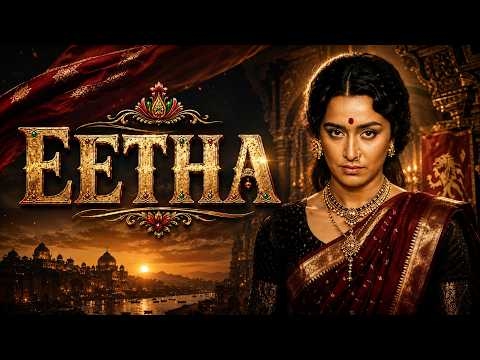


Mumbai: The trailer of Eetha, starring Shraddha Kapoor as legendary Marathi folk performer Vithabai Bhau Mang Narayangaonkar, was unveiled on October 30, offering a glimpse into the extraordinary life of one of Maharashtra’s most celebrated Tamasha artists. Directed by Laxman Utekar, the biographical drama traces Vithabai’s journey through folk theatre, her passion for performance and the personal struggles behind her artistic success.
The film marks Shraddha Kapoor’s return to the big screen after the success of Stree 2. It is scheduled to release in theatres on December 4, 2026.
Set against the cultural landscape of Maharashtra, the trailer features elaborate stage performances, colourful costumes, energetic dance sequences and music inspired by the state’s folk traditions. It also hints at the challenges Vithabai faced while building her career in a demanding performance culture.
The film brings together a prominent cast, including Randeep Hooda and Mohammed Zeeshan Ayyub in pivotal roles. With music by Ajay-Atul and a story centred on a celebrated folk artist, Eetha aims to introduce a wider audience to Vithabai’s contribution to Maharashtra’s cultural heritage.
Shraddha Kapoor transforms into Vithabai in Eetha
Shraddha Kapoor takes on the role of Vithabai Bhau Mang Narayangaonkar, an influential performer associated with Maharashtra’s Lavani and Tamasha traditions.
The trailer presents her character as a woman whose life revolves around dance, music and the stage. From energetic performances before audiences to moments reflecting her personal difficulties, the promotional video offers glimpses of different phases of Vithabai’s life.
The actor’s appearance in the film has attracted attention because the role requires her to portray a performer whose identity was closely connected with traditional folk theatre. The elaborate costumes, expressive movements and performance sequences form an important part of the trailer.
Rather than presenting Vithabai only through her achievements, the film also appears to explore the sacrifices and struggles that accompanied her journey. Her relationship with the stage and determination to continue performing are central to the story’s presentation.
For Shraddha, Eetha represents a departure from the horror-comedy space associated with Stree 2. The biographical drama places her in a period setting rooted in Maharashtra’s folk culture and performance traditions.
What the Eetha trailer reveals about Maharashtra’s folk traditions
The trailer places Lavani and Tamasha at the centre of its visual and musical presentation. Both are important elements of Maharashtra’s cultural identity, with a long history of entertaining audiences through music, dance and storytelling.
Lavani is known for its energetic movements, rhythmic music and expressive performance style. Traditionally accompanied by the dholki, the dance form combines music, poetry, gestures and storytelling. Its themes have ranged from romance and social commentary to everyday experiences.
Tamasha, meanwhile, is a traditional folk theatre form that brings together dance, music, humour, dialogue and dramatic storytelling. Performances often feature Lavani as a major attraction, along with other theatrical elements.
Vithabai became an important figure in this performance tradition through her work on stage. Her career reflected the demanding nature of folk entertainment, where performers often travelled and worked extensively to reach audiences.
By recreating these performance settings, Eetha brings attention to an art form that has played a significant role in Maharashtra’s cultural history.
Randeep Hooda, Mohammed Zeeshan Ayyub join the cast
Apart from Shraddha Kapoor, the film features Randeep Hooda and Mohammed Zeeshan Ayyub in important roles.
Hooda’s first-look poster introduced him as Anna Sawant Merchant, who is portrayed as Vithabai’s husband. His character is expected to form part of the personal narrative surrounding the folk performer.
Mohammed Zeeshan Ayyub also features in a pivotal role. The supporting cast includes Anant Joshi, Siddharth Jadhav, Akshara Singh and Ulka Gupta, among others.
The ensemble brings together actors from different film and television backgrounds, adding to the film’s portrayal of the cultural and social environment in which Vithabai lived and performed.
The screenplay has been written by Kshitij Patwardhan. The film is directed by Laxman Utekar, who has previously worked on projects rooted in Indian social and cultural settings.
Ajay-Atul compose music for the folk drama
Music is expected to play a central role in Eetha, given that the story revolves around a performer whose career was built around Lavani and Tamasha.
The film’s music has been composed by Ajay-Atul, the popular music director duo known for their work in Marathi and Hindi cinema. Their involvement is significant for a film that relies heavily on traditional music and stage performances to recreate Vithabai’s world.
The trailer features musical elements and dance sequences that reflect the energy of Maharashtra’s folk performance traditions. The soundtrack is expected to help establish the atmosphere of the period and bring the stage performances to life.
Akash Agrawal has handled the cinematography, capturing the elaborate stage settings, costumes and performance sequences shown in the promotional video.
Eetha is produced by Dinesh Vijan, Laxman Utekar and Karishma Sharma under the banners of Maddock Films and Kathputli Creations.
Eetha release date changed to December 4
The film was initially scheduled for an August 2026 release but was subsequently postponed. It is now set to arrive in theatres on December 4, 2026.
The October 30 trailer launch gives audiences their first extended look at the film’s approach to Vithabai’s life and legacy.
The delay has moved the release into the final month of the year, with the film now positioned as a December theatrical release. The makers have not indicated any further change to the announced date in the information accompanying the trailer launch.
The film’s promotional campaign is expected to draw attention to both Shraddha’s transformation and the cultural history behind the story.
Who was Vithabai, the Tamasha Samradni?
Vithabai Bhau Mang Narayangaonkar, who lived from 1935 to 2002, was a celebrated performer in Maharashtra’s folk theatre tradition. Born in Pandharpur, she began performing at a young age and went on to establish herself as one of the most recognised names in Tamasha.
She eventually earned the title of ‘Tamasha Samradni’, which translates to the ‘Empress of Tamasha’. The title reflected the recognition she received for her contribution to the traditional performance form.
Her career was closely connected with the Lavani and Tamasha traditions, both of which require considerable skill in music, movement, expression and stage performance. Through her work, she helped preserve and popularise these forms of folk entertainment.
Her journey was not without difficulties. Folk performers often worked in challenging circumstances, travelling between locations and performing before different audiences. Vithabai’s career reflected the dedication required to sustain a life in traditional theatre.
Her legacy remains significant in discussions about Maharashtra’s folk arts, particularly the contribution of women performers to the state’s cultural history.
A biographical drama centred on an influential folk artist
With Eetha, the makers are bringing Vithabai’s story to mainstream cinema through a combination of biographical storytelling, music and stage performances.
The trailer introduces a narrative that goes beyond the spectacle of Lavani and Tamasha, drawing attention to the person behind the performances. Shraddha Kapoor’s portrayal places the celebrated folk artist at the centre of the film, while the supporting cast and musical team contribute to its recreation of Maharashtra’s cultural setting.
The December 4 release will give audiences an opportunity to see how the film presents Vithabai’s artistic journey and personal life. More importantly, Eetha brings renewed attention to an artist whose contribution helped keep Maharashtra’s folk performance traditions alive.