







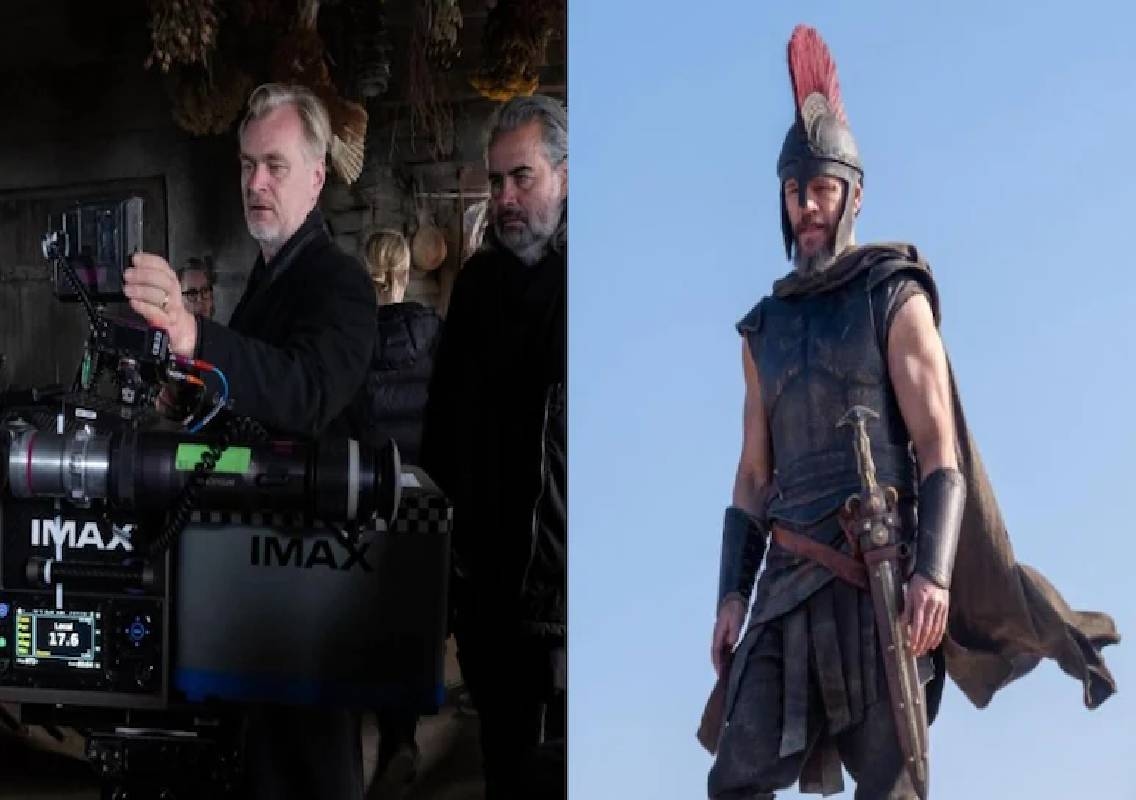


Christopher Nolan has never been one to think small, but The Odyssey may be his most ambitious project yet. With a reported budget of $250 million, filming spread across five countries over 91 days, and an ensemble cast led by Matt Damon, Tom Holland, Anne Hathaway and Zendaya, the filmmaker has attempted to recreate Homer’s legendary tale on an unprecedented scale.
Ahead of the film’s India release on July 17, the makers unveiled a behind-the-scenes documentary, The Odyssey: The Making of an Epic, which premiered on The Peacock Hub on JioHotstar on July 14. The 22-minute featurette offers an inside look at the enormous effort behind bringing the Bronze Age world of Ancient Greece to the big screen.
Based on Homer’s epic poem, The Odyssey follows Greek hero Odysseus (Matt Damon) as he embarks on a perilous 10-year journey home after the Trojan War, battling mythical creatures, hostile gods and unimaginable challenges while his wife and son fight to protect their kingdom.
Here are the biggest takeaways from the making of Christopher Nolan’s latest cinematic spectacle.
A vision bigger than any previous Nolan film
Throughout the documentary, Nolan explains that his goal was not merely to adapt a classic story but to create an experience unlike anything audiences had seen before.
Despite directing visually groundbreaking films such as The Dark Knight, Inception and Interstellar, Nolan believed The Odyssey demanded an entirely new filmmaking approach. Every set, location, costume and action sequence was designed from scratch to avoid familiar visual references.
Cast members including Tom Holland, Anne Hathaway, Matt Damon and Zendaya repeatedly describe Nolan as a filmmaker driven by relentless ambition and extraordinary attention to detail.
According to Damon, Nolan even warned the cast before production began that this would be the most physically and creatively demanding project of their careers.
Finding realism in mythology
One of Nolan’s biggest creative challenges was grounding an ancient mythological story in reality.
The filmmaker explains that audiences connect most strongly with believable emotions, even in fantastical worlds. That philosophy shaped every aspect of The Odyssey, from practical effects to production design.
Rather than relying heavily on computer-generated imagery, the production team focused on building authentic environments and filming on real locations wherever possible.
Visual effects teams, stunt coordinators and production designers worked together to recreate the world of Ancient Greece with realism while preserving the grandeur of Homer’s epic.
Filmed across five countries in just 91 days
The production travelled extensively during principal photography, filming in:
- Morocco
- Italy
- Greece
- Iceland
- Scotland
Nolan has long preferred shooting on real locations, believing constant movement gives energy to both the cast and the storytelling.
The documentary showcases breathtaking landscapes ranging from the coastlines of Greece and Iceland to Morocco’s historic settlements and Scotland’s dramatic scenery.
One sequence reveals the recreation of an ancient town at Aït Benhaddou in Morocco, while another highlights filming near Greece’s famed Nestor’s Cave, adding authenticity to the ancient setting.
Robert Pattinson jokingly recalls being told he had to hike nearly 45 minutes in full costume and sandals to reach certain filming locations.
The Trojan Horse became a production masterpiece
Among the film’s most remarkable practical creations is the legendary Trojan Horse.
Instead of relying on digital imagery, the production team constructed a towering structure approximately 35 feet tall and weighing nearly 8,000 pounds.
Designers wanted it to function exactly as historians imagined it might have during the Trojan War.
The horse featured:
- No wheels
- Human-powered movement
- Fibreglass panels over detailed structural supports
- Functional interiors for filming
The production team even transported the enormous structure from the shoreline into the recreated city before filming its dramatic entrance into the Temple of Athena.
Authentic costumes and practical action
Costume designers focused on creating garments that reflected the Bronze Age rather than modern interpretations of ancient Greece.
Every costume incorporated layers of texture, handcrafted detailing and weathering to make characters appear lived-in rather than theatrical.
The same commitment to realism extended to the action sequences.
Large wooden ships were constructed for sea battles, and actors underwent rowing training before filming.
The documentary reveals that performers learned to operate vessels weighing nearly 100 tonnes, transforming initially difficult rowing drills into coordinated routines over weeks of practice.
Rather than replacing these scenes with digital effects, Nolan insisted on capturing as much action practically as possible.
Creating the sound of Ancient Greece
Music also became an important part of building the film’s unique identity.
Composer Ludwig Göransson researched instruments believed to have existed during Ancient Greece, including the aulos, one of the era’s most recognisable wind instruments.
Alongside orchestral arrangements, the music team experimented with unconventional recording techniques such as striking walls, stone surfaces and metal railings to produce distinctive textures.
The objective, according to Nolan, was to create a score that sounded ancient while remaining emotionally accessible to modern audiences.
A return to classic large-scale filmmaking
The documentary concludes by highlighting the enormous collaborative effort behind The Odyssey.
Thousands of cast and crew members, practical sets, real-world locations and months of meticulous craftsmanship came together to create what Nolan describes as a celebration of traditional blockbuster filmmaking.
With its combination of practical effects, global locations and historical detail, The Odyssey aims to deliver an immersive cinematic experience rarely attempted in modern Hollywood.
The film is scheduled to release in theatres across India on July 17, with expectations running high following the documentary’s release.
Conclusion
Christopher Nolan’s The Odyssey represents one of the most ambitious productions of his career. From filming across five countries and building massive practical sets to researching Bronze Age music and constructing a full-scale Trojan Horse, the film reflects Nolan’s commitment to immersive, practical filmmaking. As audiences prepare for its theatrical release, The Odyssey promises to be a cinematic event that blends mythology, history and spectacle on an extraordinary scale.