







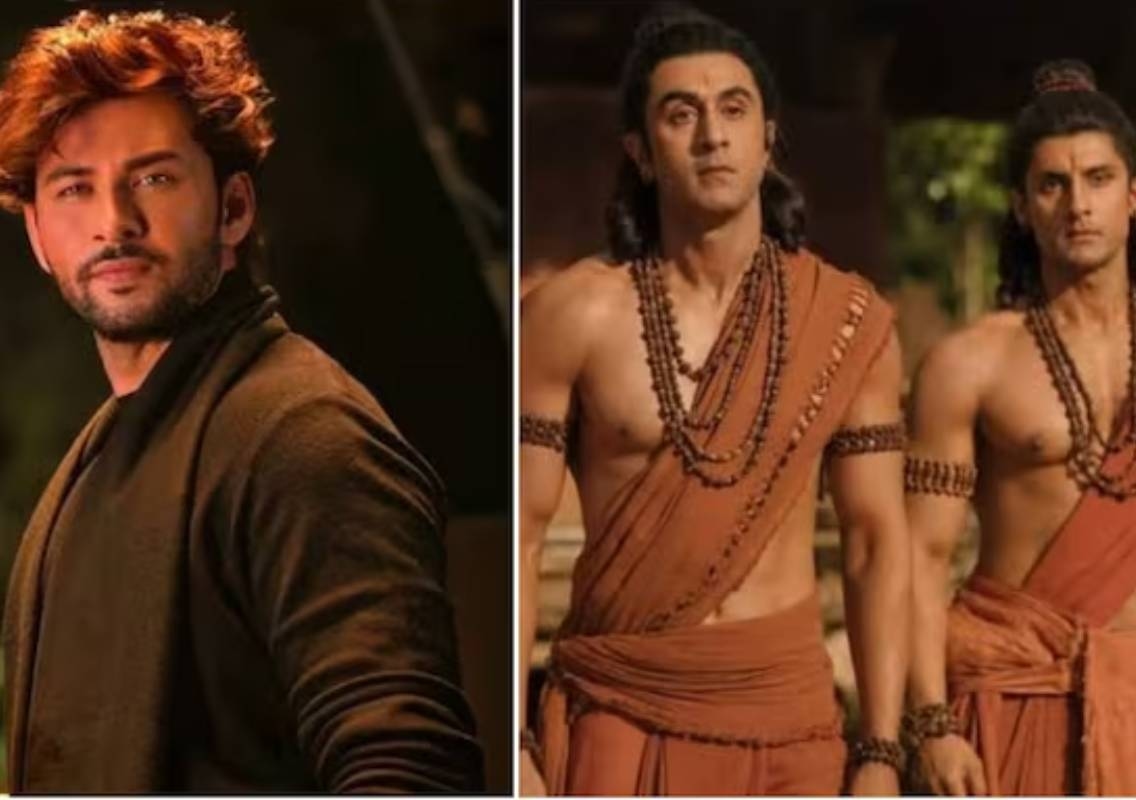


Mumbai: Kangana Ranaut has sparked fresh speculation on social media after sharing a cryptic post criticising the way modern Indian films portray Hindu deities and characters from religious epics. Although the actor-politician did not name any film or filmmaker, her remarks have been linked by social media users to Nitesh Tiwari’s upcoming Ramayana, starring Ranbir Kapoor and Sai Pallavi.
Ranaut shared an older clip from a devotional film on Instagram and contrasted the way religious figures were depicted in earlier cinema with contemporary productions that have access to advanced visual effects and technology.
“The more access people have to technology, the more they are regressing,” Ranaut wrote in her post.
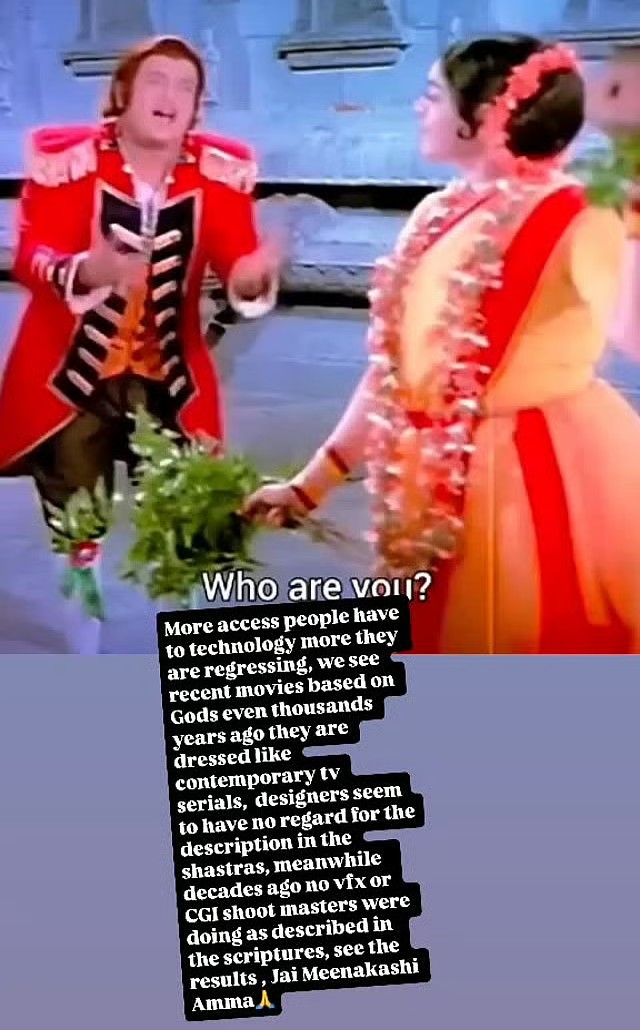
She went on to criticise what she described as contemporary approaches to costume design in films based on Hindu mythology, arguing that filmmakers in the past followed descriptions found in scriptures more closely.
Kangana criticises modern depictions of gods
In her social media post, Ranaut said recent films based on Hindu gods sometimes depict characters in costumes resembling those seen in contemporary television serials.
She also questioned whether designers were paying sufficient attention to descriptions contained in the shastras while creating costumes for mythological characters.
Ranaut contrasted these productions with films made decades ago, when filmmakers did not have access to modern VFX or CGI technology but, according to her, still attempted to follow descriptions from religious texts.
Her comments did not mention Ramayana, Ranbir Kapoor, Sai Pallavi, Nitesh Tiwari or Namit Malhotra by name.
That omission has left the connection to the upcoming film in the realm of social media speculation rather than a confirmed statement about the project.
Why fans linked the post to Ramayana
Ranaut’s remarks appeared at a time when discussions about the visual presentation of Ramayana have been circulating online.
The film, directed by Nitesh Tiwari and produced by Namit Malhotra, has attracted considerable attention because of its scale, cast and interpretation of characters from the Sanskrit epic.
Images and early glimpses associated with the production, including those featuring Sai Pallavi as Sita and Lara Dutta as Kaikeyi, have generated mixed reactions online.
Some social media users have questioned the costume choices and visual styling, with criticism focusing on whether certain designs appear too contemporary for a story rooted in ancient Indian tradition.
Ranaut’s reference to mythological characters being “dressed like contemporary TV serials” consequently prompted some users to connect her comments with the ongoing discussion around Ramayana.
However, there is no direct confirmation from Ranaut that the post was aimed at Tiwari’s film.
Film’s costume approach has also drawn attention
The visual treatment of Ramayana has been closely watched since the project was announced.
The production has been positioned as a large-scale cinematic adaptation intended to present the epic to audiences in India and overseas. Its makers have been working on costumes, production design, visual effects and other elements intended to give the story a large-screen treatment.
The film’s costume designers have also discussed their approach, indicating that the designs combine cinematic requirements with Indian cultural references rather than attempting to present the film as a strict historical reconstruction.
That distinction has become part of the wider online discussion, particularly because audiences have strong expectations about how characters such as Rama, Sita, Ravana and Kaikeyi should appear.
The debate illustrates the challenge involved in adapting a revered epic for contemporary cinema, where filmmakers have to balance traditional descriptions with the visual language of a modern theatrical production.
Kangana has previously spoken about Ramayana casting
The latest post has attracted additional attention because Ranaut has previously expressed reservations about Ramayana.
She had earlier questioned the casting of Ranbir Kapoor as Lord Rama, making her disagreement with the choice public.
That previous criticism has led social media users to interpret her latest comments through the lens of her earlier remarks about the project.
Still, her latest post itself does not identify Ramayana as its subject. Any claim that she was specifically referring to the film therefore remains an interpretation by social media users.
Ranbir Kapoor leads star-studded cast
Ramayana is being developed as a two-part cinematic adaptation of the Indian epic.
Ranbir Kapoor plays Lord Rama, while Sai Pallavi portrays Sita. Kannada actor Yash plays Ravana, with Sunny Deol portraying Hanuman.
Ravie Dubey is part of the cast as Lakshmana, while veteran actor Arun Govil plays King Dasharatha.
The casting has generated significant interest because of the scale of the production and the prominence of its principal actors.
The project is backed by Namit Malhotra and is being mounted on a reported budget running into thousands of crores. Reports have placed the overall budget at more than Rs 4,000 crore, although such figures are generally reported estimates rather than independently audited production costs.
Ramayana targets Diwali 2026 release
The first part of the film is scheduled for a Diwali 2026 theatrical release.
The production is being positioned as an ambitious attempt to take the Ramayana story to a global audience, with extensive visual effects and international production capabilities forming a major part of its presentation.
As the release approaches, attention is likely to remain focused not only on the performances and visual effects but also on the way the filmmakers interpret the characters, costumes and cultural elements of the epic.
For now, however, Ranaut’s latest remarks remain a cryptic criticism rather than a direct statement about Ramayana. While social media users have drawn parallels between her comments and the film’s ongoing visual debate, she has not explicitly identified Tiwari’s project in the post.