







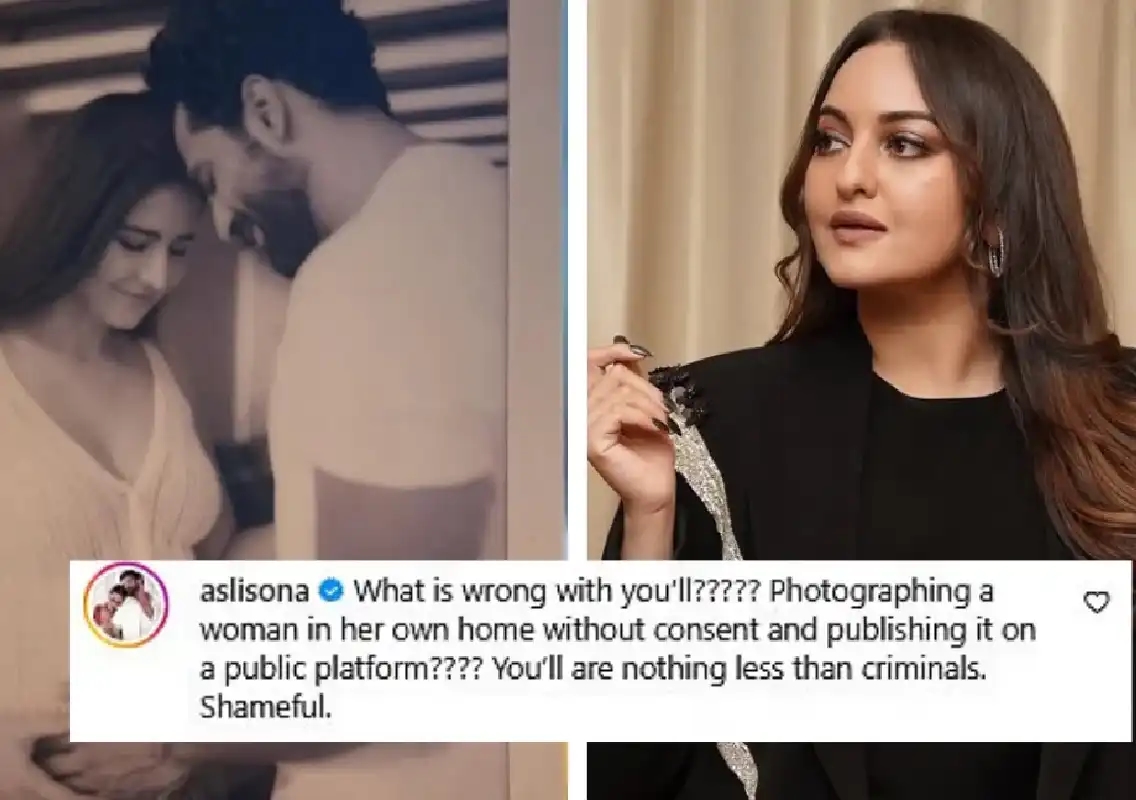


Mumbai: A wave of outrage has swept the internet following the emergence of private photographs of actress Katrina Kaif, who is expecting her first child with husband Vicky Kaushal. The images—reportedly taken from her balcony at her Mumbai residence without her permission—have touched off debate about privacy, consent and the treatment of pregnant women in the public eye.
Photographs shared without consent
The images show Katrina in a relaxed mode on her balcony, yet what has shocked many is the manner in which these photographs were obtained and shared. According to reports, the shots were taken without her knowledge, and soon found their way onto a public portal. The fact that she is pregnant has heightened sensitivity around the matter, with many users describing the episode as a “gross violation of privacy”.
Celebrity reactions and public backlash
The backlash gained momentum when actor Sonakshi Sinha took to social media, calling the act “shameful”. She emphasised that photographing a woman inside her own home without her consent crosses ethical and moral boundaries. Meanwhile, fans and netizens flooded social-media platforms, condemning the portal and urging stricter regulation of paparazzi behaviour and publishing standards.
Many posts read: “This is not reporting. It’s harassment,” and “Pregnancy is such a personal phase—give her the dignity she deserves.” Others asked: “What happened to basic decency?” The trending sentiment: even celebrities deserve safe, private spaces—especially during sensitive life moments such as impending motherhood.
Privacy, pregnancy and public life
The incident raises broader questions about the intersection of celebrity life, parenthood and media scrutiny. Being pregnant often places a public figure in an unusually exposed position—both celebrated and tightly observed. The sharing of unauthorised photographs of a pregnant woman in her private residence underscores how vulnerable such moments can become when boundaries collapse.
Legal experts say that though the photographs may not be illegal per se, they exacerbate moral concerns about consent and individual dignity. There are increasing calls for media platforms to adopt self-regulation regarding images of pregnant women and home environments.
What happens next
While Katrina and Vicky Kaushal have not publicly commented on the incident, the reaction from celebrities, fans and rights advocates suggests this episode may prompt renewed discussions about privacy laws, especially in India’s entertainment context. Media regulators and industry bodies may face pressure to revisit guidelines around capturing and publishing private imagery—especially when the subject is visibly in a unique life phase such as pregnancy.