







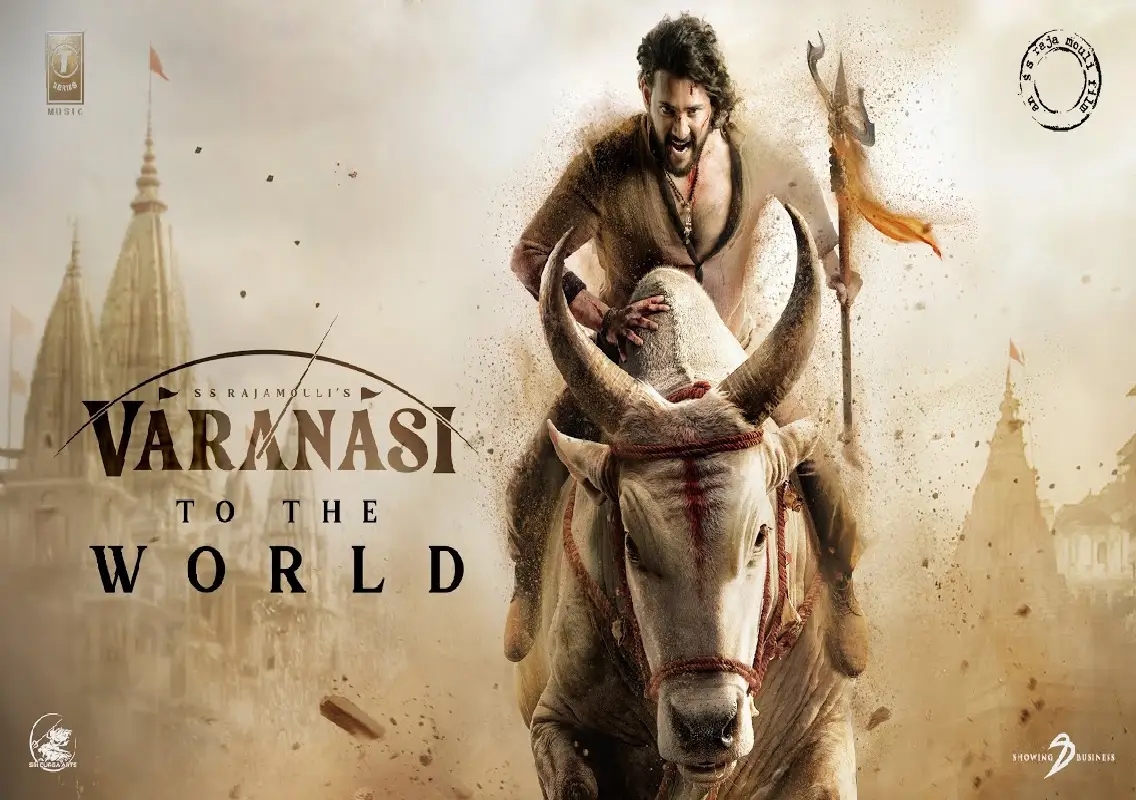


Hyderabad: Acclaimed filmmaker S. S. Rajamouli is reportedly set to release his ambitious upcoming project Varanasi in a two-part format, marking a significant creative and structural decision for what is expected to be one of the most expensive Indian films ever made.
The development comes amid evolving trends in Indian cinema, where large-scale narratives are increasingly being split into multiple parts to allow for more expansive storytelling.
Decision driven by scale and narrative depth
Sources close to the project indicate that the decision to divide Varanasi into two parts stems from the sheer scale and complexity of the story.
According to insiders, the film’s runtime was initially expected to exceed three hours. However, the makers felt that even an extended single film would not do justice to the depth and scope of the narrative.
By opting for a two-part format, the team aims to provide greater creative freedom without the constraints of runtime limitations. This approach will allow the story to unfold more organically, ensuring that key elements are not rushed or compromised.
Not a sequel, but one story in two parts
Industry sources have clarified that Varanasi is not being conceived as a sequel-based franchise. Instead, it will be a single, continuous narrative split into two instalments.
This distinction is important, as it differentiates the project from conventional film series where each part functions as a standalone story. In this case, both parts will collectively form one cohesive cinematic experience.
Influence of recent industry trends
The decision is also believed to be influenced by the success of recent multi-part films, including Dhurandhar: The Revenge, which demonstrated the viability of extended storytelling formats.
Filmmakers are increasingly recognising that splitting large narratives into multiple parts can enhance audience engagement while preserving storytelling integrity. This model has gained traction not just in Indian cinema but globally as well.
Rajamouli’s track record with grand cinema
S. S. Rajamouli is widely known for his expertise in handling large-scale cinematic projects with intricate narratives and high production values. His previous works have set benchmarks in terms of storytelling, visual effects, and box office performance.
Given his reputation, expectations are high for Varanasi, especially as it is being positioned as a landmark project in Indian cinema.
Growing trend of big-budget epics
The move reflects a broader trend in the film industry where big-budget epics are being designed with long-form storytelling in mind. This allows filmmakers to explore characters, themes, and plotlines in greater detail.
Such formats also offer commercial advantages, as multiple releases can sustain audience interest over a longer period while maximising revenue potential.
More details awaited
While the two-part release plan has generated excitement, official details regarding the film’s cast, shooting schedule, budget, and release timeline are yet to be announced.
The project is still under development, and further announcements are expected in the coming months.
Conclusion
The decision to present Varanasi in a two-part format underscores the growing ambition of Indian filmmakers to push narrative and technical boundaries. By embracing an extended storytelling structure, Rajamouli aims to deliver a cinematic experience that matches the scale of his vision.
If executed successfully, Varanasi could set new benchmarks for storytelling and production in Indian cinema, further cementing Rajamouli’s position as one of the industry’s leading directors.