







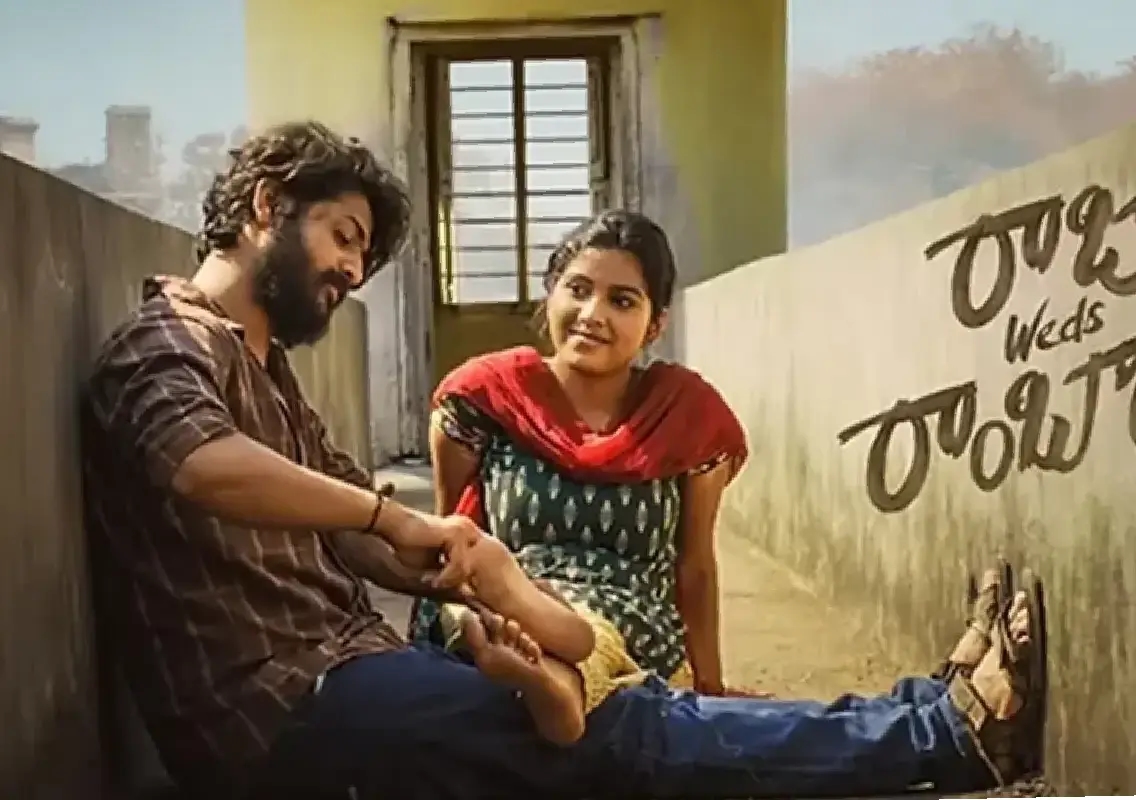


Raju Weds Rambai, a Telugu romantic drama inspired by a true incident from the Khammam region of Telangana, attempts to blend a rustic love story with the grim reality of honour killings. Directed by Saailu Kaampati and produced by filmmaker Venu Udugula, the film introduces newcomers Akhil Uddemari and Tejaswi Rao in lead roles and marks the screen debut of Chaitanya Jonnalagadda, brother of actor Siddu Jonnalagadda.
A rural love story rooted in a harsh truth
Set in 2010, when Andhra Pradesh was still undivided, the film centres around Raju (Akhil Uddemari), a local bandmaster who performs at festivals, weddings and even funerals. Rambai (Tejaswi Rao), a college student, is the daughter of Venkanna (Chaitanya Jonnalagadda), an aggressive and insecure compounder at the village hospital.
Raju has loved Rambai since childhood, and though she hesitates initially, she eventually warms up to his sincerity. Their romance soon becomes a talking point in the village, and when Venkanna learns of it, he dismisses Raju outright, insisting that his daughter marry a government employee. Left with no option, the couple elopes, hoping their families will eventually accept them. What follows, however, is devastating.
A story built backwards for maximum impact
Director Saailu Kaampati reportedly wrote the climax first and structured the entire screenplay around it. This approach pays off in the final moments — the climax is shocking, disturbing and lingers long after the credits roll. It captures the harsh realities behind honour-based violence with unsettling honesty.
However, while the ending is powerful, the journey leading up to it suffers from uneven writing. The village banter, humour and camaraderie feel natural, but the emotional depth of the core love story is inadequate. The bond between the protagonists never reaches the intensity needed to fully justify the tragic finale.
Writing and pacing issues weaken the narrative
The screenplay falters particularly in the second half, which feels stretched and overly directed towards its inevitable climax. A questionable scene in which Raju slaps Rambai for not taking his call feels unnecessary and may alienate viewers. The film’s greatest strength — its hard-hitting climax — also becomes its weakness, overshadowing the insufficiently developed romance preceding it.
Despite these flaws, the film stands out for its sincere attempt to depict rural life authentically, a welcome departure from repeated formulaic stories seen in recent Telugu cinema.
Strong performances elevate the film
Akhil Uddemari and Tejaswi Rao deliver rooted and convincing performances enhanced by their natural dialect and body language. Tejaswi’s portrayal in the climax is especially notable, establishing her as a promising newcomer.
Chaitanya Jonnalagadda is the film’s biggest surprise. As Venkanna, the psychologically complex father, he delivers a standout performance full of intensity and unpredictability. His presence drives much of the emotional tension in the story.
Supporting actors including Sivaji Raja, Anitha Chowdhary and Kavitha Srirangam add authenticity, while Raju’s friends bring humour and warmth to the narrative.
Technical elements add authenticity
Cinematographer Wajid Baig captures the rustic ambience of rural Telangana with textured visuals. Music composer Suresh Bobbili, known for The Great Pre-Wedding Show, lifts the film’s emotional tone with a strong soundtrack, complemented by Mittapalli Surender’s folk-influenced lyrics.
A compelling story weakened by uneven writing
Raju Weds Rambai is a sincere attempt at portraying a disturbing social reality through a simple rural love story. While the climax is emotionally shattering, tighter writing and a stronger build-up could have made the film more impactful. Even so, its performances, authenticity and intent make it a noteworthy entry in today’s trend of rural dramas.