







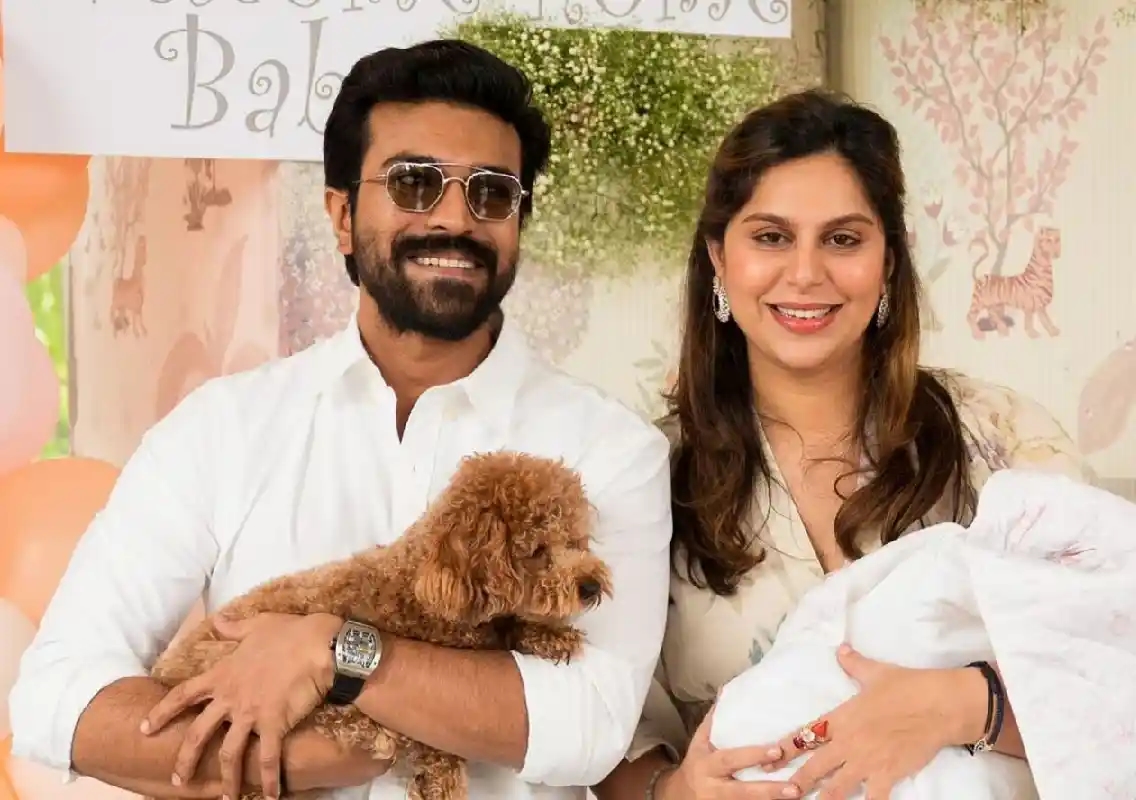


Debate erupts nationwide after Upasana’s comments at IIT Hyderabad
A conversation intended to empower young women has snowballed into one of the loudest public debates this week, after entrepreneur and philanthropist Upasana Konidela — wife of actor Ram Charan — advised female students at IIT Hyderabad to consider freezing their eggs for long-term independence. The remark, delivered during a campus interaction on career planning and personal choices, quickly travelled across social media, drawing both support and heavy criticism.
Upasana, who has previously spoken openly about freezing her own eggs in her twenties, told the audience that “the biggest insurance for women is to save your eggs,” suggesting that the option allows women to pursue education, careers, and marriage on their own timeline. She linked the idea to the larger theme of financial and emotional independence, urging young women not to rush major life decisions due to societal pressure.
Her comments, however, did not land uniformly. Within hours, clips from the session sparked a national conversation on privilege, affordability, reproductive rights, gender expectations and medical realities — turning her lecture into a trending topic across platforms.
Medical professionals counter the ‘insurance’ analogy
One of the key triggers of the backlash came from medical experts, who strongly objected to the idea of calling egg freezing an “insurance”. Fertility specialists emphasised that while egg preservation can help extend reproductive possibilities, it is not a guaranteed path to pregnancy. The method, though increasingly accessible in urban India, still involves expensive procedures, hormonal injections and storage costs that can run into several lakh rupees over the years.
Doctors argued that presenting the procedure as a fail-safe option oversimplifies a complex medical choice. Many pointed out that even with frozen eggs, success rates vary significantly with age, health conditions and individual response to treatment. Critics also highlighted the physical and emotional strain involved, urging a more nuanced conversation rather than a motivational shorthand.
Privilege concerns rise as social media weighs in
Much of the criticism also stemmed from the socioeconomic angle. Students and commentators argued that advice like this, while valid for some, may not be practical for the majority of young women in India, where medical costs remain a barrier.
Others questioned whether such suggestions should be made to students who may not have the financial or familial support for procedures that can be significantly costly over time.
A section of users also raised concerns about conflict of interest, given Upasana’s long-standing association with a healthcare conglomerate that offers fertility-related services. Though Upasana did not reference any institution in her speech, critics felt the point deserved acknowledgment in a discussion of this scale.
Still, many defended her intentions, noting that she has consistently encouraged women to make informed choices, build independence early, and plan their lives realistically. Supporters argued that talking openly about fertility options helps break long-standing taboos and gives women access to knowledge that is often withheld.
Upasana responds: “Happy to have sparked a healthy debate”
Following the wave of reactions, Upasana issued a calm response, saying she was glad her comments had triggered an important national conversation. She clarified that her aim was not to dictate personal choices but to highlight the importance of awareness and autonomy. Stressing that she conceived naturally despite freezing her eggs years earlier, she said her journey was simply an example, not a prescription.
Her statement helped soften the tone of the conversation, with many noting that Indian society rarely discusses reproductive planning openly. Others felt that, even if her analogy was imperfect, she had brought attention to a subject that deserves space in mainstream dialogue.
Broader questions about choice, autonomy and pressure
Beyond the personality-driven spotlight, the incident has reignited a broader question about how women navigate personal decisions in a rapidly evolving India. For many, Upasana’s comment touched upon the pressure young women face — to marry by a certain age, to balance ambition with social expectations, and to plan families within rigid timelines.
The debate has also highlighted educational gaps in reproductive health, with many calling for more scientifically-grounded information sessions in universities. Several gender rights advocates argued that conversations about fertility should be accompanied by discussions about workplace support, childcare, equal pay and societal mindsets — areas that significantly impact when and how women choose to have children.
A moment that reflects India’s shifting cultural landscape
The intensity of the reactions shows how the country is negotiating questions of autonomy, modernity and tradition. While egg freezing remains a relatively new concept for most Indians, the fact that it is being debated so openly reflects the evolving priorities of younger generations. Whether one agrees with Upasana or not, the dialogue she sparked has drawn attention to crucial issues around reproductive freedom, affordability, gender expectations and the medical realities of fertility choices.
As the dust settles, the incident stands as a reminder that celebrity voices can ignite conversations that society may otherwise hesitate to initiate. For many students present at the event and many more reacting online, the takeaways extend well beyond a single statement — marking another shift in India’s evolving conversation about women’s autonomy.