







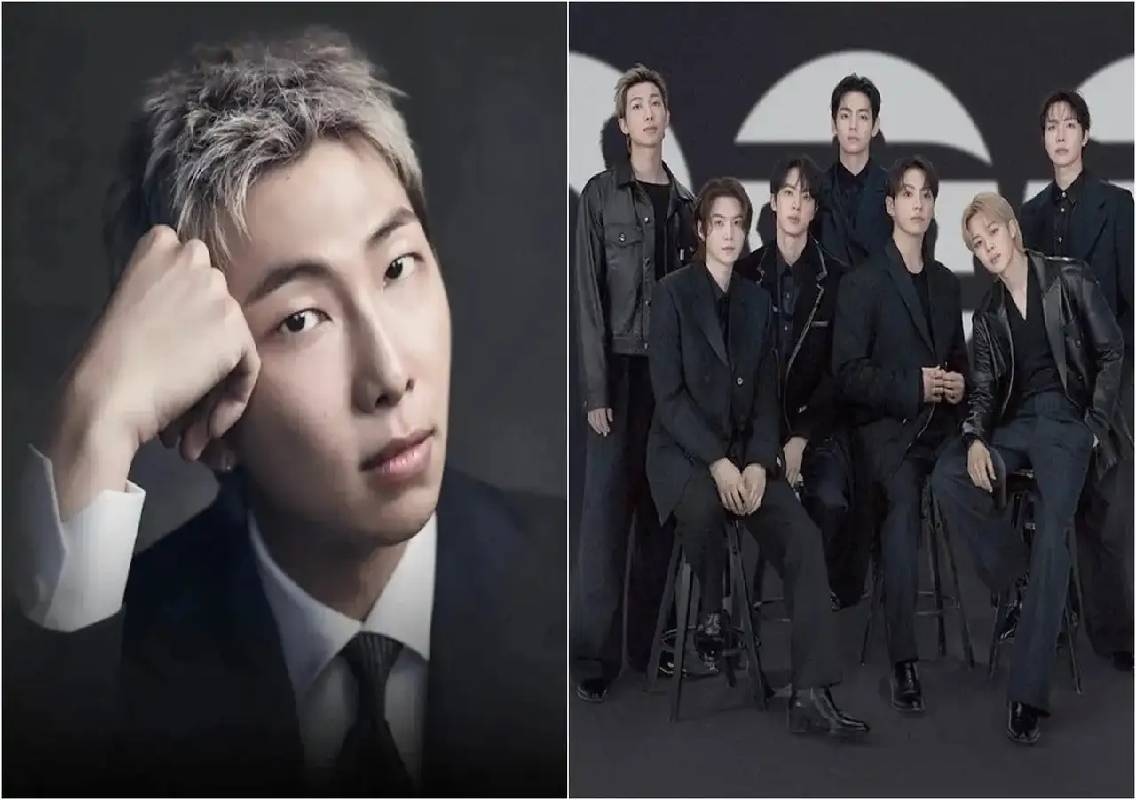


Seoul: BTS leader RM has shared candid insights into the group’s evolving dynamics in the post-military “BTS 2.0” era, saying the members are now more cautious than ever to preserve their long-standing bond. The remarks came during a recent Weverse Live session, where he discussed how the group navigates decisions after years of solo activities and military service.
With all seven members RM, Jin, Suga, J-Hope, Jimin, V and Jungkook now back to working together after their hiatus, RM said the group’s approach to teamwork has become more considerate, reflective and emotionally sensitive.
BTS bond remains central in post-hiatus era
RM explained that despite individual growth during solo projects and mandatory military service, the group’s core connection remains intact. However, the way they interact and make decisions has evolved significantly.
He said the members are now extremely mindful of each other’s preferences, often prioritising harmony over conflict. According to him, even small disagreements are handled with extra care to avoid affecting the group’s unity.
The BTS leader noted that this heightened sensitivity reflects how much they value their relationship, especially after spending time apart and returning with more individual experiences and perspectives.
RM on decision-making challenges within the group
During the livestream, RM highlighted that the group’s biggest strength mutual respect can also become a creative challenge. He explained that BTS members are so considerate of one another that reaching firm decisions sometimes becomes difficult.
He described scenarios where opinions differ within the group, with some members agreeing, others disagreeing, and a few remaining neutral. This, he said, often leads to longer discussions before finalising any group decision.
RM emphasised that no member wants to push their opinion at the cost of the group’s harmony, which makes them naturally cautious during discussions.
‘Protecting the bond is priority’
RM further said that the group’s cautious approach stems from a strong desire to protect their long-term relationship. After more than a decade together, and having experienced solo careers and military service separately, the members are more aware of the value of their bond.
He added that even before their full reunion, he anticipated that the process of creating music, planning tours and selecting songs would depend heavily on how well they navigate internal discussions.
According to him, this awareness has shaped how the group operates in its current phase, where collaboration is built on mutual respect rather than strict hierarchy.
BTS 2.0 reflects matured creative identity
Fans and industry observers have often referred to the current phase as BTS “2.0”, a period marked by greater artistic independence and maturity. The group now functions more like seven individual artists coming together for collective projects rather than a traditional band with a fixed creative structure.
This evolution has allowed each member to bring distinct musical influences and perspectives into group work, resulting in a more diverse creative output.
Their recent comeback projects have reflected this shift, blending personal storytelling with broader themes while experimenting with multiple genres.
Individual growth shaping group synergy
During their hiatus, each member pursued solo albums, collaborations and personal projects, which expanded their artistic range. RM’s comments suggest that this individual growth has now become an integral part of the group’s collective identity.
While this has added richness to their music, it has also introduced the need for more balanced discussions during group planning and production phases.
Industry analysts believe this model could redefine how long-running global music groups evolve while maintaining cohesion.
Conclusion
RM’s reflections offer a rare glimpse into BTS’s internal dynamics in their post-hiatus phase, highlighting both the strength and complexity of their deep-rooted bond. As the group continues to navigate its “BTS 2.0” era, their emphasis on mutual respect and careful decision-making appears central to sustaining their global success.