







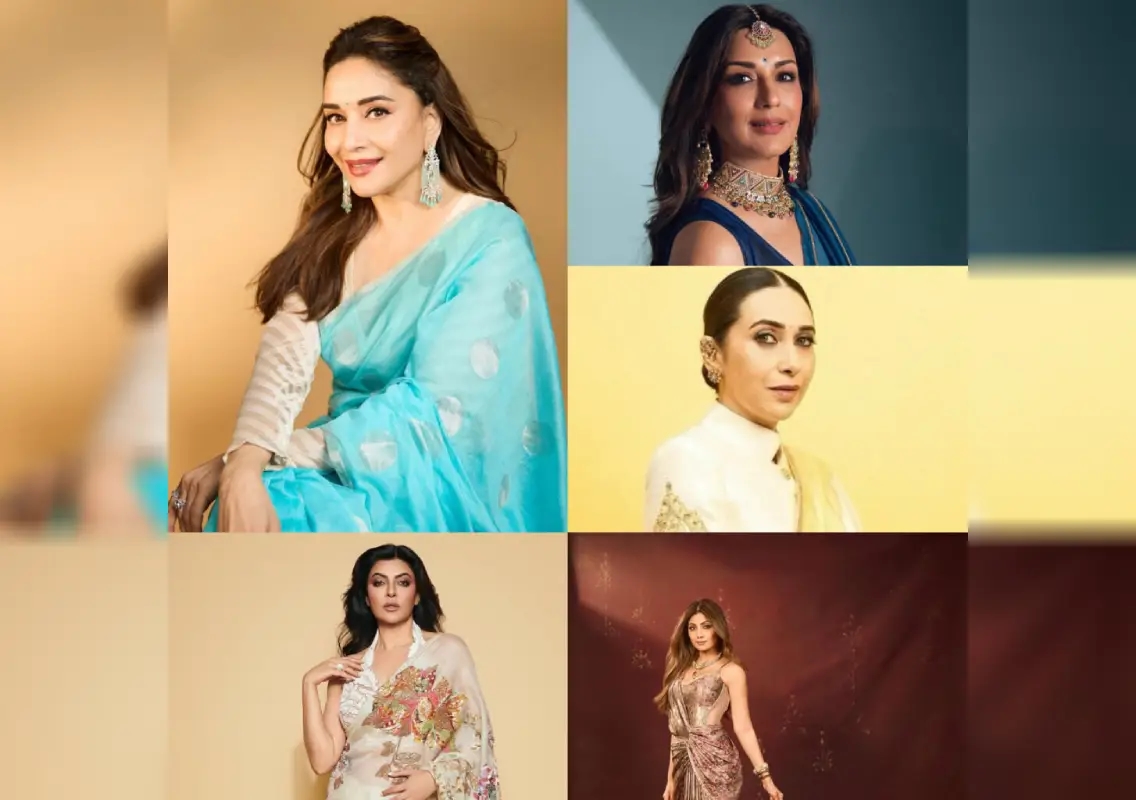


The fashion world may constantly experiment with contemporary silhouettes, bold combinations and evolving trends, but the timeless appeal of 1990s ethnic fashion continues to hold its own. From statement sarees to richly embellished ensembles, several leading actresses from that era continue to demonstrate how traditional Indian wear can be styled with confidence and individuality.
Shilpa Shetty, Madhuri Dixit, Karisma Kapoor, Sushmita Sen and Sonali Bendre are among the 90s stars whose ethnic looks offer inspiration for those who appreciate classic Indian fashion. Their outfits showcase different approaches to traditional dressing, ranging from elaborate embellishments and dramatic layering to understated drapes and regal jewellery.
The five actresses have built distinct fashion identities over the years, and their recent ethnic appearances reflect the enduring influence of their personal styles.
Shilpa Shetty brings drama to ethnic maximalism
Shilpa Shetty makes a striking statement with an embellished bronzed ensemble that combines the appearance of a saree with contemporary styling. The outfit features abstract detailing and fitted pleats around a metallic bodice, creating a structured silhouette.
The look is further elevated by an exaggerated coat, which adds drama and gives the traditional-inspired ensemble a modern edge. Rather than relying on multiple accessories, Shilpa keeps the focus on the outfit while adding a statement neckpiece and carefully selected bracelets.
Her styling demonstrates how ethnic dressing can embrace maximalism without losing its traditional character. The combination of metallic tones, intricate embellishment and dramatic layering offers an option for those who prefer occasion wear with a contemporary twist.
Madhuri Dixit keeps traditional elegance alive
Madhuri Dixit takes a more understated approach, proving that a simple and well-coordinated outfit can make a lasting impression.
The actress wears a bright blue drape decorated with circular golden patches across the fabric. She pairs it with a white blouse featuring stripes, creating a contrast that allows the colourful drape to remain the centrepiece of the look.
Madhuri completes the ensemble with tassel earrings and striking rings. Her styling remains relatively restrained, allowing the colours and detailing of the outfit to stand out.
The look reflects an approach to ethnic fashion that places emphasis on the saree or drape rather than excessive accessories. It also shows how traditional elements can be presented in a fresh way through thoughtful colour combinations and simple styling.
Karisma Kapoor gives the chanderi saree a regal touch
Karisma Kapoor opts for a classic Indian silhouette with a chanderi saree paired with an embroidered bandhgala blouse.
The blouse, featuring detailed embroidery around the sleeves, adds a distinctive touch to the traditional ensemble. Its structured design creates an interesting contrast with the fluid drape of the saree.
Karisma styles her hair in a sleek bun, complementing the outfit’s traditional character. She also chooses striking earrings to complete the look, keeping the accessories in tune with the overall aesthetic.
The combination highlights how a saree can be styled differently through the choice of blouse. Instead of opting for a conventional blouse design, the actress uses a bandhgala-inspired silhouette to give the ensemble a distinctive appearance.
Her look offers inspiration for those who want to experiment with traditional sarees while retaining a classic and elegant finish.
Sushmita Sen makes a statement in an embellished drape
Sushmita Sen brings a graceful and distinctive approach to ethnic dressing with an off-white drape featuring floral embellishments.
She pairs the outfit with a halter-neck blouse, giving the traditional drape a contemporary silhouette. The floral detailing adds visual interest, while the lighter colour palette lends the ensemble an understated elegance.
Sushmita keeps her hair in its natural style and avoids overwhelming the outfit with accessories. Elevated rings provide the finishing touch, allowing the embellished drape to remain the focus.
Her appearance demonstrates how neutral shades can be used to create an impactful ethnic look. The combination of an embellished drape and a modern blouse also illustrates how traditional Indian clothing can accommodate contemporary design elements without losing its identity.
Sonali Bendre embraces richly detailed lehenga styling
Sonali Bendre completes the line-up with a deep blue lehenga featuring intricate prints in shades of gold and red.
The rich colour palette gives the ensemble a festive and regal character. The detailed patterns add depth to the outfit, while the jewellery plays an important role in completing the overall look.
Unlike the relatively restrained accessorising seen in some of the other ensembles, Sonali opts for heavy, embellished jewellery. The accessories complement the richness of the lehenga and reinforce its traditional appeal.
Her styling shows how a richly patterned lehenga can be paired with statement jewellery to create an elaborate occasion-wear look.
The enduring appeal of 90s fashion
The ethnic appearances of these five actresses underline the variety that Indian traditional wear offers. Shilpa Shetty demonstrates the appeal of dramatic layering and metallic embellishments, while Madhuri Dixit highlights the elegance of a colourful drape with minimal accessories.
Karisma Kapoor experiments with a structured blouse, Sushmita Sen combines a contemporary neckline with floral detailing, and Sonali Bendre embraces the richness of a printed lehenga and elaborate jewellery.
Although contemporary fashion continues to introduce new silhouettes and styling ideas, the appeal of traditional Indian clothing remains strong. These looks also show that there is no single formula for wearing ethnic outfits. Personal choices in colour, fabric, jewellery and silhouettes can make even familiar styles distinctive.
For the 90s divas, ethnic fashion is not simply about revisiting an earlier era. It is about bringing together traditional aesthetics and individual expression, demonstrating why classic Indian dressing continues to find a place in modern wardrobes.