


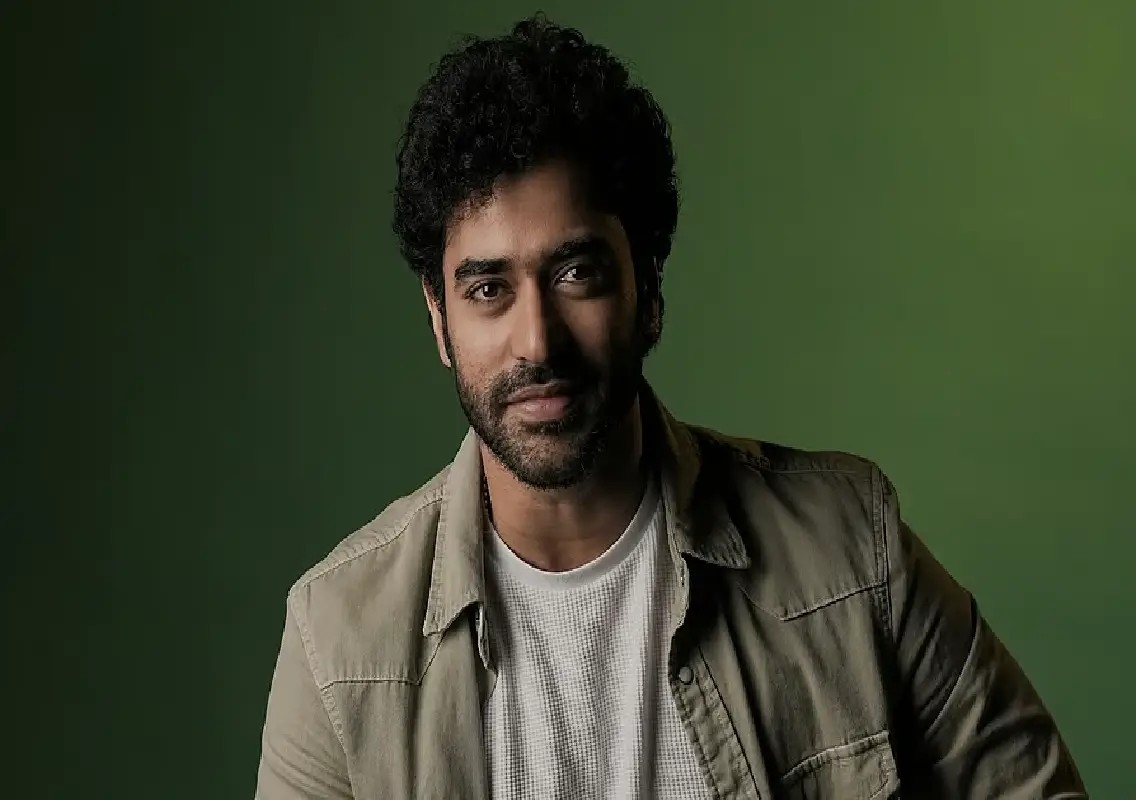


Bengaluru: For Shine Shetty, acting was always the dream. Writing and production were never part of the original plan. But after 15 years in the film industry, the actor says his understanding of cinema and his place in it has evolved.
With Shankarabharana, Shine is taking on responsibilities beyond acting, developing stories and building a production house that he hopes will eventually create opportunities for other actors and filmmakers.
In an interaction, Shine spoke about discovering his ability to develop stories, his decision to become a producer, the importance of authenticity, his preference for traditional writing methods over AI and his desire to contribute more to Kannada cinema.
‘Maybe I can make stories’
Shine said writing happened unexpectedly after actor-filmmaker Raj B Shetty once gave him a line and asked him to develop it.
A writer was brought in to work with him, but Shine was not convinced with how the story was developing. He felt the treatment was too bookish and quietly began developing the story himself.
When the team responded positively to his version, it gave him confidence that he could develop stories for the screen.
“I still wouldn’t call myself a writer,” Shine said, while acknowledging that he can take an idea, narrate it and develop it into something that can eventually become a film.
He also joked that everyone has some ability to tell stories, recalling how children could convince teachers that their grandmother had died simply to avoid going to school.
How Shankarabharana took shape
Shine said he had developed three stories before Shankarabharana, but this was one of the ideas he felt particularly strongly about.
The film contains elements of horror and comedy, though he prefers to describe its genre simply as entertainment.
The story draws from incidents and experiences around him, particularly in Udupi, Mangaluru and Dakshina Kannada.
While Shine developed the core ideas, he acknowledged the importance of collaborating with writers who understand film grammar and can translate those ideas effectively onto paper.
Why Shine decided to become a producer
The decision to enter production came from his desire to have greater creative control over the kind of work he wanted to do.
Shine said that over the years, people had appreciated his performances in films such as Kantara and James. He has always believed that the length of a character does not determine its value and that what matters is the contribution the role makes to a film.
However, after 15 years in the industry, he began asking what the roles were contributing to his own journey as an actor.
He tried working with different teams but realised that when someone else is producing a film, important creative and financial decisions ultimately rest with them.
“When you don’t find the right opportunity, you create the right space where you can make that opportunity for yourself,” he said.
That thinking eventually led him towards production.
Production house aims to support other filmmakers
Shine said his production house is not based on the idea that he has already reached the level of a superstar.
He described himself as a good actor but said he does not consider himself among the industry’s biggest names.
Instead, he hopes the production house will gradually grow into a platform capable of backing films and actors beyond his own projects.
According to Shine, established actors producing films for others can help bring attention and business to those projects even when they are not personally acting in them.
His larger ambition, he said, is to contribute more to Kannada cinema and, through it, to Indian cinema.
Authenticity remains important
Shine said authenticity is central to the making of Shankarabharana.
The film features several actors from Udupi and Mangaluru who have experience in theatre and cinema in the region.
He cited the casting of Tanvi Ram as an example. Her character is a Malayali who has settled in Udupi, and Shine did not want to cast a Kannada actor and ask her to artificially reproduce a Malayalam accent.
Instead, the team wanted someone who naturally fitted the character and her background.
Shine said having actors such as Tanvi Ram, Charan Raj and Sumanth Bhat agree to be part of Shankarabharana increased his confidence in the project.
Why he prefers writing on paper over AI
Despite the growing use of artificial intelligence in filmmaking, Shine said he continues to write on paper rather than typing scripts on a laptop.
He does not oppose AI entirely and acknowledged that technology can be useful when filmmakers need to achieve something that may otherwise be difficult within their budget.
However, he believes the creative process should retain a human element.
Shine said he would rather spend a month or two sitting with a writer, explaining his ideas and brainstorming together than use AI to produce something in minutes.
For him, the time spent developing a story has its own value because he becomes deeply familiar with every aspect of the script before the film goes on floors.
Connection with coastal Karnataka and Tulu
Shine also spoke about the growing recognition of Tulu and the cultural identity of Tulunadu.
He said the development makes him happy because people have been seeking greater recognition for Tulu for a long time.
According to Shine, recognition of a language also reflects the strength and contribution of the people associated with it.
He pointed to businesspeople, actors, filmmakers, writers and professionals from the region who have built careers outside coastal Karnataka and contributed to its visibility.
Shine said he did not grow up speaking Tulu but learnt the language through his work as an anchor for a local television channel. He described it as a vyavaharika bhasha, or a language acquired through everyday interaction.
‘Relatability is extremely important’
Shine said relatability would remain an important factor in the films he makes.
However, he believes relatable cinema can still have exaggeration and larger-than-life elements to create a cinematic experience.
His objective is to make films that audiences can connect with while ensuring they also experience something beyond the ordinary when they visit a theatre.
He wants audiences to be entertained, enjoy their time in the theatre and feel that the experience was worth the money they spent on the ticket.
‘I want to add whatever I can’
Looking ahead, Shine said he sees a positive future combining acting, writing and production.
He does not define that future purely in terms of success, noting that success and failure are both part of a career.
His immediate goal is to continue acting while building a production house with a team of like-minded people and making more films.
“There are already so many people putting in tremendous effort to make the industry bigger and better,” he said. “I simply want to add whatever I can to that effort.”
Social media and family
Shine said he has never been particularly concerned about social-media numbers and sometimes goes for weeks without posting.
He sees social media as part of everyday life and likes sharing occasional personal moments, including visits to temples, rituals and pictures with his parents.
He said such posts can also help younger generations understand traditions and places they may not otherwise encounter.
Shine added that his family plays a major role in keeping him happy and grounded.
“If somebody thinks what I post looks fake, that’s okay. This is my life,” he said.