


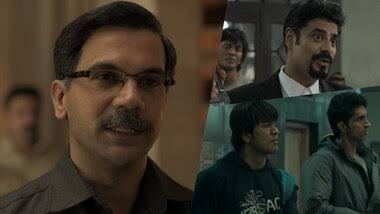


Mumbai: Actor Sikandar Kher has opened up about preparing to portray criminal lawyer Abbas Kazmi in Prahaar: The Untold Story of Ujjwal Nikam, revealing that a meeting with the lawyer helped him understand the conviction behind his decision to defend Ajmal Kasab, the lone terrorist captured alive during the 26/11 Mumbai attacks.
In an recent interview Sikandar said he initially struggled to understand why a lawyer would agree to represent Kasab, given the scale of the attacks and the overwhelming evidence against him. Meeting Kazmi before filming helped him look beyond his personal reaction and understand the legal principle that shaped the lawyer’s role in the trial.
The film also brought Sikandar back together with actor Rajkummar Rao, who portrays special public prosecutor Ujjwal Nikam. The two actors had previously worked together in Monica, O My Darling, and Sikandar said their familiarity helped them deliver compelling courtroom confrontations in Prahaar.
While the actor has been pleased with the response to his performance, he is still waiting for feedback from his parents, veteran actor Anupam Kher and actor-politician Kirron Kher, who are yet to watch the film.
Sikandar Kher wanted to understand Abbas Kazmi’s decision
Before taking on the role, Sikandar wanted to understand what motivated Kazmi to defend Kasab during the trial that followed the November 2008 Mumbai attacks.
Kasab was the only attacker captured alive after the coordinated terrorist strikes that killed 166 people and left the country deeply traumatised. His trial became a major test of India’s criminal justice system, including its commitment to ensuring that even a person accused of terrorism received a fair trial.
For Sikandar, understanding that legal and moral complexity was essential to portraying Kazmi convincingly.
Recalling how he arranged to meet the lawyer before filming began, the actor told India Today: “I asked Avinash to plan a meeting with him. I needed to know how a person in that situation in this country comes on board to defend a terrorist like Kasab. By no means can it be an easy decision to take. And I just wanted to see what kind of conviction I can bring to the character.”
Sikandar chose not to disclose many details of their conversation, describing the interaction as personal.
However, the meeting helped him appreciate the distinction between defending an accused person in court and endorsing the alleged crime. A lawyer’s responsibility is to ensure that the legal process is followed and that the accused receives a fair trial, regardless of the public outrage surrounding the case.
That understanding became an important part of Sikandar’s preparation for the role.
Why defending Ajmal Kasab was central to the story
The case against Kasab was among the most closely watched criminal trials in modern Indian history.
The 26/11 attacks involved coordinated assaults across Mumbai, targeting hotels, a railway station and other locations. The violence resulted in 166 deaths and numerous injuries, leaving a lasting impact on the city and the country.
Kasab’s capture alive made it possible for Indian authorities to prosecute him in a criminal court. The proceedings involved extensive evidence, witness testimony and arguments over the charges against him.
Kazmi’s role as defence counsel placed him in a difficult position. He was representing a man widely associated with one of the most devastating terrorist attacks in India, at a time when public anger was intense.
For Sikandar, this tension made Kazmi more than a supporting character in the story. The lawyer represented a fundamental principle of the justice system: the right to legal representation does not depend on whether the accused is popular, sympathetic or widely condemned.
The meeting allowed Sikandar to explore the conviction required to carry out that responsibility in such circumstances.
Rather than approaching the role solely through the public perception of Kasab, the actor sought to understand the professional principles and personal resolve that informed Kazmi’s decision.
The beard helped Sikandar resemble the real lawyer
Viewers have also commented on Sikandar’s physical resemblance to Kazmi in Prahaar.
The actor said the resemblance was largely down to the beard, which was a distinctive feature of the lawyer’s appearance.
Sikandar was working on another project at the same time, but he had to retain the beard because Prahaar is based on real events and the character’s appearance was an important consideration.
When portraying a real person, even seemingly small visual details can influence how audiences perceive the performance. Maintaining the beard helped Sikandar align his appearance more closely with Kazmi’s while keeping the character recognisable within the film’s courtroom setting.
The actor’s preparation therefore involved both understanding the lawyer’s motivations and retaining aspects of his physical appearance.
The combination was particularly important because the film draws on a real criminal case that remains significant in India’s collective memory.
Working with Rajkummar Rao made the courtroom scenes rewarding
In Prahaar, Sikandar plays the lawyer on the opposing side of Rajkummar Rao’s Ujjwal Nikam, setting up confrontations between the defence and the prosecution.
The courtroom scenes required the actors to engage with each other through arguments, pointed exchanges and competing legal positions. Sikandar said working with Rajkummar made the experience enjoyable because the two had already developed a comfortable professional relationship.
Reflecting on their collaboration, Sikandar said: “It’s great. We do damn well together. Both the times that I have worked with him in Monica, O My Darling and in Prahaar, I think both of us enjoy working with each other because both of us get the best out of each other.”
Their earlier collaboration helped create an easy working dynamic on the sets of Prahaar.
The actors could approach their scenes with an understanding of each other’s working styles, while still responding to the demands of their respective characters. Their courtroom exchanges were built around the tension between the prosecution and defence, with each side presenting a different role within the judicial process.
For Sikandar, that give-and-take was a particularly rewarding aspect of the film.
Prahaar explores the courtroom battle around Ujjwal Nikam
Prahaar: The Untold Story of Ujjwal Nikam centres on the work of public prosecutor Ujjwal Nikam and the legal proceedings surrounding the Kasab trial.
Rajkummar Rao plays Nikam, while Sikandar portrays Kazmi, placing the two actors on opposing sides of the courtroom.
The film examines a case that extended beyond the immediate question of criminal guilt. It also highlighted the role of legal institutions in responding to a national tragedy and the importance of presenting evidence through established judicial procedures.
For audiences familiar with the 26/11 attacks, the story carries considerable historical weight. The events remain a defining episode in India’s security history, while the subsequent trial became a major public demonstration of the country’s criminal justice process.
By portraying Kazmi, Sikandar takes on a character whose professional responsibilities were closely scrutinised because of the identity of the accused he represented.
The actor’s decision to meet the real lawyer before filming reflects the challenge of depicting such a figure without reducing the role to a simple contrast between public anger and legal duty.
Anupam Kher and Kirron Kher are yet to watch the film
Despite the film’s release and the response to his performance, Sikandar said his parents have not yet watched Prahaar.
His father, veteran actor Anupam Kher, has been travelling for work and is currently filming in Sweden. His mother, Kirron Kher, who is based in Chandigarh, recently arrived in Mumbai.
According to Sikandar, his mother has been telling him every day that she wants to watch the film.
The actor said he values feedback from both his parents because of their experience in the entertainment industry. He particularly highlighted his mother’s honesty, describing her as “brutally honest”.
For Sikandar, their reactions are not simply about receiving praise from family members. Their observations also offer an opportunity to learn from people whose professional judgement he respects.
Having parents who have spent decades working in films and television means that their feedback carries particular significance for him.
Their eventual response will provide another perspective on his portrayal of Kazmi, especially given the challenges of recreating a real person involved in a historically sensitive case.
Sikandar Kher’s performance is rooted in understanding the character
Sikandar’s account of preparing for Prahaar highlights the importance he placed on understanding Kazmi’s motivations before stepping into the role.
The meeting helped him move beyond his initial question about why anyone would defend Kasab and examine the professional principles that govern criminal defence.
His collaboration with Rajkummar Rao added another dimension to the experience, allowing the actors to build on their previous work together while portraying opposing sides in the courtroom.
The physical resemblance to Kazmi, meanwhile, was supported by the decision to retain the lawyer’s distinctive beard, even while Sikandar was working on another project.
For the actor, the role ultimately involved balancing the emotional weight of the 26/11 case with the responsibility of portraying a real lawyer whose work formed part of the judicial proceedings.
His parents are yet to watch the film, but Sikandar has said their feedback remains important to him. For now, his account offers a glimpse into the preparation behind a performance shaped by a difficult question: how does an actor portray someone who defended a deeply unpopular accused person while recognising the principles that underpin a fair trial?