







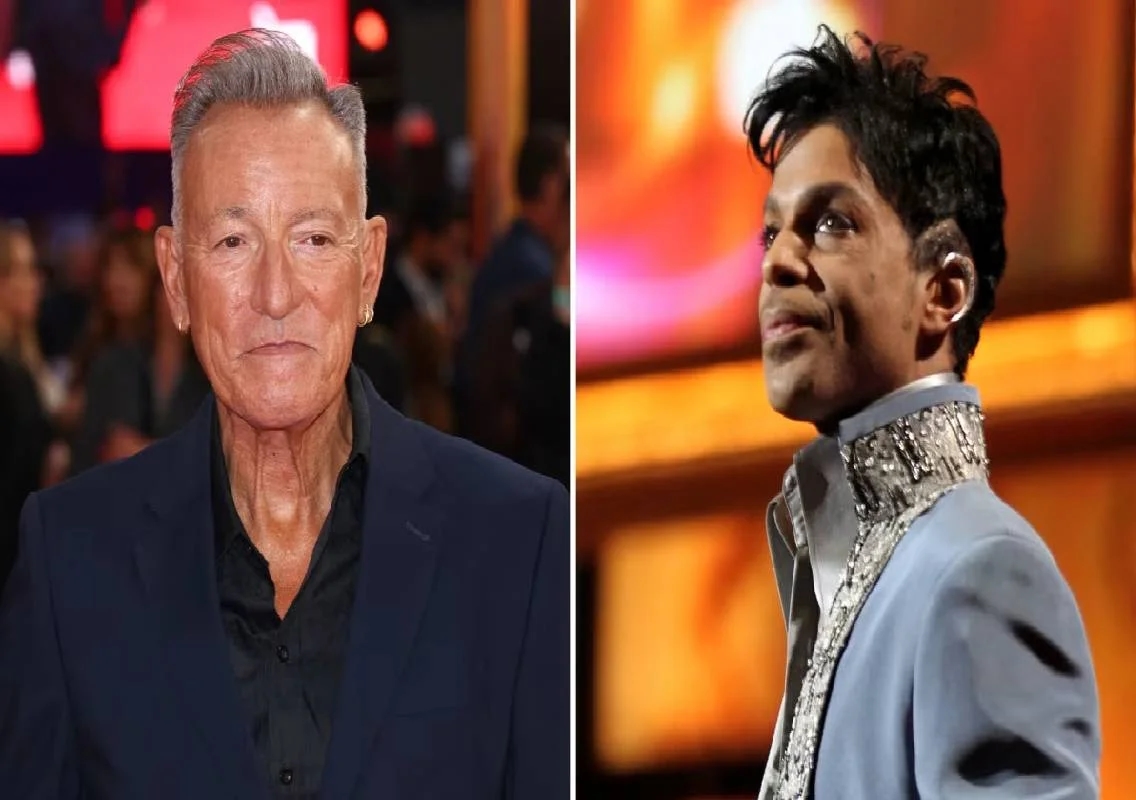


Minneapolis: In a powerful blend of music, memory, and message, Bruce Springsteen has paid tribute to the late Prince while also lending his voice to ongoing social tensions in Minneapolis.
Nearly a decade after Prince’s death, the two legendary artists — once seen as chart rivals — are symbolically reunited through Springsteen’s latest performances and political expressions in the city that shaped Prince’s legacy.
A tribute through music
Springsteen kicked off his latest tour in Minneapolis with a moving rendition of Purple Rain, one of Prince’s most iconic tracks. The performance marked a return to the song for Springsteen, who last performed it shortly after Prince’s passing in 2016.
The tribute resonated deeply with fans, not just as a musical homage but as a reminder of the mutual respect the two artists shared. Despite competing at the peak of their careers in the 1980s, rivalry never defined their relationship.
In 1984, Prince’s Purple Rain famously replaced Springsteen’s Born in the U.S.A. at the top of the charts. Yet, instead of competition, the two developed admiration for each other’s artistry and endurance on stage.
Minneapolis at the centre of protest and art
Springsteen’s tribute comes at a time when Minneapolis is once again in the national spotlight. The singer has used his platform to address recent tensions linked to immigration enforcement and federal actions in the city.
Earlier this year, he released Streets of Minneapolis, a protest anthem responding to incidents involving federal agents. He also performed the song at a large rally in nearby St. Paul, voicing strong criticism of the situation.
Springsteen told the crowd that Minneapolis had been wrongly targeted and praised the resilience of its people. His words echoed the spirit often associated with Prince, who used his music and influence to advocate for justice and social change.
Shared legacy of activism
Though their styles differed, both artists were known for standing up for social causes. Prince, who passed away in 2016 at the age of 57, frequently supported movements such as Black Lives Matter and spoke out against systemic injustice.
Following the death of George Floyd in 2020, Minneapolis became a global symbol of protest — a moment many fans linked to Prince’s long-standing advocacy.
A year before his death, Prince released the protest song Baltimore in response to the death of Freddie Gray, calling attention to systemic issues and urging younger generations to drive change.
Springsteen has followed a similar path, addressing issues such as racial injustice, workers’ rights, and civil liberties. His song American Skin (41 Shots), for instance, highlighted police violence, while his music has consistently reflected themes of social struggle and resilience.
A bond beyond rivalry
Despite their contrasting backgrounds — Prince from Minneapolis and Springsteen from New Jersey — the two shared a deep artistic connection. Prince once praised Springsteen’s ability to command audiences during long, high-energy performances.
Springsteen, in turn, has often expressed admiration for Prince’s creativity and stage presence. Following Prince’s death, he opened a concert with Purple Rain, calling it a moment of personal and artistic loss.
Those close to Prince have described the bond between the two as rooted in authenticity. Both artists were known for staying true to their vision, regardless of industry pressures.
Music as a unifying force
Today, Springsteen’s tribute highlights how music can transcend time, geography, and even personal differences. By honouring Prince in Minneapolis, he has not only celebrated a musical legend but also reinforced the city’s identity as a hub of cultural and social resilience.
Conclusion
The connection between Bruce Springsteen and Prince stands as a testament to mutual respect in an industry often defined by competition. As Minneapolis continues to navigate social challenges, the legacy of Prince lives on amplified by artists like Springsteen who carry forward the message of courage, creativity, and change.