


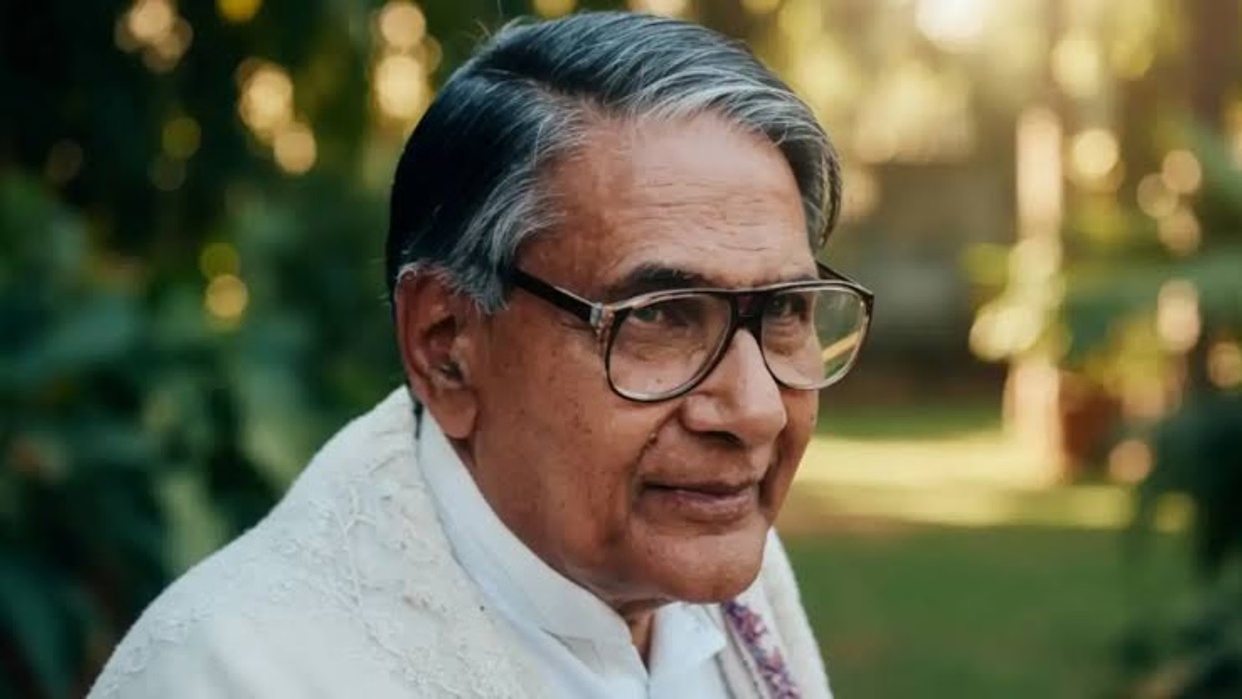


Thane: Veteran writer and filmmaker Ved Rahi, best known for directing the popular Doordarshan serial Gul Gulshan Gulfam, died at his residence in Maharashtra’s Thane district on Sunday morning. He was 93. His death marks the end of a long career that brought together Dogri literature, Hindi cinema and Indian television.
Rahi’s last rites were performed at the Kopari cremation ground in Thane later on Sunday. He is survived by his daughters, Geetanjali and Poonam, and their families.
A respected figure in Dogri literature, Rahi received the Sahitya Akademi Award in 1983 for his short-story collection Aale. His contribution to literature was recognised again in 2024, when he was conferred the Sahitya Akademi Fellowship, one of the institution’s highest honours.
His work extended well beyond literature. Rahi wrote screenplays and dialogues for more than 25 films and later established himself as a director. He also created several memorable television productions, particularly for Doordarshan, during a period when television serials were becoming an important part of family entertainment across India.
A major voice in Dogri literature
Born in Jammu in May 1933, Ved Rahi grew up in a family with deep connections to journalism. His father, Mulk Raj Saraf, was a pioneering journalist in the region and played an important role in the development of journalism in Jammu and Kashmir.
Rahi began his literary journey in his hometown, writing in Dogri and gradually building a reputation for his contribution to the language. His short-story collection Aale brought him the Sahitya Akademi Award in 1983, placing his work among the recognised contributions to Indian literature.
The award was an important milestone in a career devoted to storytelling and cultural expression. Rahi’s writing helped bring Dogri literature to a wider audience, while his later work in Hindi cinema and television allowed him to reach readers and viewers beyond his linguistic and regional roots.
The Sahitya Akademi Fellowship awarded to him in 2024 further acknowledged his longstanding contribution to literature. The distinction is among the highest forms of recognition given by the national literary institution.
Following news of his death, the Sahitya Akademi’s official X handle paid tribute to the veteran writer, recognising his contribution to the literary world.
From Dogri writing to Hindi cinema
Rahi moved to Mumbai to explore opportunities in the film industry, beginning another significant chapter of his professional life. His transition from regional-language literature to mainstream Hindi cinema demonstrated the range of his storytelling abilities.
Over the years, he wrote for more than 25 films, contributing screenplays and dialogues to productions such as Yeh Raat Phir Na Aayegi, Aap Aaye Bahaar Aayi, Beimaan, Mome Ki Gudiya and Bezubaan.
His work as a screenwriter allowed him to participate in different genres and narratives during a period of considerable change in Hindi cinema. While his literary identity remained closely associated with Dogri, his film work established him as a contributor to the wider Indian entertainment industry.
Rahi eventually moved from writing scripts to directing films. His directorial credits included Prem Parbat and Kali Ghata. He also directed Veer Savarkar, released in 2001.
Some of his films, including Prem Parbat and Kali Ghata, are no longer easily accessible to contemporary audiences. Nevertheless, they remain part of the body of work associated with his career as a filmmaker.
Gul Gulshan Gulfam made him a household name
For many television viewers, Rahi’s most familiar work was Gul Gulshan Gulfam, the Doordarshan serial that became one of his best-known directorial projects.
The show, remembered by audiences from the 1980s and 1990s, helped establish his reputation as a television filmmaker. At a time when Doordarshan was a major source of entertainment for households across the country, serials had the ability to connect with viewers across different regions and generations.
Rahi’s television work also included productions such as Meera and Rishtay. These projects strengthened his association with Indian television and demonstrated his ability to adapt his storytelling to a different medium.
His contribution was significant because it extended beyond the conventional boundaries of a literary or film career. He moved between languages and formats, working in short stories, screenplays, dialogues, films and television serials.
While Gul Gulshan Gulfam remains the title most closely associated with his television legacy, his wider body of work reflects a sustained engagement with storytelling across several decades.
A career spanning generations
Ved Rahi’s professional journey began in Jammu, where he developed his literary voice in Dogri, before taking him to Mumbai and the Hindi film industry. His career brought together regional literature and mainstream entertainment at a time when opportunities to move between these creative fields were less common.
His achievements also illustrate how writers from regional-language backgrounds contributed to Indian cinema and television. Rahi retained his connection with Dogri literature even as he worked on films and television productions for a much wider audience.
The recognition he received from the Sahitya Akademi, first through the award for Aale and later through the Fellowship in 2024, reflected the lasting value of his literary contribution.
His death at 93 leaves behind a body of work that spans different creative forms. For readers of Dogri literature, he will be remembered as an influential writer. For Hindi film audiences, his screenplays and direction remain part of his legacy. For generations of television viewers, Gul Gulshan Gulfam will continue to be among the works most closely associated with his name.