







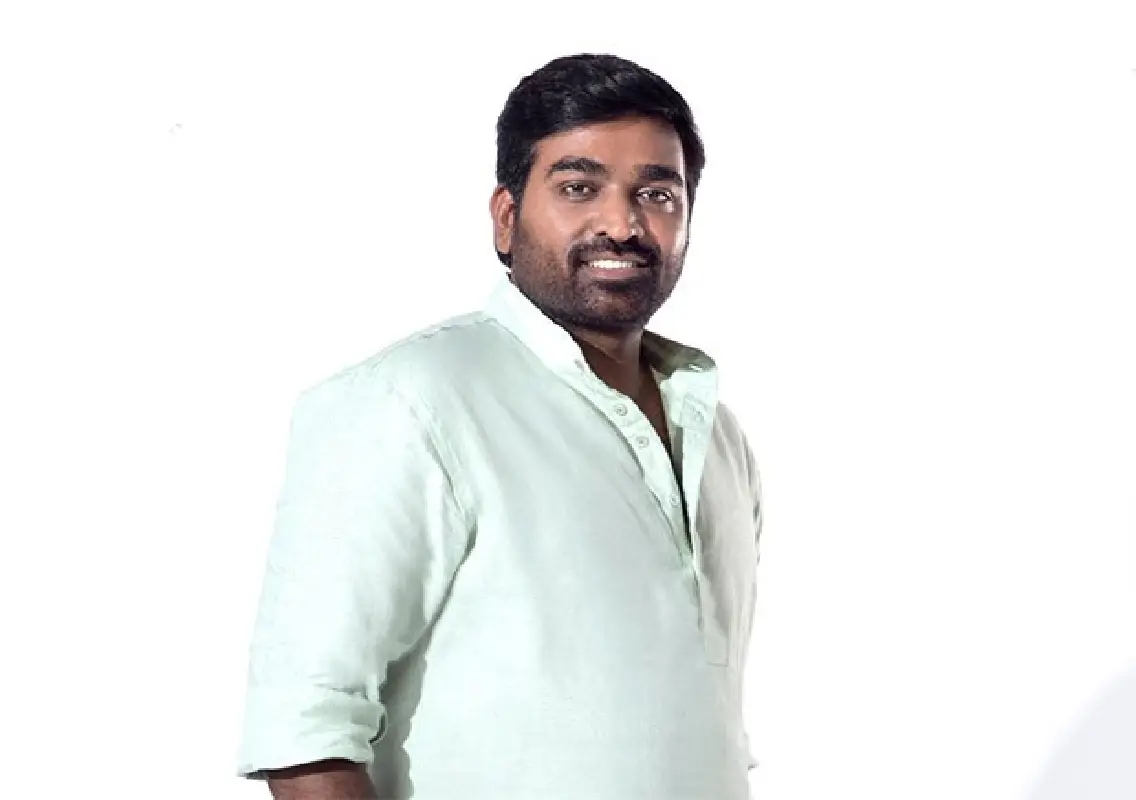


Chennai: Actor Vijay Sethupathi, widely regarded as one of the most versatile performers in contemporary Indian cinema, is exploring a new creative direction with his latest project Gandhi Talks. The actor has taken on a silent film, using the opportunity to question the long-standing reliance on dialogue-heavy storytelling in Indian films.
Known for his powerful performances across Tamil, Telugu and Hindi cinema, Vijay Sethupathi believes that Indian filmmakers often depend too heavily on words to communicate emotions and plot. With Gandhi Talks, he hopes to highlight how silence and expressions can sometimes convey far more than extended monologues.
Actor questions overuse of dialogue in Indian cinema
Speaking about the concept behind the film, Vijay Sethupathi candidly pointed out that Indian cinema, across languages, tends to over-explain situations through dialogue.
“Sir, we speak too much in our cinema,” the actor said while discussing the film’s approach to storytelling. “I am not talking about any one language. Cinema in every Indian language depends excessively on dialogue. We tend to over-explain everything.”
According to him, the habit of relying on dialogues may come from a fear of losing the audience’s attention or a belief that viewers need constant verbal engagement to stay invested in the narrative.
However, Sethupathi believes cinema as a visual medium should rely more on expressions, visuals and emotional nuance rather than lengthy explanations.
Gandhi Talks explores the power of silence
In Gandhi Talks, the actor embraces the challenge of performing in a silent narrative where emotions are communicated primarily through body language, expressions and visual storytelling.
For Vijay Sethupathi, the experience turned out to be both refreshing and creatively fulfilling. He described the film as an opportunity to explore a different dimension of acting where silence becomes a powerful tool.
“Let the silences speak, as they do in Gandhi Talks. I enjoyed being silently articulate in this film,” he said.
The actor added that working in a silent film required a deeper focus on subtle performance elements, as every expression and movement had to carry emotional weight without the support of dialogue.
He also expressed interest in exploring similar roles in the future that allow actors to communicate through silence rather than words.
Audience expectations remain a challenge
Despite his enthusiasm for the format, Vijay Sethupathi acknowledged that such experiments may face challenges in a film culture that celebrates dramatic dialogues and memorable punchlines.
Indian cinema has historically been known for iconic lines delivered by stars, often becoming part of popular culture. From powerful monologues to witty one-liners, dialogues frequently drive audience engagement and fan celebrations.
“Sadly, our audience is addicted to dialogue-baazi,” the actor remarked with a smile, suggesting that viewers often expect strong dialogue-driven moments from films, especially those featuring major stars.
Because of this, silent storytelling or films with minimal dialogue are relatively rare in mainstream Indian cinema.
A broader conversation about storytelling
With Gandhi Talks, Vijay Sethupathi hopes to spark a wider conversation about how Indian films approach storytelling. As a visual medium, cinema offers numerous ways to communicate emotions through visuals, music, gestures and pacing.
By stepping into a silent film, the actor has attempted to challenge conventional filmmaking patterns while encouraging filmmakers and audiences alike to reconsider the role of dialogue in storytelling.
Industry observers note that such creative risks often help expand the boundaries of mainstream cinema. Experiments with minimal dialogue can open the door to new narrative styles and give actors opportunities to showcase different facets of their craft.
Conclusion
Vijay Sethupathi’s decision to star in Gandhi Talks reflects his willingness to push artistic boundaries and explore unconventional storytelling methods. By questioning the heavy reliance on dialogue in Indian films, the actor has reignited discussions about the balance between words and visual expression in cinema.
Whether the experiment inspires a broader shift remains to be seen, but Sethupathi’s bold choice has already drawn attention to the idea that sometimes, silence can speak louder than words.