


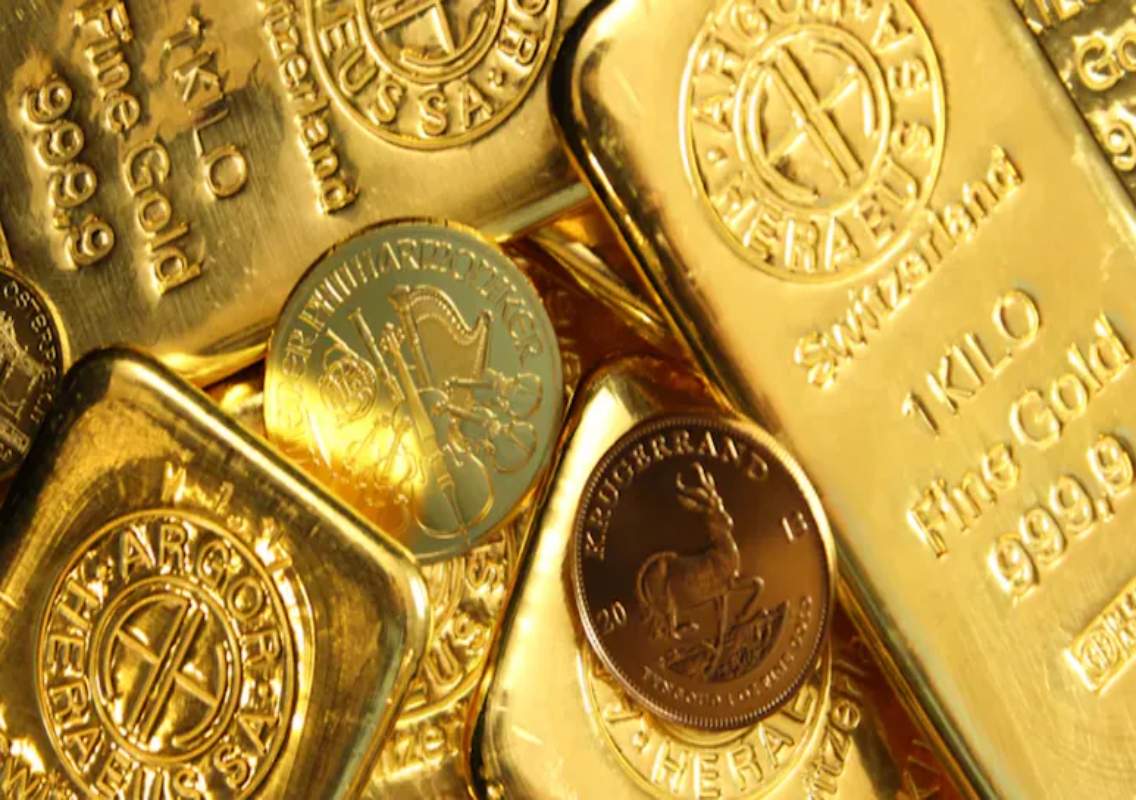


New Delhi: Investing in gold during Diwali is a long-standing tradition in India, with many families purchasing gold coins, bars and jewellery on Dhanteras as a symbol of prosperity. However, beyond its cultural significance, gold has also emerged as an important long-term investment option. A yearly investment of ₹25,000 in gold during Diwali could potentially grow into approximately ₹27 lakh over 25 years, assuming an average annual return of 10%.
With gold prices witnessing a historic rally in recent years, investors are increasingly considering the precious metal as part of their long-term financial portfolios. The rise in gold prices has also renewed interest in systematic investments, where individuals set aside a fixed amount every year rather than making a large one-time purchase.
Investing ₹25,000 in gold every Diwali could create a substantial corpus over 10, 15, 20 and 25 years.
The calculation assumes an average annual return of 10% on gold investments. While actual returns will depend on market movements, the projections demonstrate how regular investments and long holding periods can contribute to wealth creation.
Gold prices have delivered strong long-term returns
Gold has historically been regarded as a store of value and a hedge against economic uncertainty. In India, the precious metal occupies an important position in household savings, investment planning and traditional celebrations.
The recent rally in gold prices has further strengthened its appeal among investors.
The price of 24-carat gold increased from approximately ₹26,000 per 10 grams in 2015 to more than ₹1,30,000 per 10 grams in November 2026.
This represents a substantial increase over approximately 11 years, rewarding investors who maintained long-term exposure to the precious metal.
The rise has been supported by several factors influencing the global bullion market, including economic uncertainty, investor demand and changing financial conditions.
However, investors should remember that past price performance does not guarantee similar returns in the future. Gold prices can experience significant fluctuations depending on international market conditions, currency movements and demand.
Investing ₹25,000 in gold every Diwali for 10 years
For someone beginning a gold investment journey, a yearly investment of ₹25,000 may appear relatively modest. However, continuing the investment over a decade can create a meaningful financial asset.
Under the 10% annual return assumption, the calculation produces the following result:
| Investment details | Amount |
|---|---|
| Annual investment | ₹25,000 |
| Investment period | 10 years |
| Total amount invested | ₹2,50,000 |
| Estimated returns | ₹1,88,279 |
| Estimated total value | ₹4,38,279 |
The investor contributes a total of ₹2.50 lakh over 10 years. At the assumed rate of return, the investment generates an additional ₹1.88 lakh.
The estimated corpus reaches approximately ₹4.38 lakh.
This example highlights the potential benefit of maintaining a regular investment habit instead of purchasing gold only when prices appear favourable.
What happens when the investment continues for 15 years?
Extending the investment period to 15 years increases the potential value of the accumulated gold investment.
An individual investing ₹25,000 every Diwali would contribute ₹3.75 lakh over this period.
At an assumed annual return of 10%, the estimated investment value could reach approximately ₹8.73 lakh.
This means the investment could generate nearly ₹4.98 lakh in returns over and above the principal amount.
The difference between the invested amount and the estimated value demonstrates the impact of compounding over a longer period.
For individuals planning long-term financial goals, such as children’s education, future family expenses or wealth accumulation, a disciplined investment approach may help build financial resources gradually.
₹25,000 every Diwali for 20 years: Investment grows to ₹15.75 lakh
The potential growth becomes more significant when the investment continues for two decades.
An annual contribution of ₹25,000 over 20 years means the investor puts a total of ₹5 lakh into gold.
Based on the assumed 10% annual return, the estimated value of the investment could increase to approximately ₹15.75 lakh.
The projected value is more than three times the total amount invested.
This illustrates why investment duration is an important factor in long-term wealth creation. Rather than attempting to predict short-term price movements, investors following a regular investment strategy can focus on maintaining consistency.
However, the actual value of gold holdings will depend on the purchase prices, market performance and the method used to invest.
Investing ₹25,000 every Diwali for 25 years: Corpus reaches ₹27 lakh
The most significant projection in the calculation comes from continuing the annual investment for 25 years.
An investor contributing ₹25,000 every Diwali would invest a total of ₹6.25 lakh over this period.
Assuming an average annual return of 10%, the investment could grow to approximately ₹27 lakh.
The estimated growth is as follows:
| Investment details | Amount |
|---|---|
| Annual investment | ₹25,000 |
| Investment duration | 25 years |
| Total invested amount | ₹6,25,000 |
| Estimated total value | ₹27,00,000 |
| Estimated returns | ₹20,75,000 |
The projected returns of ₹20.75 lakh are substantially higher than the original investment of ₹6.25 lakh.
The calculation demonstrates how a relatively small annual contribution can potentially create a sizeable investment corpus when maintained over a long period.
For households that already purchase gold during Dhanteras or Diwali, setting a fixed annual investment budget could also help bring greater financial discipline to the tradition.
Comparison of gold investments over 10, 15, 20 and 25 years
The following table summarises how an annual investment of ₹25,000 could grow at an assumed average annual return of 10%.
| Investment period | Total invested | Estimated value |
|---|---|---|
| 10 years | ₹2.50 lakh | ₹4.38 lakh |
| 15 years | ₹3.75 lakh | ₹8.73 lakh |
| 20 years | ₹5 lakh | ₹15.75 lakh |
| 25 years | ₹6.25 lakh | ₹27 lakh |
Projected value of annual gold investments
Estimated corpus for a ₹25,000 annual investment at an assumed 10% return.
The comparison shows that the estimated investment value increases considerably as the holding period becomes longer.
While the total contribution increases gradually, the projected returns grow at a faster pace under the assumed compounding model.
Why does gold remain an important investment option?
Gold continues to hold an important position in Indian investment portfolios because of its historical role as a store of value.
One of its major attractions is its potential to provide diversification. Investors who hold equities, bonds and other financial assets may consider gold as an additional component of their portfolios.
Gold is also widely viewed as a potential hedge against inflation and economic uncertainty. During periods of financial instability, investor demand for precious metals can increase.
Another factor supporting gold’s popularity is its liquidity. Gold coins, bars and certain investment products can generally be sold through established markets, although the actual selling price depends on purity, prevailing rates and transaction costs.
However, gold does not generate regular interest or dividend income like certain other investment products. Its returns primarily depend on price appreciation.
Therefore, investors should consider gold as one component of a diversified portfolio rather than relying entirely on it for long-term wealth creation.
How can investors invest in gold every Diwali?
Individuals interested in following an annual gold investment strategy have several options.
Physical gold: Investors can purchase gold coins and bars from authorised jewellers and recognised dealers. Buyers should check purity, hallmarking, weight and applicable charges before purchasing.
Gold exchange-traded funds (ETFs): Gold ETFs provide exposure to gold prices through exchange-traded financial instruments. Investors can buy and sell units through a demat and trading account.
Gold mutual funds: These funds generally invest in gold ETFs and offer investors an alternative way to gain exposure to gold without directly holding physical metal.
Sovereign Gold Bonds: These government-issued securities were another route for investing in gold, offering returns linked to gold prices along with interest. However, fresh issuances should not be assumed to be available, and investors must check the current availability and secondary-market options.
The choice depends on individual investment objectives, costs, liquidity requirements and holding periods.
Important factors investors should consider
Although the projections indicate the potential of long-term gold investments, the assumed 10% annual return should not be treated as guaranteed.
Actual gold returns can vary considerably from one year to another. There may be periods when prices remain stagnant or decline.
Investors should also consider the costs associated with their chosen investment method.
Physical gold purchases may involve making charges, GST and differences between buying and selling prices. Gold ETFs and mutual funds may involve expense ratios, brokerage charges and other applicable costs.
Taxation is another important consideration. The applicable tax treatment depends on the investment product, purchase date and holding period. Investors should verify the prevailing tax rules before making decisions.
Most importantly, individuals should avoid investing money required for immediate expenses or emergency needs simply because gold prices are rising.
The 10% return assumption used in the projections is a mathematical illustration, not a promise of future performance.
Conclusion: Consistency can make a difference in long-term gold investments
Investing ₹25,000 in gold every Diwali could potentially build a corpus of approximately ₹27 lakh over 25 years, assuming an average annual return of 10%.
The projections also show that the same annual investment could grow to ₹4.38 lakh in 10 years, ₹8.73 lakh in 15 years and ₹15.75 lakh in 20 years.
For Indian households, the tradition of purchasing gold during Diwali could therefore be combined with a disciplined long-term investment approach.
However, investors should remember that gold prices are market-linked and returns are not guaranteed. A diversified portfolio, appropriate investment horizon and careful consideration of costs and taxes remain essential for achieving long-term financial goals.