







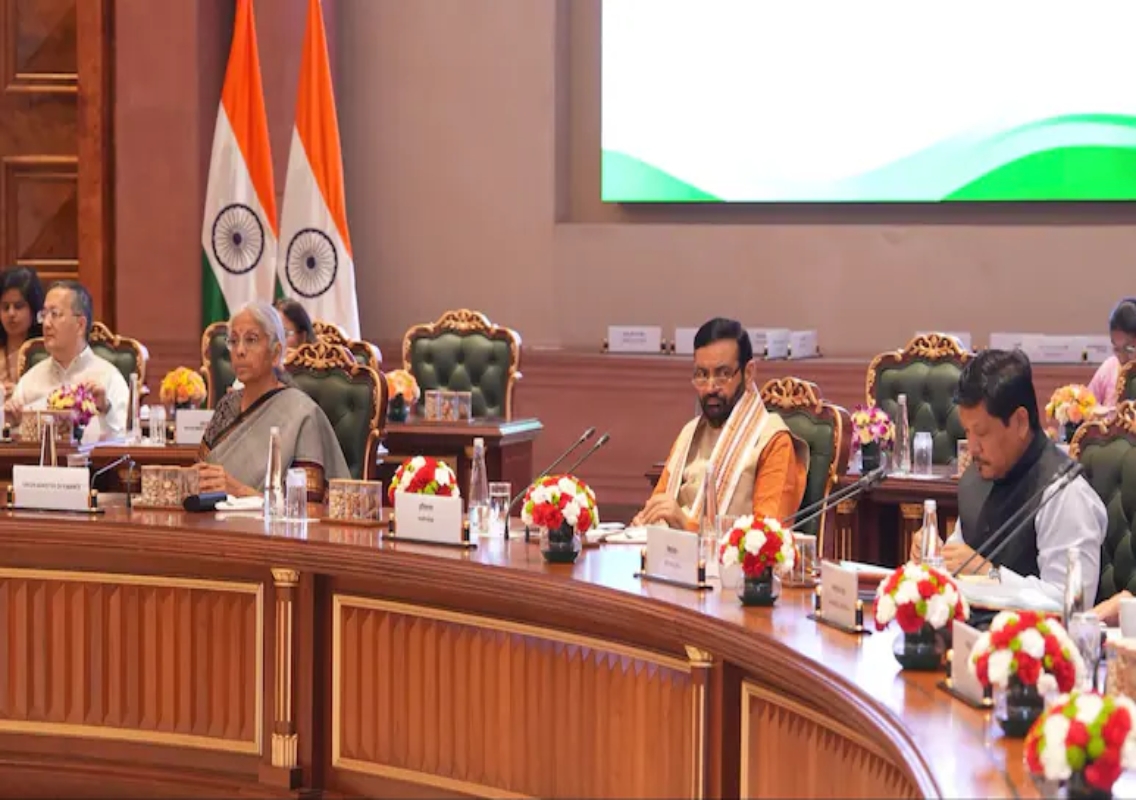


New Delhi: The Centre and states have discussed ways to mobilise financial resources for India’s long-term development agenda at the first Conference of State Finance Ministers and Finance Secretaries of States and Union Territories with legislatures. The two-day conference, held on September 18 and 19 in New Delhi, focused on financing India’s journey towards Viksit Bharat and examined the role of public and private capital in supporting future growth.
The conference brought together state finance ministers, finance secretaries, economists and financial experts to discuss the financial challenges associated with India’s development priorities. Key areas included the macroeconomic outlook, agricultural transformation and financing the country’s energy transition.
Focus on Centre-state coordination
A major theme of the conference was closer coordination between the Union government and states in financing development. The Ministry of Finance said the discussions were guided by the spirit of “Team India”, with the Centre and states working together towards the shared objective of Viksit Bharat.
The conference was also intended to provide a platform for regular discussions between the Centre and states on issues involving public finances, investment and development. Fifteenth Finance Commission chairman N K Singh called for a new Centre-state economic compact and said cooperative federalism would be important for financing the country’s development ambitions.
Singh also highlighted the need for states to learn from one another and improve their performance on development parameters. He said stronger coordination would need to be accompanied by healthy competition among states in areas such as development and investment.
Private capital seen as important for development
The discussions also highlighted the limitations of relying only on government budgets to finance India’s long-term investment requirements.
Economic Affairs Secretary Anuradha Thakur said private-sector financing would have to play a critical role alongside government expenditure. The discussions focused on innovative financing mechanisms and ways to mobilise additional private capital for development projects.
Chief Economic Adviser V Anantha Nageswaran also stressed the importance of greater private investment. He urged states to increase capital expenditure and create conditions that can attract private investors, including by ensuring adequate land, power and logistics infrastructure.
Nageswaran suggested that states could raise their capital outlay from around 2.4% of Gross State Domestic Product to 3% by 2031-32. He also emphasised improving project preparation and reporting so that development projects can access financing more effectively.
Agricultural transformation among key priorities
Financing agricultural transformation was one of the three broad thematic areas discussed at the conference.
The deliberations covered financing agricultural markets and marketing, as well as ways to strengthen resilience and promote sustainable resource use in Indian agriculture. The broader objective was to examine how financing can support changes in India’s agricultural sector while improving its long-term sustainability.
Agriculture remains an important part of state-level economic planning, making financing mechanisms particularly relevant for infrastructure, market access, productivity and sustainable resource management.
Energy transition needs new financing models
The financing of India’s energy transition was another major focus of the conference.
Discussions included financing renewable energy and transmission assets, along with emerging areas such as carbon capture, utilisation and storage. These areas are expected to require substantial investment over the longer term, making the participation of private capital increasingly important.
The conference therefore examined how public finance can help attract and support private investment in sectors where projects may involve high initial costs or longer investment horizons.
States urged to strengthen capital expenditure
The role of state finances was another important component of the discussions. Nageswaran said states would need to increase capital expenditure while maintaining fiscal discipline. He also highlighted the importance of improving the quality of projects and creating an investment-friendly environment.
Telangana Deputy Chief Minister and Finance Minister Bhatti Vikramarka, for instance, said the state was looking at mechanisms such as public-private partnerships, green bonds and blended finance to reduce dependence on government borrowing for infrastructure.
The discussions indicate that states could increasingly explore different financing instruments rather than depending primarily on conventional government borrowing to fund infrastructure and development.
Savings and investment gap remains a concern
N K Singh also pointed to the importance of increasing domestic savings to support India’s investment requirements. He said gross domestic savings were around 34% of GDP and argued that the rate would need to rise towards 38-40% to support the investment required for the country’s long-term development ambitions.
At the same time, he stressed that higher savings alone would not be sufficient and that public finance should help attract private capital.
The conference took place against a backdrop of strong recent economic growth. Singh referred to 7.8% growth in the first quarter of the current financial year as one of the positive indicators supporting the timing of the discussions.
A framework for future financing discussions
The first finance conference provided a common platform for the Centre and states to examine how India’s development priorities can be financed over the long term. The discussions covered public finance, private investment, agriculture, renewable energy, infrastructure and Centre-state coordination.
With India’s development ambitions extending towards 2047, the discussions underline the need for multiple sources of capital and stronger cooperation between different levels of government. The conference also highlighted the importance of improving state-level capital expenditure, attracting private investment and developing financing mechanisms suited to emerging sectors.
The Ministry of Finance said the conference provided deeper understanding of the challenges and opportunities on India’s path towards Viksit Bharat.