







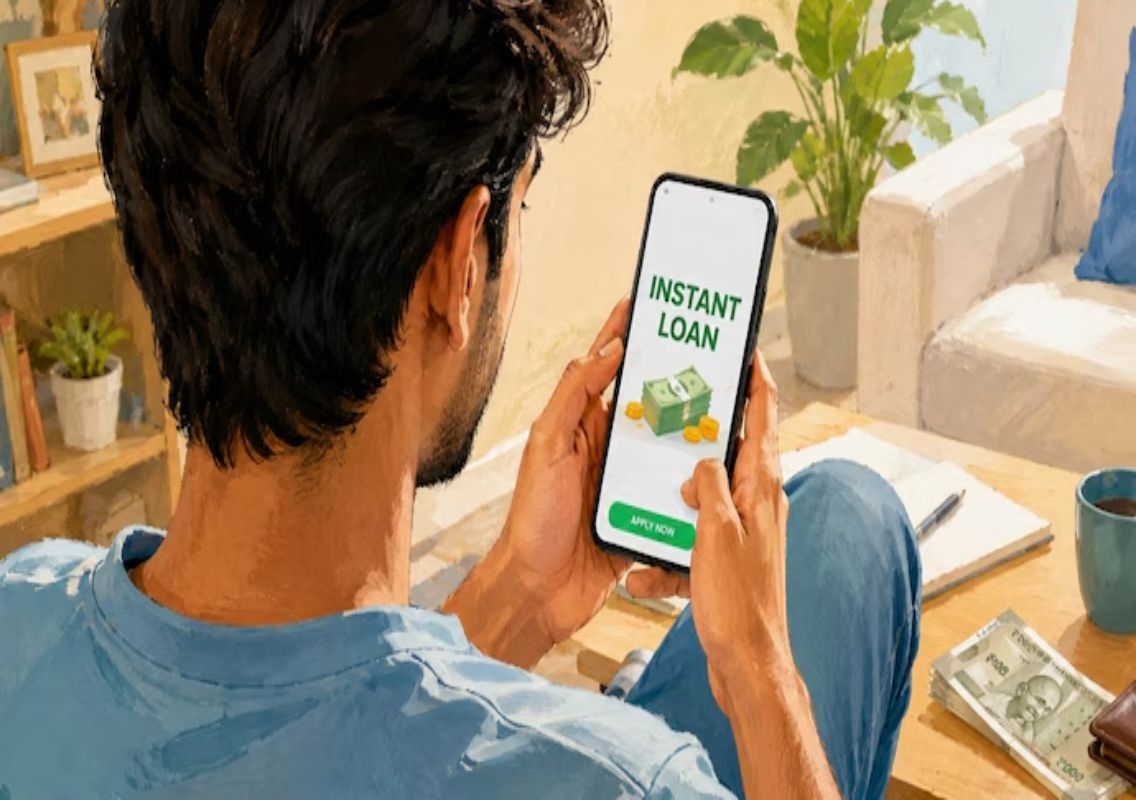


New Delhi: Getting a loan through a smartphone can take only a few minutes. Attractive advertisements promising instant approval, low interest rates and minimal paperwork can make digital borrowing appear simple. But the convenience can also expose borrowers to fake loan applications, excessive charges and misuse of sensitive personal information.
A recent report has highlighted the warning signs borrowers should look for before accepting a digital loan. The Reserve Bank of India (RBI) has also advised consumers to verify whether a digital lending app is associated with an RBI-regulated bank or non-banking financial company (NBFC) before using it.
The biggest mistake, therefore, is to focus only on how quickly money can reach a bank account. Borrowers should first establish who is actually providing the loan, what the total borrowing cost will be and what information the app wants to access.
Start with the lender, not the loan offer
A genuine-looking app is not necessarily proof of a genuine lender.
Warning signs can include an unclear lender identity, limited information about interest rates and charges, excessive permissions and promises of instant approval without an appropriate credit assessment.
Before applying, borrowers should identify the legal name of the bank or NBFC that is actually providing the credit.
The RBI advises consumers to check whether a digital lending app is associated with an RBI-regulated entity. This can be done through information provided by the lender and the RBI’s digital lending resources.
Borrowers should not assume that an app is genuine simply because it uses the name, logo or branding of a well-known financial institution.
An app store listing is not enough
Another common misconception is that an app available on an official app store must automatically be safe.
Borrowers should examine the developer’s name, privacy policy, customer support information, description and recent reviews before installing a lending application. These details should also be consistent with the information published on the lender’s official website.
If an app claims to represent a particular bank or NBFC but the developer information does not match the financial institution’s official details, borrowers should treat it as a serious warning sign.
The RBI has specifically advised consumers to avoid downloading suspicious loan applications received through SMS or social media links.
Check whether the lender is regulated
The most important question before taking a digital loan is whether the lender is regulated.
Borrowers should establish the name of the bank or NBFC providing the loan and independently verify the institution through official RBI sources.
The RBI’s financial awareness guidance says consumers should check the association of a digital lending app with an RBI-regulated bank or NBFC through the concerned lender’s website.
This independent verification is important because fraudsters can sometimes use familiar names or branding to make an application appear legitimate.
Beware of excessive app permissions
The information a loan application requests from a smartphone can reveal a lot about whether the app is behaving appropriately.
An application that asks for access to contacts, call logs or media files should make borrowers question why such information is necessary.
Some permissions may have legitimate purposes. For example, a camera could be required during a KYC process. But borrowers should understand why each permission is being requested and whether it is relevant to the service being provided.
The RBI has also advised consumers to carefully examine the permissions requested by digital lending applications and read the lender’s privacy and data-storage policies.
Your contacts should not become collateral
One particularly concerning situation is when a lending application seeks access to a borrower’s contact list without a clear reason.
Borrowers should remember that their friends, relatives and colleagues are not collateral for a loan.
If an application appears more interested in accessing personal information than in conducting a transparent credit assessment, it is worth stopping the application process.
Consumers should also avoid granting unnecessary permissions merely because an app says they are required for loan approval.
That low-interest loan may not be cheap
An advertisement offering a very low interest rate can be tempting, particularly when someone needs money urgently.
But the interest rate alone does not reveal the actual cost of borrowing.
Before accepting a digital loan, borrowers should examine the Annual Percentage Rate (APR), processing fee, other charges, repayment schedule, loan tenure and total amount payable.
The RBI’s financial awareness material specifically advises borrowers to assess the total cost of a digital loan through the APR and other terms provided in the Key Fact Statement (KFS).
This is important because a loan advertised with an attractive interest rate can still become expensive after processing fees and other applicable charges are included.
Read the Key Fact Statement
Borrowers should not rush through the documentation simply because the application promises immediate approval.
The KFS contains important information about the cost and terms of the loan. Consumers should read it carefully before accepting the credit.
The RBI also advises borrowers to read documents such as the KFS, sanction letter and relevant privacy policies carefully.
If the terms are unclear, borrowers should seek clarification from the lender before proceeding.
A legitimate lender should be able to explain the loan amount, repayment obligations, applicable charges and other important terms.
Be careful with Aadhaar, PAN and bank details
Digital lenders may legitimately require personal information for KYC and credit assessment.
However, borrowers should understand why the information is being collected, whether it is necessary and how it will be used.
Aadhaar, PAN and bank details should not be entered into an unfamiliar platform simply because it promises quick money.
The RBI advises consumers to read privacy policies and data-storage policies carefully and examine the permissions required by digital lending apps before installing them.
Sensitive information should preferably be submitted through the lender’s verified and official digital platform.
Avoid paying upfront fees to suspicious lenders
A demand for money before a loan is processed can be another major warning sign.
RBI consumer guidance on fake loan apps warns that reputed banks and NBFCs do not ask borrowers to make payments before processing a loan application in the manner associated with fraudulent lenders. Genuine lenders also conduct appropriate verification rather than offering money without checking documents and credentials.
Therefore, borrowers should be extremely cautious if an unfamiliar lender demands an upfront payment for approval, processing, insurance or another supposed requirement without providing clear and verifiable documentation.
Instant approval is not necessarily a benefit
The promise of receiving money within minutes can make a loan app attractive.
But speed should not replace transparency.
A responsible digital lender should provide clear information about the lender’s identity, borrowing costs, data use, repayment terms and grievance-redressal arrangements.
An offer that promises approval with almost no verification should therefore be examined carefully.
Borrowers should also be wary of messages claiming that a loan is available only for a short period or that immediate action is required. RBI guidance identifies pressure tactics and unusually urgent offers as potential warning signs associated with fraudulent lending.
What to check before accepting a digital loan
A simple five-minute verification can reduce the risk of falling for a fake loan application.
Borrowers should check:
- Who is the actual lender? Verify the bank or NBFC independently.
- Is the lender regulated? Check official RBI sources.
- Does the app match the lender’s website? Compare the developer and company details.
- What permissions does the app request? Avoid unnecessary access to contacts, call logs and media.
- What is the actual cost? Check APR, processing fees, other charges and the total repayment amount.
- Have you read the KFS? Understand the terms before accepting.
- How will your data be used? Read the privacy policy.
- Is customer support clearly available? A legitimate lender should provide a proper grievance channel.
What to do if an app looks suspicious
Consumers should not continue with an application simply because they have already entered some information.
If an app appears suspicious, borrowers should avoid providing additional personal or financial information and should not make payments to unknown parties.
The RBI advises that suspicious loan applications, including those found on app stores or received through SMS and social media links, should be reported to law enforcement agencies.
For complaints involving regulated entities, borrowers can also use the applicable grievance-redressal mechanism. The RBI’s current Integrated Ombudsman Scheme provides a mechanism for eligible complaints involving deficiencies in service by covered regulated entities.
Convenience should not replace verification
Digital lending has made access to credit considerably easier, but the same convenience can be exploited by fraudsters.
The safest approach is to slow down before accepting an offer. A borrower should verify the lender, understand the complete cost of the loan, examine app permissions and protect sensitive personal information.
The RBI’s guidance makes the central principle clear: consumers should verify whether a digital lending app is linked to a regulated bank or NBFC rather than trusting an application simply because it looks professional.
Conclusion
A loan that promises instant approval and minimal paperwork may look attractive, particularly during an emergency. But borrowers should not allow urgency to replace basic financial checks.
Before downloading or using a loan app, verify the lender’s identity and regulatory status. Check the developer details, avoid suspicious SMS and social media links, question unnecessary permissions and carefully examine the KFS, APR, processing charges and repayment schedule.
Most importantly, borrowers should never share sensitive information blindly or make payments to suspicious lenders.
The safest digital loan is not necessarily the fastest one — it is the one where the lender, costs, terms and use of your data are transparent and independently verifiable.