







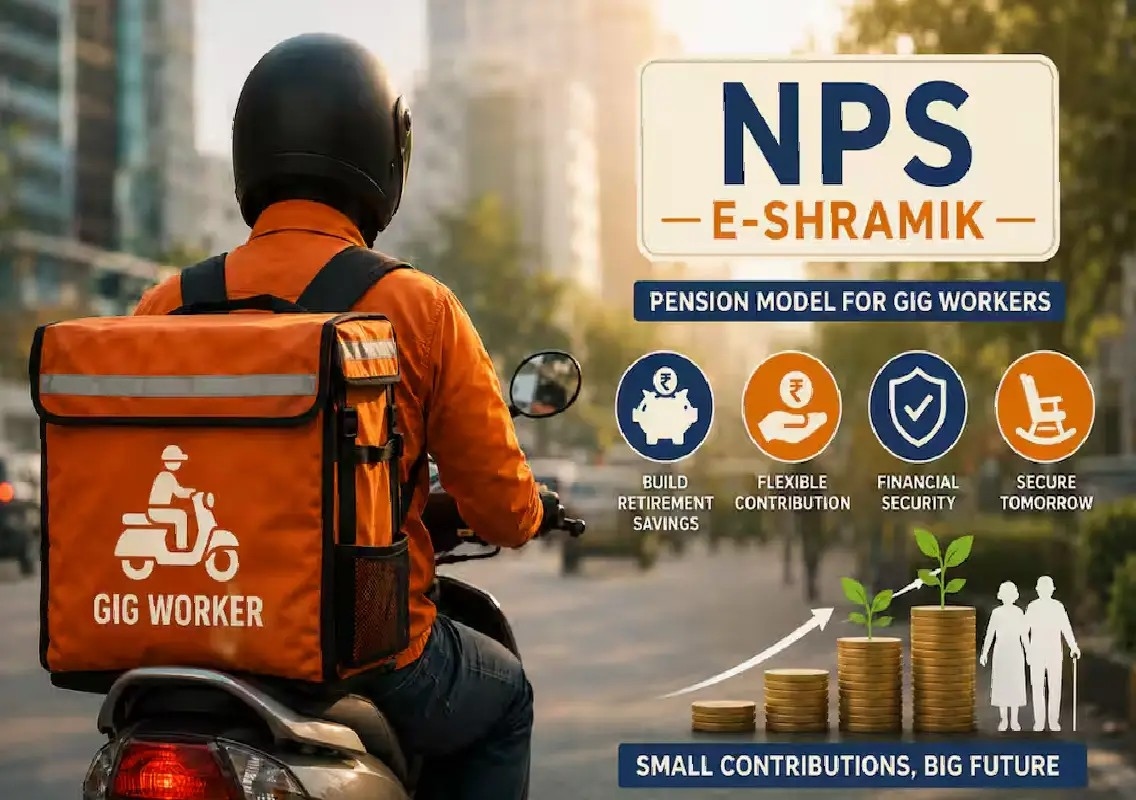


New Delhi: India’s gig and platform workers can build a retirement corpus through the National Pension System (NPS) under the NPS e-Shramik (Platform Service Partner) model, which allows contributions without a fixed minimum or maximum amount prescribed by the regulator.
The model is designed for workers whose earnings can fluctuate depending on deliveries, rides, bookings and other assignments.
Flexible contributions for gig workers
The Pension Fund Regulatory and Development Authority (PFRDA) launched the NPS e-Shramik model on October 29, 2025, to bring platform workers into a structured retirement savings framework.
The model covers workers providing services through digital platforms such as Zomato, Swiggy, Ola, Uber and Urban Company.
PFRDA has not prescribed a mandatory minimum or maximum contribution for individual pension accounts. Workers can therefore contribute according to their earning capacity and the arrangement agreed with the platform aggregator.
PFRDA has highlighted that workers can start with contributions as low as Rs 99. However, this is not a mandatory minimum contribution set by the regulator.
Worker or platform can contribute
The framework also provides flexibility over who contributes to the pension account. Contributions can be made by the worker, the platform aggregator, or jointly by both.
According to the October 2025 PFRDA circular, Points of Presence (PoPs) are responsible for engaging with platform aggregators, educating workers and facilitating their onboarding.
The worker and aggregator can also determine the applicable contribution structure for their arrangement.
Building a retirement corpus over time
The initiative aims to address a social-security gap faced by workers who do not have predictable monthly salaries or conventional employment-linked retirement benefits.
However, flexibility also makes regular saving important. Workers seeking to build a meaningful retirement corpus will ultimately need to contribute whenever their income allows and remain invested for the long term.