




New Delhi: India will require around $220 billion in investment to achieve its target of 500 gigawatts (GW) of renewable energy capacity by 2030, with the government looking to attract foreign direct investment (FDI) alongside domestic capital to bridge the funding gap.
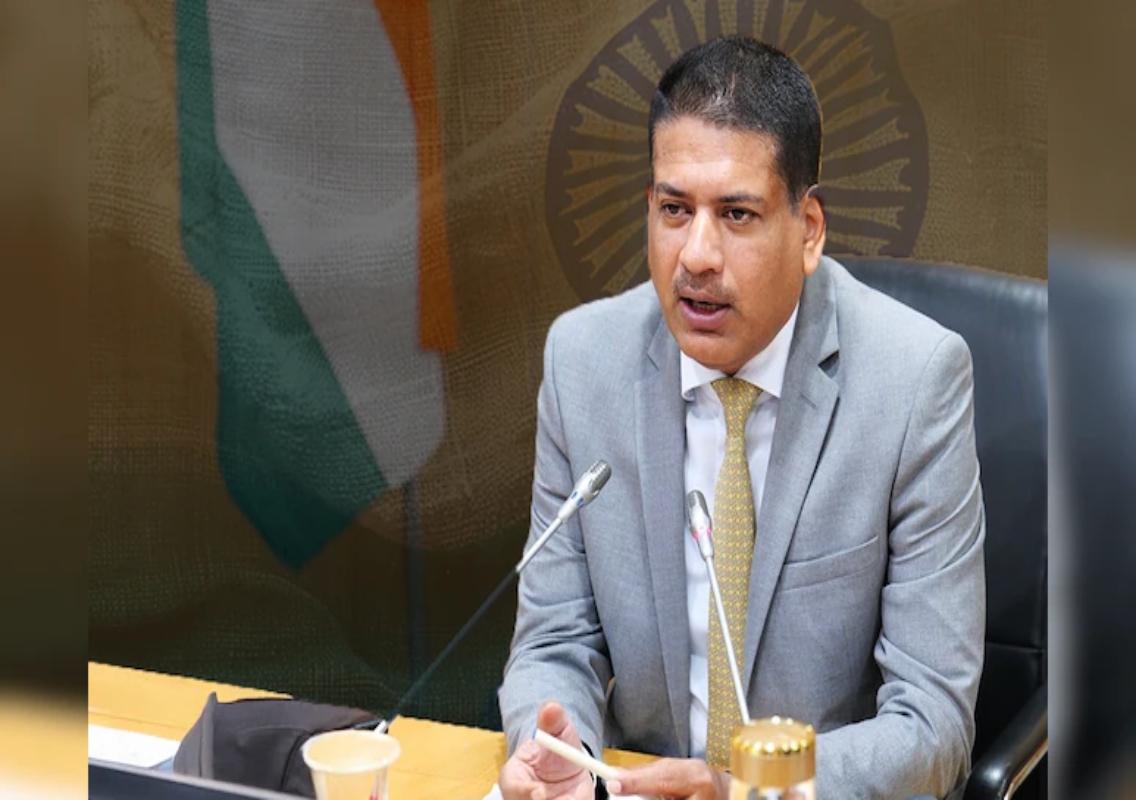
Ministry of New and Renewable Energy (MNRE) Secretary Santosh Kumar Sarangi outlined the investment requirement in an interview with NDTV Profit, highlighting the importance of private capital, domestic manufacturing and stronger transmission infrastructure in accelerating India’s clean energy transition.
India has installed around 310 GW of renewable energy capacity so far and is working towards its 500 GW target by the end of the decade. Achieving the goal will require significant additional investment as well as improvements in the infrastructure needed to integrate renewable electricity into the national grid.
Sarangi said foreign investment would be important, but domestic capital would also have to contribute substantially to meet the funding requirement. The government is preparing to host its biggest-ever green energy summit to attract investors and encourage fresh capital inflows into renewable energy projects.
India seeks domestic and foreign investment
The estimated $220 billion investment requirement highlights the scale of the challenge facing India’s renewable energy sector. Solar and wind power projects require substantial upfront funding, while the supporting infrastructure must expand to accommodate the growing volume of electricity generated from renewable sources.
The government is seeking to attract investors through policy support, manufacturing incentives and initiatives intended to improve the investment environment. Foreign direct investment could help bring additional capital and technology into the sector, while domestic financial institutions and companies will remain important sources of funding.
However, investment alone will not be sufficient. Projects must also be supported by transmission networks, grid-management systems and the infrastructure required to move electricity from renewable energy installations to consumers.
As more solar and wind capacity comes online, the electricity system will need greater flexibility to manage fluctuations in generation and ensure reliable power supply. These requirements make transmission planning and grid integration central to India’s 2030 ambitions.
Transmission infrastructure remains a major priority
Renewable energy projects are often located in areas with strong solar or wind resources, which may be far from major consumption centres. Expanding transmission capacity is therefore essential to ensure the electricity generated can reach homes, industries and commercial facilities.
The government is pursuing the Green Energy Corridor programme to strengthen the infrastructure needed to evacuate renewable power within states and across the wider electricity network.
The third phase of the programme involves an outlay of around ₹54,000 crore and is expected to support the evacuation of 135 GW of renewable energy between 2030 and 2035.
The planned expansion is intended to prepare the grid for further growth in clean electricity generation. Without adequate transmission capacity, new renewable energy projects could face difficulties delivering their output efficiently, limiting the benefits of investment in generation.
The scale of the planned corridor programme also highlights the importance of coordinating renewable energy development with grid expansion rather than treating generation and transmission as separate priorities.
Government focuses on domestic solar manufacturing
Alongside expanding renewable energy capacity, the government is seeking to strengthen India’s domestic manufacturing ecosystem and reduce dependence on imported solar components.
Sarangi said the ministry was in discussions with the Finance Ministry about incentives for polysilicon manufacturing, an important stage in the solar photovoltaic supply chain. India has significant potential to develop this industry, with the availability of silica offering a possible domestic resource.
Polysilicon is used in the production of solar-grade materials that are subsequently processed into wafers, cells and modules. Building domestic capacity across these stages could help India develop a more integrated solar manufacturing industry.
The government has already used the production-linked incentive (PLI) scheme to support solar module manufacturing. It is also expanding the Approved List of Models and Manufacturers (ALMM) framework to cover additional parts of the renewable energy supply chain.
These measures are intended to give domestic manufacturers greater visibility about future demand and encourage long-term investment in production facilities.
New rules for ingot and wafer manufacturing
The government has notified ALMM requirements for solar ingot and wafer manufacturing from June 2028. According to Sarangi, the ministry has received capacity declarations of around 80 GW following the move.
The policy is expected to provide manufacturers with a clearer timeline for planning investments in these intermediate stages of solar production.
India’s solar manufacturing ambitions extend beyond modules. Developing domestic capabilities in polysilicon, ingots, wafers and cells could reduce reliance on imported inputs and make the supply chain more resilient.
The government is pursuing a similar approach for polysilicon and has also introduced ALMM requirements for wind turbine components, including generators and gearboxes.
The stated objective is to ensure that equipment required for 24 GW of wind energy capacity can be supplied domestically.
Sarangi also highlighted the need to learn from China’s experience in manufacturing and deploying renewable energy equipment at scale, while addressing technology-transfer issues.
Rooftop solar scheme targets one crore households
The government is also seeking to increase household participation in solar power through the PM Surya Ghar rooftop solar scheme.
Around 63 lakh households have been covered under the programme so far, against a target of one crore households. The ministry has made changes to encourage wider adoption, particularly among households and regions where participation has been slower.
According to the figures shared in the report, Andhra Pradesh has reported 7.7 lakh households under the initiative, while Bihar has recorded 2.5 lakh and Odisha more than three lakh.
The expansion of rooftop solar can help households generate part of their own electricity and potentially reduce their dependence on conventional grid power. However, wider adoption also depends on awareness, installation capacity, financing and the ease of accessing the scheme.
The government is looking to build momentum in states that entered the rooftop solar programme more recently, with the broader objective of expanding distributed renewable energy across the country.
Agrivoltaics offers opportunities for farming regions
Agrivoltaics, which combines agricultural activity with solar power generation on the same land, is another area receiving attention.
The approach could help expand renewable energy adoption in states such as Bihar, Uttar Pradesh, Odisha, West Bengal, Chhattisgarh and Jharkhand.
By allowing farming and electricity generation to coexist, agrivoltaics may offer an additional income opportunity for landowners while contributing to clean power production. Its suitability will depend on crop requirements, solar installation design, water availability and local farming conditions.
The initiative reflects the government’s broader effort to expand renewable energy beyond large solar parks and wind farms, bringing more households, farmers and local communities into the clean energy transition.
Renewable power for data centres and EV charging
India is also positioning renewable electricity as a competitive energy source for electric vehicle (EV) charging networks, global capability centres (GCCs) and data centres.
Solar power can support daytime EV charging, when electricity generation is typically strong. Data centres and GCCs, however, require reliable electricity throughout the day, making the availability of round-the-clock renewable power particularly important.
Sarangi expressed confidence that India could supply round-the-clock renewable electricity at competitive rates, citing a discovered tariff of ₹5.25 per unit.
Reliable clean power could strengthen India’s appeal to businesses seeking to reduce their carbon footprint while maintaining uninterrupted operations. For data centres in particular, the ability to secure dependable electricity is an important consideration when choosing locations and planning expansion.
The government is also revising power purchase agreements signed before recent Goods and Services Tax reductions on solar equipment. The tax-related savings are expected to be reflected in tariffs under the revised arrangements.
A long-term challenge for India’s clean energy transition
India’s target of 500 GW of renewable energy capacity by 2030 will require coordinated action across investment, manufacturing, power generation and transmission.
The estimated $220 billion funding requirement underscores the importance of attracting both domestic and international investors. At the same time, policies supporting local manufacturing, rooftop solar, agrivoltaics and renewable electricity for commercial users are intended to broaden the benefits of the transition.
The government will also need to ensure that transmission infrastructure keeps pace with new capacity and that renewable electricity can be delivered reliably to consumers.
India’s progress towards its clean energy goal will therefore depend not only on how quickly new solar and wind projects are built, but also on whether financing, domestic supply chains and grid infrastructure develop at the required scale.