







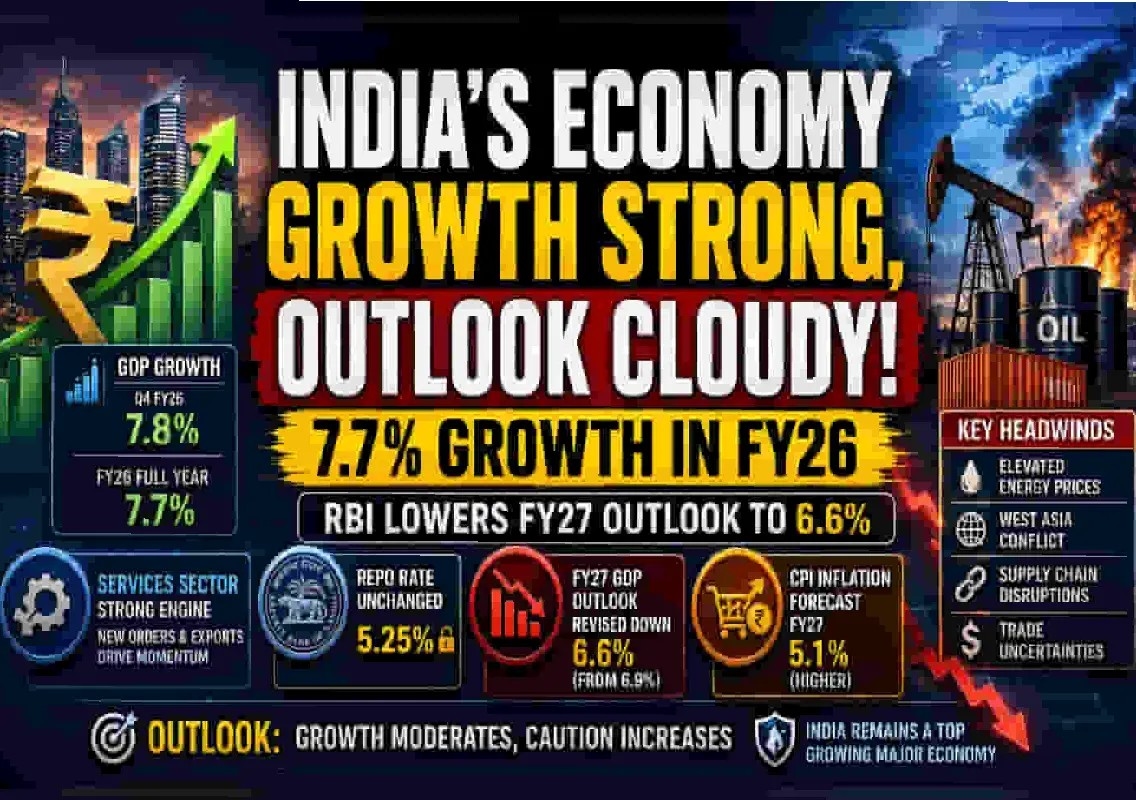


India’s economy recorded stronger-than-expected growth in the January-March quarter of 2026, reinforcing its position as one of the world’s fastest-growing major economies.
Official data released on Friday showed that the country’s Gross Domestic Product (GDP) grew by 7.8 per cent compared to the same quarter a year earlier.
Growth exceeds forecasts
The latest growth figure surpassed market expectations of 7.3 per cent, although it was slightly lower than the 8 per cent expansion recorded in the previous quarter.
Economists had anticipated a moderation in growth amid global economic challenges, making the latest performance a positive surprise.
The strong showing was supported by resilient domestic demand, investment activity and continued economic momentum across key sectors.
Fiscal year growth revised upward
India’s GDP growth for the financial year 2025-26, which ended in March, has been estimated at 7.7 per cent.
This marks an improvement over the 7.1 per cent growth recorded during the previous financial year, reflecting the economy’s sustained recovery and expansion.
The latest figures further strengthen India’s standing among the fastest-growing large economies globally.
RBI lowers future growth outlook
Despite the strong quarterly performance, the Reserve Bank of India (RBI) has revised its growth forecast for 2026-27 downward.
The central bank reduced its GDP projection from 6.9 per cent to 6.6 per cent, citing global uncertainties and supply-chain disruptions.
RBI Governor Sanjay Malhotra warned that prolonged geopolitical tensions, volatility in international financial markets and weather-related disruptions could affect economic activity in the coming months.
Global risks remain
The central bank also highlighted concerns over rising energy prices and disruptions in the supply of key commodities, factors that could impact growth and inflation.
While India’s economy continues to demonstrate resilience, policymakers remain cautious about external risks that could influence the country’s economic trajectory during the current financial year.