







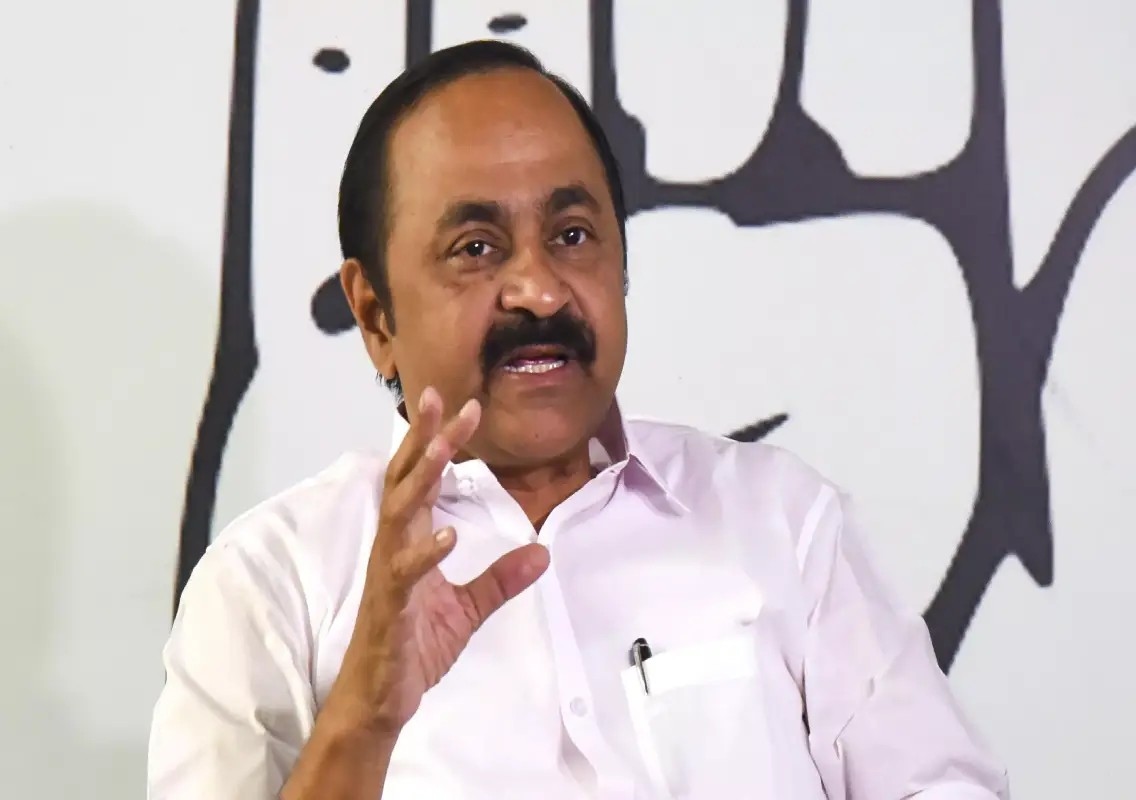


Thiruvananthapuram: Kerala Chief Minister V. D. Satheesan on Friday presented the first Budget of the United Democratic Front (UDF) government for the financial year 2026-27 in the Kerala Legislative Assembly, outlining the administration’s fiscal roadmap amid mounting concerns over the state’s financial health.
Satheesan, who also holds the Finance portfolio, presented the Budget against the backdrop of a recently released White Paper that highlighted the state’s growing debt burden, fiscal deficit and mounting liabilities.
The Budget is expected to provide insights into the government’s strategy for managing Kerala’s financial challenges while continuing welfare programmes and pursuing developmental initiatives.
Budget presented amid financial concerns
Thiruvananthapuram witnessed heightened attention as the Chief Minister unveiled the Budget, which comes just weeks after the UDF government tabled a White Paper on the state’s finances in the Assembly.
As part of the traditional pre-Budget process, printed copies of the Budget document were delivered to the Chief Minister’s official residence by senior finance department officials, including Additional Chief Secretary (Finance) K. R. Jyothilal.
The Budget presentation marks an important milestone for the newly elected UDF government as it seeks to address concerns raised in the White Paper while charting a path towards fiscal stability.
White Paper highlights debt burden
According to the White Paper tabled in the Assembly on June 4, Kerala’s total public debt has reached approximately Rs 5.07 lakh crore, raising concerns about the state’s long-term financial sustainability.
The report described the fiscal situation as challenging and stated that a substantial portion of the state’s revenue is being consumed by committed expenditures.
It noted that nearly 77 per cent of government revenue is spent on recurring obligations such as salaries, pensions and interest payments. This leaves relatively limited fiscal space for developmental and infrastructure projects.
The government has indicated that addressing this imbalance will be a key priority in the coming years.
Limited resources for development spending
The White Paper also drew attention to Kerala’s capital expenditure levels, which it said stand at only 1.3 per cent of the Gross State Domestic Product (GSDP).
Despite recording one of the highest fiscal deficits among Indian states, Kerala’s spending on infrastructure and development projects remains comparatively low, according to the report.
Economists often view capital expenditure as a crucial driver of long-term economic growth because it creates assets, improves infrastructure and generates employment opportunities.
The Budget is therefore expected to focus on increasing investment in productive sectors while maintaining fiscal discipline.
Treasury operations under pressure
The financial report also highlighted challenges faced by the state treasury during the previous year.
According to the White Paper, Kerala relied on Ways and Means Advances for 262 days during 2025, indicating frequent cash-flow pressures.
The state reportedly remained in overdraft for 84 days, underscoring the strain on government finances and the need for stronger revenue mobilisation and expenditure management.
Financial analysts have noted that reducing dependence on short-term borrowing mechanisms will be important for improving the state’s fiscal position.
Pending liabilities remain significant
Another major concern identified in the report is the accumulation of pending liabilities amounting to Rs 48,733 crore.
These include unpaid dearness allowance (DA) and dearness relief (DR) arrears due to government employees and pensioners, along with other financial commitments.
The issue has been a matter of concern for employee organisations and pensioners, who have been seeking clarity regarding the settlement of outstanding dues.
The Budget is expected to indicate how the government intends to manage these liabilities while maintaining essential public services.
Focus on balancing welfare and growth
The UDF government faces the challenge of balancing Kerala’s extensive welfare commitments with the need to strengthen economic growth and improve fiscal sustainability.
Observers expect the Budget to include measures aimed at boosting investment, enhancing revenue generation and improving infrastructure while safeguarding social welfare programmes that support millions of residents.
The government’s approach is likely to be closely watched by economists, industry stakeholders, public sector employees and citizens as Kerala navigates its current financial situation.
Conclusion
The presentation of the first UDF Budget by Chief Minister V. D. Satheesan marks a significant moment for Kerala’s new government as it confronts a challenging fiscal landscape. With public debt exceeding Rs 5 lakh crore, high committed expenditure and substantial pending liabilities, the Budget is expected to outline a roadmap for restoring financial stability while continuing the state’s welfare and development agenda.