







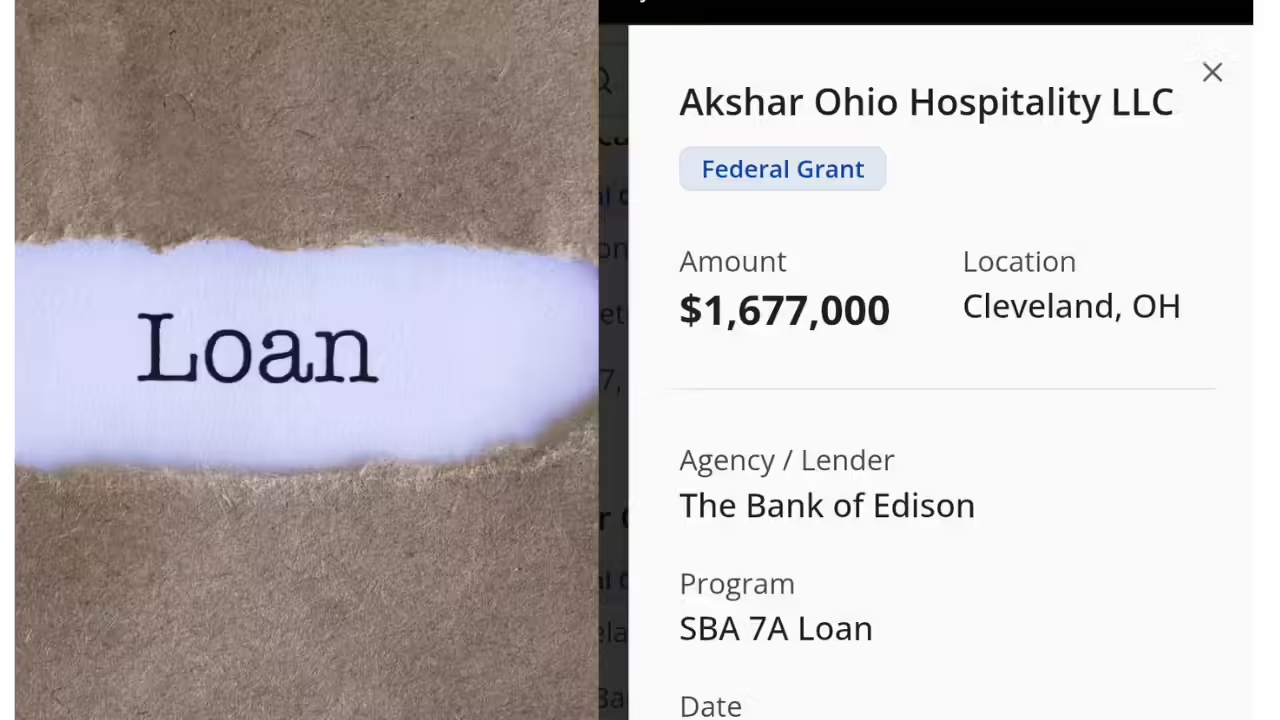


A viral post on social media platform X has sparked a heated debate in Ohio after claiming that a $1.677 million Small Business Administration (SBA) loan was granted to Indian-American hotel owners, raising questions about the use of American taxpayer money amid rising local property taxes.
The post alleged that federal funds were directed to Indian hoteliers and attached screenshots appearing to be from USAspending.gov, linking the loan to hospitality properties including a Microtel Inn & Suites in Cambridge, Ohio. Ownership records shared online pointed to links with the Patel family, a surname commonly associated with Indian-American hotel ownership in the United States.
Claims spark political and social backlash
The user who shared the post wrote, “Here’s where your Ohio tax dollars are going. SBA Loan $1,677,000 for Indian hoteliers,” triggering strong reactions, particularly from conservative and MAGA-aligned accounts. Several users questioned whether such loans should be extended to businesses perceived as already established or operating across multiple states.
One user asked, “SBA loans are for small American businesses, not already established corporations. Why is this legal?” Another alleged that similar groups had also accessed Paycheck Protection Program (PPP) loans during the pandemic.
Indian-Americans’ role in US hotel industry
Industry data shows that Indian-Americans, particularly those of Gujarati origin, play a dominant role in the US hospitality sector. According to the Asian American Hotel Owners Association, Indian-Americans own nearly 60 per cent of hotels across the country — around 34,000 properties.
This trend dates back to the 1970s, when immigrant families began purchasing struggling motels and running them as family-owned businesses. Over decades, the model expanded through pooled savings, community financing, and access to SBA-backed loans legally available to eligible US residents and citizens.
Legal but politically sensitive
Experts note that SBA loans are not restricted by ethnicity and are granted based on eligibility criteria such as business size, creditworthiness and compliance with federal guidelines. However, critics argue that such programmes disproportionately benefit well-networked groups, sidelining local buyers.
The controversy also reflects broader political tensions around immigration, economic opportunity and federal spending, especially in states facing higher taxes and economic pressures.
As of now, no official irregularities have been reported in connection with the Ohio-linked loan. However, the viral post has reignited national debate on who truly benefits from America’s small business funding programmes — and how perception can fuel political divides.