







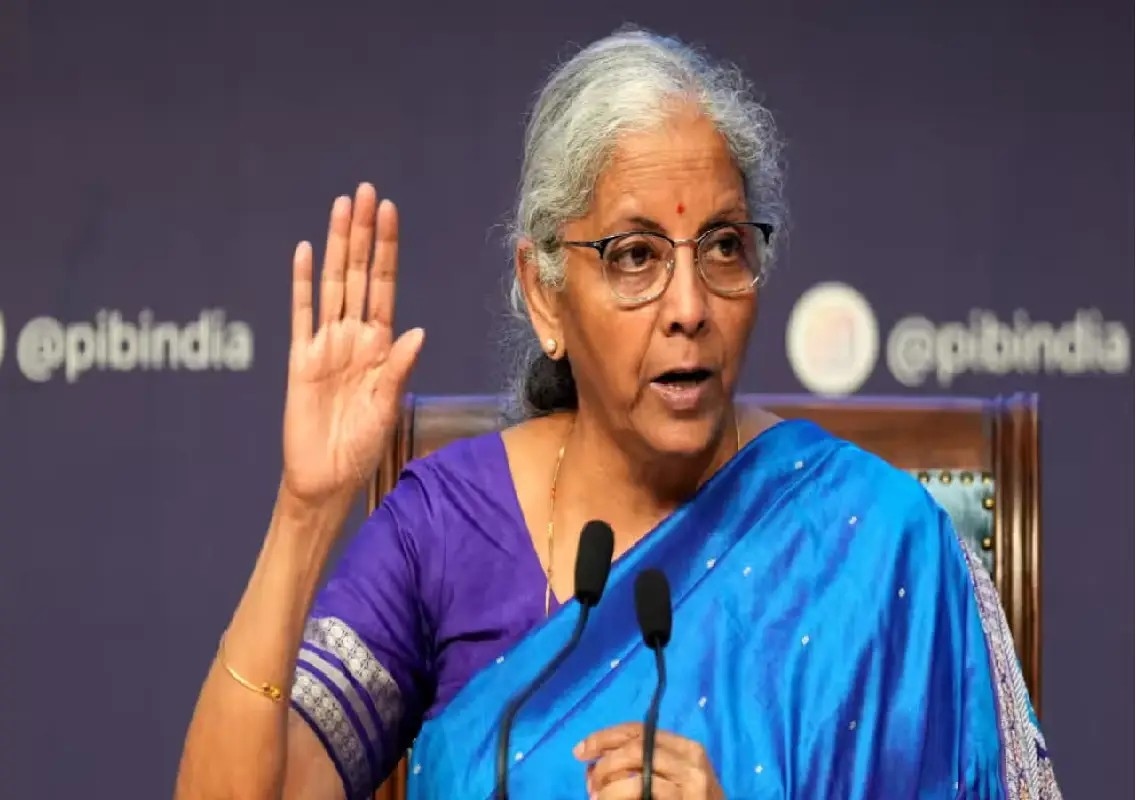


New Delhi: Union Finance Minister Nirmala Sitharaman has urged the Indian toy industry to set more ambitious export targets, saying the country has the potential to capture a significantly larger share of the projected USD 179 billion global toy market by 2032 instead of limiting itself to a projected USD 5 billion market by 2034.
Addressing the 17th Toy Biz International B2B Expo, organised by the Toy Association of India, the Finance Minister highlighted the transformation of India’s toy manufacturing sector over the past five to six years and called for greater emphasis on innovation, branding and exports.
Toy exports expand to 153 countries
Sitharaman said India’s toy exports have witnessed steady growth, reaching USD 186 million in the financial year 2025-26, with Indian-made toys now being exported to 153 countries.
She also pointed to a sharp decline in toy imports, particularly low-cost products that had earlier entered the country in large quantities.
According to the Finance Minister, toy imports have fallen by 71 per cent between 2019 and 2026, reflecting the impact of government policy measures aimed at strengthening domestic manufacturing.
Policy measures drive industry growth
The Minister attributed the sector’s turnaround to targeted government interventions.
She noted that the Union government increased the basic customs duty on toys from 20 per cent to 60 per cent in February 2020 to discourage the import of cheap and unsafe products.
She also highlighted stricter enforcement of quality standards by the Bureau of Indian Standards (BIS) at airports and in domestic markets to ensure only compliant products are sold in India.
According to Sitharaman, these initiatives have encouraged domestic manufacturing while improving the quality and competitiveness of Indian toys.
Government strengthening toy ecosystem
Sitharaman said the National Action Plan for Toys, renewed in the 2024 Union Budget, brings together 14 central ministries to support cluster development, skill enhancement and the creation of a globally competitive toy manufacturing ecosystem.
She noted that toy clusters have been established under the MSME SPURTI scheme in Karnataka, Rajasthan, Tamil Nadu, Uttar Pradesh and Andhra Pradesh, providing assistance for infrastructure development, product design and market access.
The Finance Minister said these initiatives are helping traditional artisans and manufacturers modernise production while expanding their reach.
Trade agreements open new markets
Highlighting export opportunities, Sitharaman said free trade agreements have improved market access for Indian toy manufacturers.
Under the India-UAE Comprehensive Economic Partnership Agreement (CEPA) and the India-Australia Economic Cooperation and Trade Agreement (ECTA), Indian toys now enjoy duty-free access to these markets.
She added that exporters can also benefit from the Remission of Duties and Taxes on Exported Products (RoDTEP) scheme, while small manufacturers have access to affordable credit through the PM Mudra Yojana and the Credit Guarantee Fund Trust for Micro and Small Enterprises (CGTMSE).
Innovation and branding key to growth
The Finance Minister stressed that future growth would depend not only on manufacturing but also on innovation and strong branding.
She cited the E-Toy-Cathon, organised by the Ministry of Electronics and Information Technology (MeitY), as an initiative encouraging the development of augmented reality games, coding kits and indigenous electronic toys.
She also highlighted the role of digital public infrastructure such as Unified Payments Interface (UPI), the Account Aggregator framework and the Open Network for Digital Commerce (ONDC) in enabling artisans and small manufacturers to sell directly to customers across the country.
“Manufacturing is important, but branding creates value. Enduring value is only when your brand can be identified,” Sitharaman said.
Promoting ‘Made in India’ toys globally
Referring to India’s long tradition of toy-making, Sitharaman cited cultural practices such as Bommai Kolu during Navaratri and ancient toys discovered at Sindhu-Saraswati civilisation sites as examples of the country’s rich heritage.
She urged manufacturers to build globally recognised Indian brands, saying, “Let toys carry the mark ‘Made in India’. Let that Made in India toy travel the world.”
The Finance Minister said India’s growing manufacturing capabilities, supportive government policies and expanding export opportunities position the country to emerge as a major player in the global toy industry.