







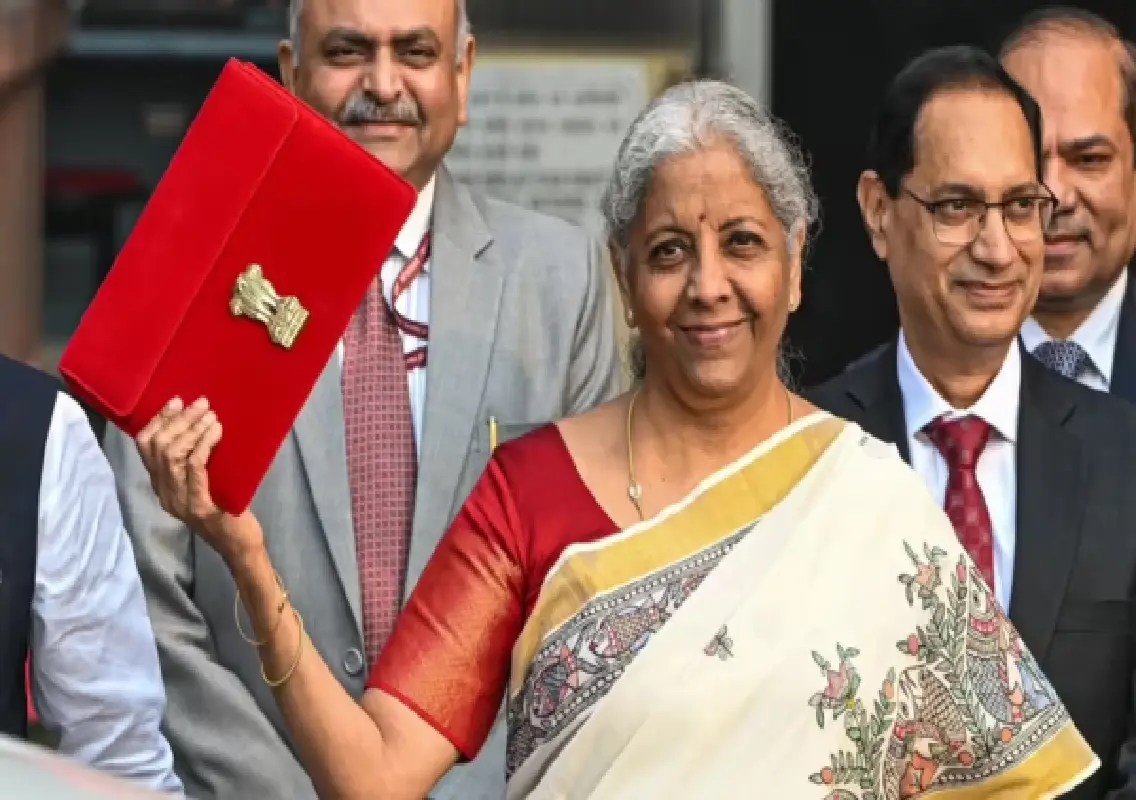


New Delhi: Finance Minister Nirmala Sitharaman will present the Union Budget for 2026–27 on February 1, Lok Sabha Speaker Om Birla confirmed on Monday, putting an end to speculation over the date of the crucial annual financial exercise. The upcoming Budget will be Sitharaman’s ninth presentation in Parliament, underscoring her status as one of India’s longest-serving finance ministers in recent decades.
Budget date officially confirmed
The confirmation came amid discussions and speculation in political and economic circles about possible changes to the traditional Budget timetable. By reaffirming February 1 as the presentation date, the Speaker clarified that the government is adhering to the established practice followed since 2017, when the Budget presentation was advanced from the end of February to allow for faster implementation of policy measures from the start of the financial year on April 1.
Officials said the Finance Minister is expected to outline the government’s fiscal roadmap for 2026–27, including taxation proposals, expenditure priorities and sectoral allocations, at a time when India’s economy is navigating global uncertainties while aiming to sustain growth momentum.
Budget Session to begin on January 28
Earlier, Union Parliamentary Affairs Minister Kiren Rijiju announced that the Budget Session of Parliament will commence on January 28, 2026. He said the President of India has approved the summoning of both the Lok Sabha and the Rajya Sabha for the session.
As per convention, the Budget Session is the first and longest parliamentary session of the year. It plays a critical role in approving the government’s financial proposals and debating key policy directions.
The session will begin with the President’s address to a joint sitting of both Houses of Parliament on the opening day. The address traditionally outlines the government’s broad vision, achievements and legislative agenda for the year ahead.
Two-phase session till April 2
The Budget Session of Parliament will run till April 2, 2026, and will be held in two phases. The first part of the session will conclude on February 13, following the presentation of the Budget and initial debates on the Finance Bill and the demands for grants.
After a recess, Parliament will reconvene for the second phase on March 9. The latter part of the session is expected to focus on detailed discussions and voting on demands for grants of various ministries, passage of the Finance Bill, and other legislative business.
Parliamentary affairs officials said the two-phase structure allows standing committees to examine budgetary proposals in detail during the break, enabling more informed debates when the House meets again.
Sitharaman’s ninth Budget
The 2026–27 Budget will be Nirmala Sitharaman’s ninth consecutive Budget presentation, a rare milestone in Indian parliamentary history. She first presented the Union Budget in July 2019 and has since steered fiscal policy through challenging phases, including the Covid-19 pandemic, global economic disruptions and evolving domestic priorities.
Observers note that her previous Budgets have focused on infrastructure spending, capital expenditure-led growth, manufacturing incentives, digital public infrastructure and social welfare schemes. Expectations are high that the upcoming Budget will continue to balance fiscal consolidation with growth-oriented spending.
Economists anticipate that the government may focus on maintaining capital expenditure at elevated levels, supporting employment generation, boosting manufacturing under the ‘Make in India’ initiative, and providing targeted relief to vulnerable sections without significantly straining the fiscal deficit.
Key expectations from Budget 2026
While official details will only be known on Budget day, industry bodies and policy experts have already begun outlining their expectations. These include potential measures to simplify the tax regime, rationalise GST slabs, enhance incentives for startups and MSMEs, and increase allocations for health, education and climate-resilient infrastructure.
There is also anticipation around steps to strengthen India’s global competitiveness, particularly in sectors such as electronics, semiconductors, renewable energy and defence manufacturing. With global economic headwinds persisting, the Budget is expected to emphasise macroeconomic stability while fostering long-term growth.
On the social front, analysts believe the government may continue to prioritise welfare schemes aimed at women, farmers and marginalised communities, especially in the run-up to key political milestones in the coming years.
Importance of the Budget Session
The Budget Session is considered one of the most significant periods in Parliament’s calendar. Apart from approving the government’s expenditure plans, it provides an opportunity for the Opposition to scrutinise fiscal policies, raise concerns over economic management and suggest alternative approaches.
Debates during the session often set the tone for political discourse in the months ahead, with Budget proposals influencing public opinion, market sentiment and policy implementation across states and sectors.
Conclusion
With the Union Budget 2026 scheduled for February 1 and the Budget Session set to begin on January 28, the stage is set for a crucial phase in India’s parliamentary and economic calendar. As Finance Minister Nirmala Sitharaman prepares to present her ninth Budget, attention will be firmly focused on how the government plans to navigate economic challenges, sustain growth and address the aspirations of a diverse population in the year ahead.