







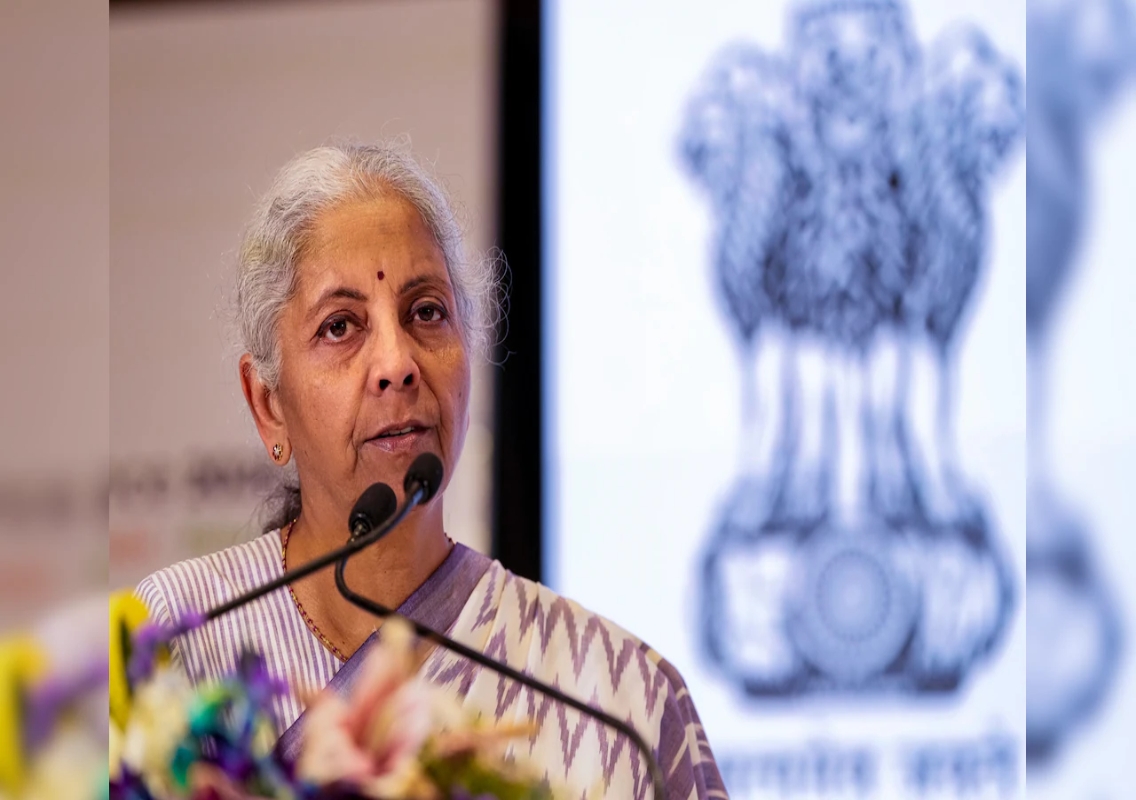


New Delhi: Finance Minister Nirmala Sitharaman has said that the Merchant Discount Rate (MDR) applicable to certain Unified Payments Interface (UPI) transactions is neither a government tax nor a cess, while rejecting claims that the new framework will impose an additional burden on consumers.
Her comments came amid a debate over the introduction of MDR on specified high-value merchant UPI transactions. Under the new framework, a 0.4% MDR will apply from October 15 to person-to-merchant UPI payments above Rs 2,000, with the charge payable within the payments ecosystem rather than by the consumer. For transactions of Rs 75,000 or more, the MDR will be capped at Rs 300.
Sitharaman said the amount would not be deposited into the Consolidated Fund of India and argued that describing the mechanism as a tax or cess could create confusion about how UPI charges work.
What Nirmala Sitharaman said about UPI charges
Speaking on the issue, Sitharaman said UPI payments below Rs 2,000 would not attract the MDR. She also said the charge would operate between participants in the payment ecosystem and would not be passed on to customers.
The Finance Minister said the fee is intended to support the payments infrastructure and improve the services provided by operators. She also recalled that the government had clarified the issue during the parliamentary session.
The clarification is particularly relevant because UPI is used for a wide range of transactions, from person-to-person transfers to payments made at shops and other establishments.
Under the framework outlined by the government, person-to-person payments will remain free irrespective of the amount transferred. Merchant payments up to Rs 2,000 will also remain free.
Which UPI transactions will attract MDR?
The new framework does not apply to every UPI payment.
The government has said that MDR will apply only to specified person-to-merchant transactions above Rs 2,000. The fee is set at 0.4%, subject to the applicable cap.
The Press Information Bureau said on September 15 that UPI would continue to remain completely free for all person-to-person transactions. It added that payments to merchants up to Rs 2,000, along with transactions covered under the zero-MDR framework for small merchants, would remain free.
The government said approximately 96% of person-to-merchant UPI transactions would remain unaffected under the new framework. This means the MDR is targeted at a relatively specific segment rather than being a universal charge on UPI users.
MDR is not a government collection
One of the key points in the Finance Minister’s clarification is the distinction between MDR and a government levy.
A tax or cess collected by the government would ordinarily flow to the government. In contrast, the government has said the MDR will be distributed among participants in the payments ecosystem, including banks and payment application providers, to support the operation and expansion of UPI infrastructure.
This distinction has become central to the debate surrounding the new framework. Sitharaman has objected to descriptions suggesting that the government is imposing a new tax on UPI users.
The Finance Minister also criticised opposition parties for what she described as misinformation surrounding the issue. Those comments represent the government’s position in the ongoing political debate over the UPI fee framework.
Consumers are not supposed to pay the MDR
For ordinary UPI users, the government’s stated position is that the MDR should not become a separate transaction charge.
A customer making a person-to-person transfer will continue to pay no UPI transaction fee. Similarly, merchant payments within the specified free categories will remain unaffected.
For eligible merchant transactions above Rs 2,000, the MDR is structured as a charge within the payments ecosystem. Sitharaman said the burden would not fall on customers.
The government has therefore sought to draw a distinction between the existence of an MDR mechanism and the introduction of a consumer-facing UPI transaction fee.
Why the MDR framework is being introduced
The government has linked the framework to the long-term sustainability of India’s UPI ecosystem.
UPI has expanded rapidly and become a major channel for digital payments across India. While the system has generally remained free for consumers, payment ecosystem participants incur costs associated with maintaining banking, payment-processing and technology infrastructure.
According to the PIB, the new framework was introduced under the Payment and Settlement Systems Act, 2007, following deliberations by the UPI Steering Committee. The government said the objective is to support the continued expansion of UPI while protecting individuals and small merchants from additional charges.
The framework therefore attempts to introduce a revenue mechanism for specified transactions without turning UPI into a general consumer-paid service.
What changes from October 15?
From October 15, users and merchants will need to distinguish between different types of UPI transactions.
Person-to-person transfers will remain free. Merchant payments up to Rs 2,000 will also remain free, while specified merchant payments above Rs 2,000 will come under the MDR framework.
For an eligible transaction, the MDR will be 0.4%. The charge will be capped at Rs 300 for transactions of Rs 75,000 or more.
The government has said the vast majority of merchant UPI payments will remain outside the MDR framework. According to the PIB’s September 15 clarification, about 96% of P2M transactions will remain unaffected.
Debate over possible impact on merchants
Although the government has said the MDR will not be passed on to consumers, the practical impact on merchants and payment-service providers will depend on how the new framework operates.
The official position is that the charge is an inter-operator payment rather than a customer fee. Any commercial decisions by businesses relating to pricing or payment acceptance would therefore be separate from the government’s stated MDR mechanism.
For consumers, the immediate takeaway is that there is no blanket UPI fee. The new framework applies only to specified merchant transactions above the Rs 2,000 threshold.
Conclusion
The introduction of MDR marks a change in the economics of selected UPI merchant transactions, but it does not amount to a tax or cess on UPI users, according to the government.
Sitharaman has reiterated that person-to-person payments and eligible small-value merchant transactions will remain free. The government has also said the MDR will operate within the payments ecosystem and not be deposited into the Consolidated Fund of India.
The new framework will take effect from October 15, with a 0.4% MDR on specified person-to-merchant UPI payments above Rs 2,000 and a maximum charge of Rs 300 for transactions of Rs 75,000 or more.