







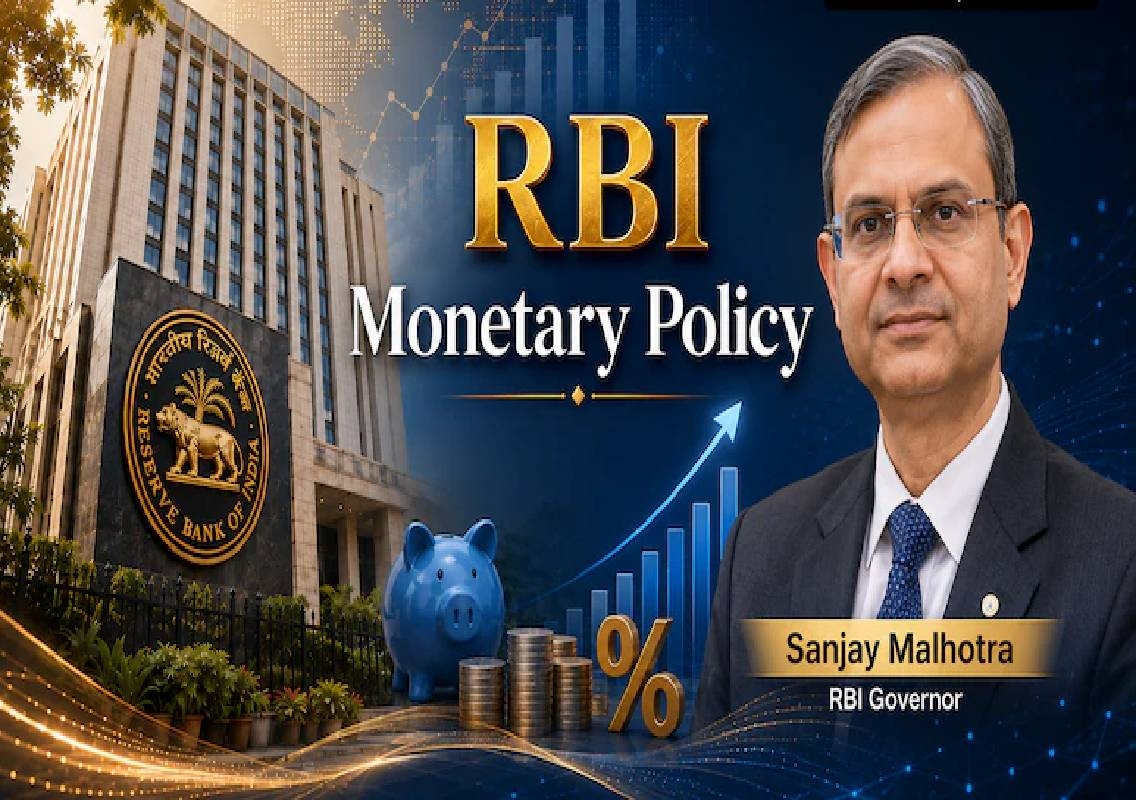


Mumbai: The Reserve Bank of India (RBI) has kept the repo rate unchanged at 5.25%, offering stability to home loan borrowers but no immediate relief in the form of lower equated monthly instalments (EMIs). The decision, announced after the latest Monetary Policy Committee (MPC) meeting, means that borrowers with floating-rate home loans linked to external benchmarks are unlikely to see any change in their EMIs unless banks independently revise lending rates.
While many borrowers were hoping for another rate cut, the RBI opted to maintain a cautious stance amid global uncertainties, geopolitical tensions and inflation risks. Experts say the decision provides predictability for borrowers even though it does not reduce repayment burdens.
Repo rate remains unchanged
The six-member MPC unanimously decided to retain the repo rate at 5.25%, continuing its wait-and-watch approach.
RBI Governor Sanjay Malhotra said the central bank wants greater clarity on inflation trends before taking any policy action. The MPC also retained its neutral stance, allowing flexibility for future decisions depending on incoming economic data.
Will your EMI change?
For most home loan borrowers, the answer is no, not immediately.
If your loan is linked to the External Benchmark Lending Rate (EBLR), which is directly tied to the repo rate, your interest rate and EMI are expected to remain unchanged because the benchmark itself has not moved.
Similarly, borrowers with loans linked to the Repo Linked Lending Rate (RLLR) are also unlikely to experience any change in monthly repayments unless lenders revise their spreads or other loan components.
Existing borrowers retain stability
Although borrowers will not benefit from lower EMIs, they also avoid the risk of higher repayments.
Financial experts say the RBI’s decision ensures stability in borrowing costs, allowing households to continue financial planning without unexpected increases in loan servicing costs.
Those who have recently taken home loans or are planning to buy property can also expect lending rates to remain broadly stable in the near term.
Why RBI chose to hold rates
The central bank cited several factors behind its decision.
These include persistent geopolitical uncertainties, fluctuations in global crude oil prices and concerns over food inflation. Although India’s domestic economy remains resilient, policymakers believe it is prudent to wait for clearer inflation trends before considering any further easing or tightening of monetary policy.
What borrowers should do
Experts advise borrowers to continue reviewing their home loan terms even without a repo rate change.
Those paying significantly higher interest rates than prevailing market rates may consider negotiating with their lender or exploring a balance transfer to another bank if the savings outweigh the associated costs.
Borrowers should also continue making timely repayments and, where possible, prepay part of the principal to reduce the overall interest burden over the loan tenure.
Outlook for future rate changes
Economists remain divided on the RBI’s next move.
Some expect the central bank to maintain rates for an extended period if inflation remains elevated, while others believe future policy decisions will depend largely on crude oil prices, monsoon performance and global economic developments.
For now, the RBI has indicated that it will remain data-driven rather than committing to either rate cuts or hikes.
Conclusion
The RBI’s decision to keep the repo rate unchanged at 5.25% means home loan borrowers will not see any immediate reduction in EMIs. However, the move provides certainty by keeping borrowing costs stable during a period of global economic uncertainty. Borrowers should continue monitoring interest rate trends and review their loan terms periodically while waiting for future monetary policy decisions.