









Hangzhou: Alibaba Group has agreed to sell its videogame business, Lingxi Games, to Asian private-equity firm Trustar Capital in a deal valued at more than $1.5 billion, as the Chinese technology giant sharpens its focus on artificial intelligence and other core businesses.
The transaction marks another significant step in Alibaba’s broader effort to reduce its exposure to businesses considered non-core and redirect capital towards areas it sees as offering stronger long-term growth. An internal memo viewed by The Wall Street Journal confirmed the agreement, while a person familiar with the matter put the value of the gaming studio at more than $1.5 billion.
Reuters separately reported that the transaction could be worth more than $2 billion, citing sources familiar with the deal. Trustar has confirmed the transaction agreement, although the specific financial terms and regulatory timetable have not been disclosed.
Alibaba shifts focus towards artificial intelligence
The sale comes as Alibaba accelerates its investments in artificial intelligence and cloud computing.
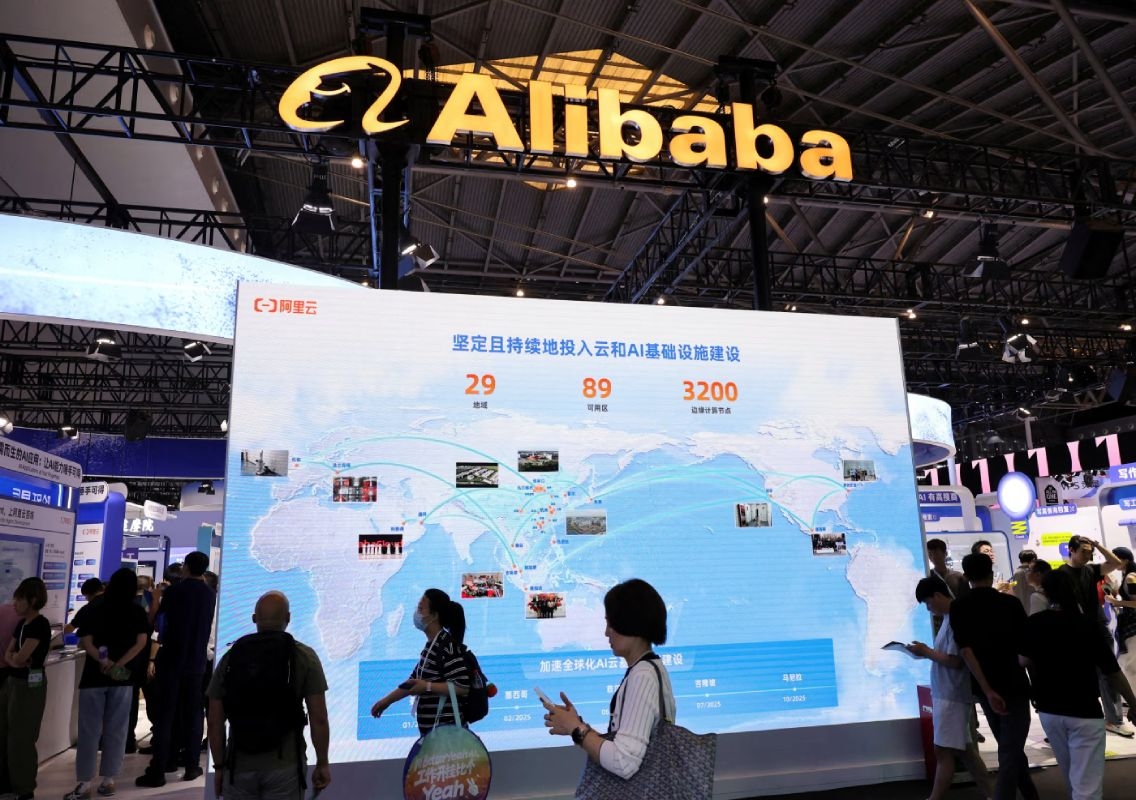
Alibaba has increasingly positioned itself as an AI and cloud-focused technology company, with its Qwen family of large language and multimodal models becoming a central part of its technology strategy. The company describes its business focus as “AI + Cloud” alongside consumption.
Selling Lingxi Games would allow Alibaba to streamline its portfolio while potentially unlocking capital that can be deployed towards strategic priorities.
The move also reflects a wider change taking place across China’s technology sector. Large technology companies that previously expanded aggressively into multiple consumer and digital businesses are increasingly reassessing which assets deserve continued investment.
For Alibaba, gaming is no longer being treated as a central component of its future growth strategy.
Lingxi Games to be acquired by Trustar Capital
Lingxi Games will be acquired by Trustar Capital, an Asian private-equity firm formerly known as CITIC Capital.
The company is one of China’s prominent private-equity investors and has experience investing across multiple industries.
Under the proposed transaction, Lingxi will move from Alibaba’s corporate structure to private-equity ownership.
Reuters reported that Lingxi CEO Zhou Bingshu and the existing management team are expected to remain with the company after the acquisition. This could help maintain operational continuity and reduce disruption to the studio’s existing game development and publishing operations.
The final terms of the transaction, including regulatory approvals and the exact closing timeline, have not yet been publicly disclosed.
Lingxi is known for Three Kingdoms: Strategy Edition
Lingxi Games is best known for Three Kingdoms: Strategy Edition, a strategy title co-developed with Japanese game company Koei Tecmo.
The game is based on the historical Three Kingdoms period of China and has become one of Lingxi’s better-known titles.
The studio was established in 2018 and has built its business around mobile gaming and related digital entertainment products.
The sale therefore does not represent Alibaba’s exit from a small experimental gaming operation. Lingxi has developed an established gaming business with recognised titles and an existing user base.
That could help explain why the business has attracted a multibillion-dollar valuation.
Deal value could exceed $2 billion
The valuation attached to the transaction has varied in reports.
The Wall Street Journal said the deal would be worth at least $1.5 billion, with a source familiar with the matter putting the value above that figure.
Reuters, however, reported that the transaction is expected to exceed $2 billion.
The difference may reflect deal structure, final consideration or information available to different sources.
Earlier reports had indicated that Alibaba was seeking buyers for Lingxi Games at a substantially lower valuation.
TechNode reported in June that Alibaba was marketing the gaming business for between 7 billion yuan and 9 billion yuan, equivalent at the time to roughly $1.03 billion to $1.33 billion.
If the final transaction value does exceed $2 billion, it would represent a substantial improvement over those earlier expectations.
Alibaba had been looking for buyers
The sale did not emerge suddenly.
Alibaba had reportedly been exploring options for Lingxi Games for several months.
In June, reports said the company had approached multiple potential buyers, including Chinese game developers 37 Interactive Entertainment, China Ruyi, Century Huatong and Giant Network, as well as private-equity firms.
The earlier marketing process suggested that Alibaba was already evaluating gaming as an asset that could be monetised rather than retained as a strategic core business.
Trustar eventually emerged as the buyer.
The transaction demonstrates how private-equity investors can provide an exit route for large technology companies looking to simplify their portfolios while giving established businesses a new ownership structure.
A broader Alibaba asset divestment strategy
The Lingxi transaction is part of a wider effort by Alibaba to reshape its business portfolio.
Alibaba has been working to make its non-core businesses profitable or divest them.
The company previously sold its stakes in Sun Art and Intime, with the two transactions together generating around $2.6 billion in 2024, according to the Wall Street Journal.
These deals form part of a broader strategy to simplify Alibaba’s operations and strengthen its financial position.
The company’s leadership, including Chairman Joe Tsai and CEO Eddie Wu, has emphasised greater discipline around capital allocation as Alibaba increases investment in AI.
The sale of Lingxi fits neatly into that strategy.
Why Alibaba is prioritising AI
Artificial intelligence has become one of the most competitive areas in China’s technology industry.
Alibaba has invested heavily in its Qwen AI models and cloud infrastructure, while seeking to expand AI applications across commerce, enterprise software and other services.
Its annual report describes Alibaba as a global technology company focused on AI + Cloud and consumption, with Qwen providing AI capabilities across enterprise solutions, e-commerce and other internet platforms.
The company therefore needs significant capital and resources to compete in AI.
Divesting businesses that are not central to this strategy can provide additional financial flexibility.
The gaming business may still have growth potential, but Alibaba appears to believe that its capital can generate stronger strategic returns elsewhere.
Gaming remains valuable despite Alibaba’s exit
Alibaba’s decision to sell Lingxi does not necessarily indicate that China’s gaming industry is weakening.
In fact, the opposite may be true.
Private-equity firms and strategic investors continue to see established gaming studios as valuable assets because successful games can generate recurring revenue through in-game purchases, subscriptions, advertising and new content.
The fact that Lingxi has reportedly attracted a valuation of more than $1.5 billion suggests that buyers continue to see significant value in established gaming businesses.
For Trustar, acquiring Lingxi could provide exposure to a large and established gaming operation without having to build a comparable studio from scratch.
Trustar could provide a different growth strategy
Under Alibaba ownership, Lingxi was part of a huge technology conglomerate with businesses spanning e-commerce, logistics, cloud computing, digital entertainment and financial technology.
Under private-equity ownership, its strategic priorities could change.
Trustar could focus more directly on improving Lingxi’s gaming portfolio, expanding existing titles, developing new games or exploring partnerships and international markets.
The continued presence of Zhou Bingshu and the existing management team could provide stability during the transition. Reuters reported that the CEO and management team are expected to remain in place following the acquisition.
Alibaba is not abandoning technology
The Lingxi sale should not be interpreted as Alibaba reducing its overall technology ambitions.
Instead, it represents a reallocation of resources.
Alibaba continues to operate major businesses in e-commerce and cloud computing and is investing heavily in AI.
The company’s official investor-relations materials list its strategic direction around AI and cloud, while its latest annual report highlights Qwen as an important part of its technology ecosystem.
This makes the Lingxi sale more consistent with a concentration strategy than a general retreat from technology.
The move follows a broader industry trend
Alibaba’s decision is also part of a wider trend among major technology companies.
Large internet groups expanded into gaming, entertainment, fintech, logistics and other sectors during the previous decade.
As AI has become a much larger investment priority, some companies are now reconsidering those diversified portfolios.
Reuters noted that Alibaba’s Lingxi sale follows other divestments and comes as the company focuses on strategic areas such as AI and cloud computing.
Other major technology companies have also reassessed their gaming businesses.
The broader trend suggests that the AI investment cycle is influencing not only new spending decisions but also which existing assets companies choose to retain.
What the sale means for Lingxi Games
For Lingxi, the transaction could provide greater independence.
As an independent company backed by private equity, the studio could potentially make decisions based more directly on gaming performance and growth opportunities.
It may also have greater flexibility to explore partnerships or acquisitions.
However, the transition also brings risks.
Lingxi will no longer have Alibaba’s enormous technology ecosystem directly behind it. Its future performance will depend more heavily on its own games, management and ability to compete in China’s rapidly changing gaming market.
Regulatory conditions will also remain an important consideration for Chinese game companies.
China’s gaming industry has evolved
China’s gaming sector has undergone significant regulatory changes over the past several years.
Authorities have introduced measures affecting game approvals, minors’ playing time and other aspects of the industry.
The sector has nevertheless continued to recover from periods of uncertainty, and major Chinese gaming companies continue to invest in new titles.
Lingxi’s established portfolio could therefore be an attractive asset for an investor prepared to take a longer-term view.
Alibaba’s portfolio becoming more focused
The Lingxi transaction is another indication that Alibaba is becoming more selective about where it commits capital.
Rather than maintaining a broad collection of businesses, the company appears increasingly focused on areas where it believes it can establish a stronger competitive position.
AI and cloud computing are at the centre of that strategy.
E-commerce remains another core area, while other businesses are being evaluated based on profitability and strategic importance.
This approach could improve capital efficiency if Alibaba successfully directs resources towards its strongest growth opportunities.
A significant deal for China’s gaming sector
If the transaction closes at more than $2 billion, it would rank among the more notable recent deals involving a Chinese gaming business.
The acquisition also demonstrates the continued interest of private-equity investors in established game developers.
For Alibaba, meanwhile, the deal provides another example of its shift from expansion through diversification towards concentration around AI, cloud and core commerce.
The final deal value and closing conditions will be important to watch.
Conclusion
Alibaba has agreed to sell Lingxi Games to Trustar Capital in a deal valued at more than $1.5 billion, according to The Wall Street Journal. Reuters has reported that the transaction could exceed $2 billion, although the final terms have not been disclosed.
The transaction represents a major change in direction for Alibaba’s gaming business. Lingxi, founded in 2018 and known for titles such as Three Kingdoms: Strategy Edition, will move from Alibaba’s portfolio to private-equity ownership.
For Alibaba, the sale is part of a broader strategy to divest non-core assets and concentrate resources on artificial intelligence, cloud computing and core e-commerce operations. The company has already completed other major divestments and is increasing investment in its Qwen AI ecosystem.
For Trustar Capital, Lingxi offers an opportunity to acquire an established gaming studio with recognised titles and an existing business rather than building a gaming operation from the ground up.
The deal also highlights a larger shift taking place across the technology industry: as AI demands increasingly large amounts of capital, major technology companies are reassessing older investments and selling businesses that no longer fit their strategic priorities.