


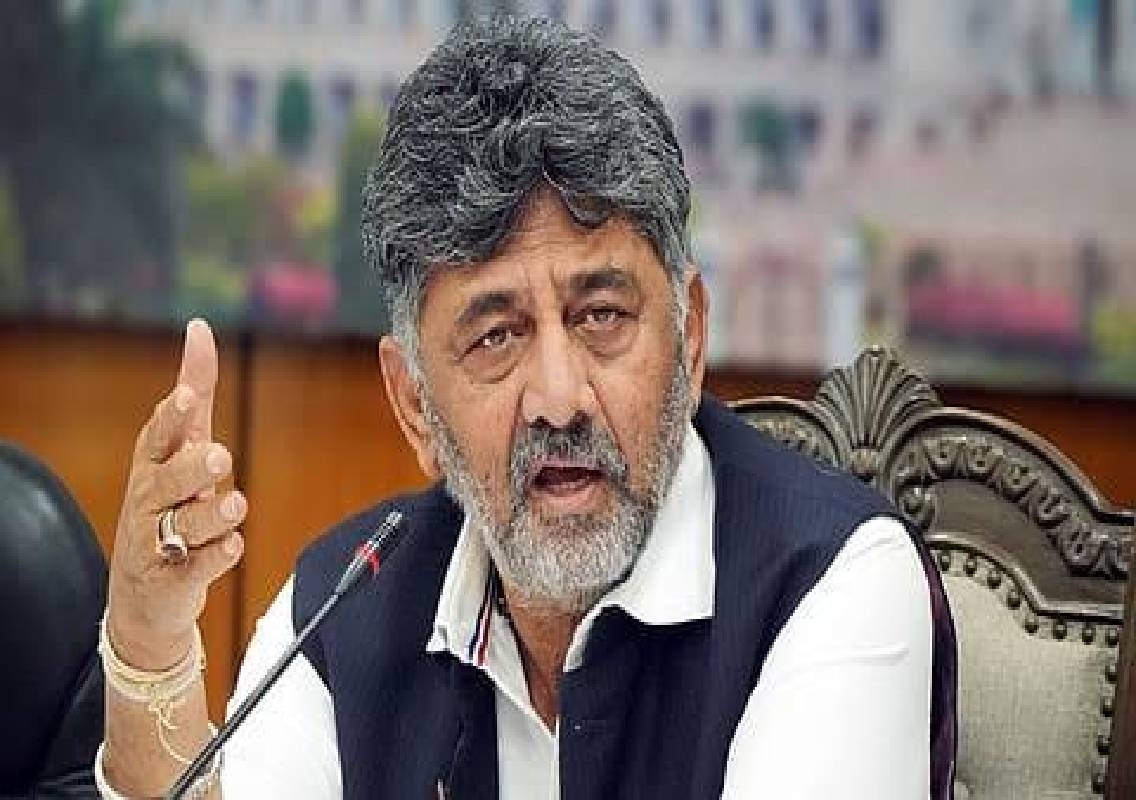


Hassan: Karnataka Chief Minister D.K. Shivakumar has said that the proposed Mekedatu balancing reservoir project does not require permission from Tamil Nadu, but the neighbouring State’s cooperation is important for its implementation.
Speaking to reporters after offering prayers at the Hasanamba Temple in Hassan on Sunday, November 8, Shivakumar responded to a letter written by Tamil Nadu Chief Minister C. Joseph Vijay to Prime Minister Narendra Modi, urging the Centre not to grant clearance for the Mekedatu project without the consent of the other Cauvery basin States.
Shivakumar maintained that Karnataka was entitled to implement the project and appealed to Tamil Nadu to understand its purpose and potential benefits. He also invited representatives from the neighbouring State to visit the proposed project site and examine the arrangements.
The Chief Minister said Karnataka was committed to following the Supreme Court’s directions on Cauvery water sharing and would continue to release the stipulated annual share of water to Tamil Nadu.
Project intended to meet Bengaluru’s drinking water needs
Explaining the purpose of the Mekedatu project, Shivakumar said the proposed reservoir would primarily meet Bengaluru’s drinking water requirements. He stressed that Karnataka would not use the project as an opportunity to draw additional water for other purposes.
According to him, the reservoir is designed as a balancing reservoir and would help regulate water availability in the Cauvery basin. He argued that the project could benefit Tamil Nadu as well, particularly in managing water availability during periods of scarcity.
Shivakumar said the project site was located in his Assembly constituency, near the Hanur border. He urged Tamil Nadu leaders and officials to visit the location and understand the technical aspects of the proposed reservoir.
He also said the project included a pumped-storage component capable of generating around 400 MW of electricity, adding that its benefits would extend beyond drinking water supply.
Karnataka says it will honour Cauvery water-sharing commitment
The Chief Minister reiterated that Karnataka would comply with the Supreme Court’s directions on the release of Cauvery water to Tamil Nadu.
He referred to the stipulated annual release of 177 TMC of water and said the State remained committed to fulfilling that obligation.
His remarks came amid continuing discussions over Cauvery water availability. The Cauvery Water Regulation Committee and the Cauvery Water Management Authority had reportedly asked Karnataka to release 3,000 cusecs of water per day for 15 days.
Shivakumar said the Mekedatu project should be viewed in the context of the existing water-sharing framework. He maintained that Karnataka would not misuse the water stored in the proposed reservoir and would adhere to the legal obligations governing the river.
He appealed to Tamil Nadu to cooperate rather than oppose the project, saying both States should work together in the interest of people dependent on the Cauvery.
Forest land and environmental clearances
The proposed reservoir is expected to submerge approximately 5,400 hectares of forest land. Addressing concerns over the environmental impact, Shivakumar said Karnataka had identified alternative land for compensatory afforestation.
He said arrangements were being made to provide the identified land to the Forest Department as part of the environmental compliance process. The State would approach the concerned authorities for the necessary clearances after completing the required formalities.
The Chief Minister indicated that approval from the Union environment and forest authorities remained an important part of the process. He said discussions had already been held with the Union Jal Shakti Ministry and that the State would continue pursuing the required approvals.
Karnataka has also been seeking an early appraisal of the detailed project report for the proposed reservoir.
Shivakumar refers to Supreme Court proceedings
Shivakumar said the Supreme Court had already considered Karnataka’s position on the project and referred to the dismissal of Tamil Nadu’s review petition.
He maintained that the legal position supported Karnataka’s right to pursue the project, subject to compliance with the conditions governing Cauvery water sharing and the necessary statutory clearances.
However, the project continues to face opposition from Tamil Nadu, which has expressed concerns about its possible impact on water availability for farmers in the State.
Tamil Nadu has argued that the proposed reservoir could affect the flow of Cauvery water downstream and has sought the Centre’s intervention. The latest letter from Chief Minister Vijay to the Prime Minister reflects the State’s continuing objections.
The disagreement highlights the importance of balancing Karnataka’s drinking water requirements with Tamil Nadu’s concerns over its share of Cauvery water.
Appeals for cooperation between Karnataka and Tamil Nadu
Shivakumar appealed to Vijay to send a delegation to Karnataka to inspect the proposed project site and hold discussions with officials.
He said Karnataka was prepared to extend full cooperation to the visiting team and provide details about the project’s design, intended use and environmental arrangements.
The Chief Minister also said leaders across political parties in Karnataka had expressed support for the project. He indicated that the State government would continue discussions with the Union government and pursue the required clearances.
Describing the Cauvery as a river that supports people across Karnataka, Tamil Nadu, Puducherry and Kerala, Shivakumar called for cooperation among the basin States.
He said the focus should be on respecting the legal framework, sharing water and addressing the needs of people dependent on the river for drinking water, agriculture, livestock and industries.
The Mekedatu project remains a significant issue in Karnataka-Tamil Nadu relations, with its progress dependent on the necessary regulatory clearances and the continuing discussions over Cauvery water management.