







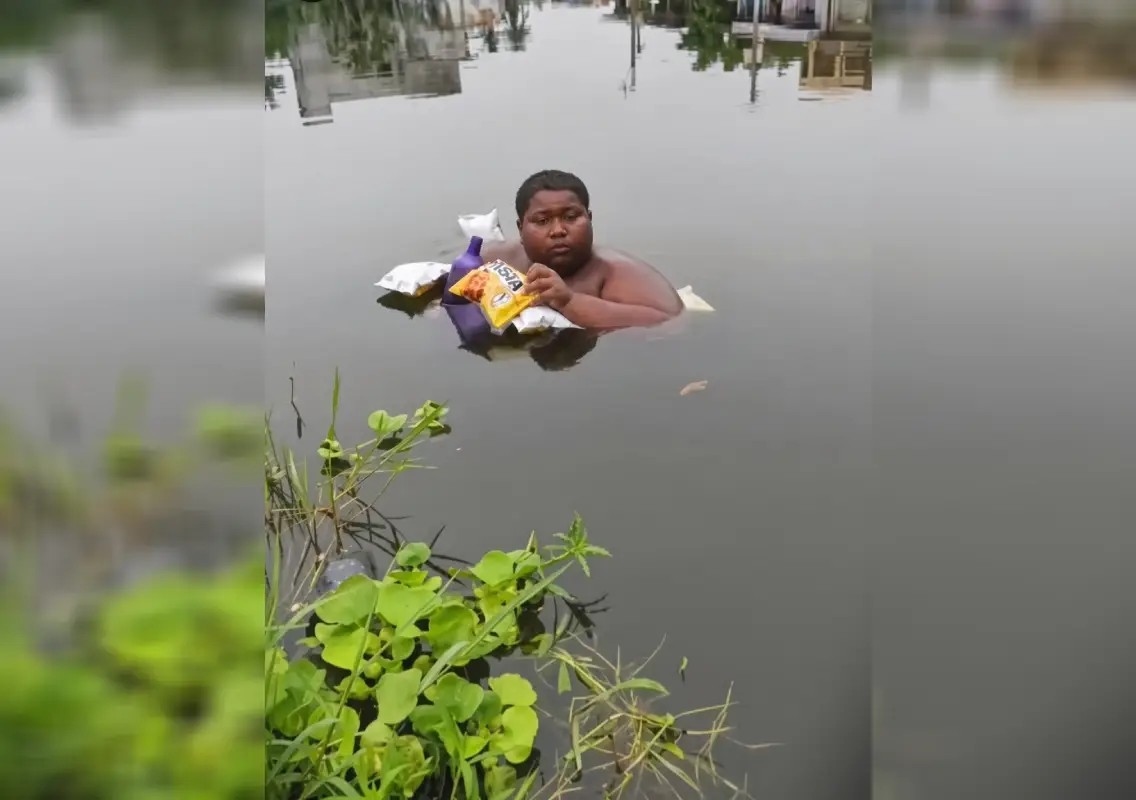


Murshidabad: A 16-year-old boy from West Bengal’s Murshidabad district is reportedly spending most of his time in a pond near his home because a persistent skin condition causes severe burning when he comes out of the water.
Identified as Iqbal Sheikh, the teenager has reportedly been living in the water for more than five years. His difficult circumstances have drawn attention to the hardships faced by families who are unable to afford medical treatment for chronic illnesses.
Severe burning keeps teenager in water
According to the account shared about Iqbal, his skin condition is reportedly the primary illness affecting him. When he leaves the water, he experiences intense burning across his body, making it extremely difficult for him to remain outside for extended periods.
As a result, the teenager reportedly spends almost his entire day in the pond located near his house.
His routine is unlike that of most children his age. He reportedly eats and drinks while remaining in the water and spends long periods there simply because it provides relief from the discomfort he experiences when he comes out.
The situation has reportedly continued for more than five years.
Prolonged exposure creates further health concerns
Remaining in water for extended periods can itself create additional health concerns.
According to the account, Iqbal has experienced symptoms including cold and cough and has also reportedly suffered from pneumonia. His prolonged exposure to water, combined with his underlying skin condition, has made his daily life even more challenging.
At 16, he should ordinarily be attending school, spending time with friends and pursuing normal activities associated with adolescence. Instead, his reported condition has restricted his everyday life to the pond near his home.
Financial hardship limits access to treatment
The most distressing aspect of the situation is reportedly the family’s inability to afford appropriate medical care.
A chronic skin condition that causes severe burning and forces someone to remain in water for years requires proper medical assessment. However, according to the account, financial difficulties have prevented Iqbal from receiving the treatment he needs.
Without a confirmed medical diagnosis, it would not be appropriate to speculate about the exact skin condition or recommend a specific treatment. Conditions that cause severe burning, itching or sensitivity can have several possible causes and require examination by a qualified dermatologist.
The teenager’s case highlights how financial hardship can become a major barrier to accessing healthcare, particularly for families dealing with persistent medical problems.
A childhood overshadowed by illness
For more than five years, Iqbal has reportedly adapted his entire life around his symptoms.
Instead of occasionally using water for bathing or cooling himself, he reportedly remains immersed for much of the day. Even basic activities such as eating and drinking are said to take place while he is in the pond.
Such circumstances can have consequences beyond physical health. Being unable to participate normally in school, social activities and everyday life can also affect a young person’s education, emotional well-being and future opportunities.
His story therefore goes beyond the question of a skin condition. It also raises concerns about access to affordable diagnosis, specialist care and support for children living with chronic illnesses.
Need for medical evaluation and support
Iqbal’s reported condition underlines the importance of ensuring that financial limitations do not prevent children from receiving necessary medical attention.
A comprehensive medical evaluation could help determine the cause of his symptoms and whether the condition can be treated or managed effectively. Depending on the diagnosis, he may require dermatological care, laboratory tests, medicines or other forms of treatment.
The case also highlights the need for families in economically vulnerable communities to be made aware of government hospitals and healthcare assistance programmes that may provide treatment at low or no cost, depending on eligibility.
For Iqbal, access to appropriate medical care could potentially offer a path towards living outside the water without experiencing the severe discomfort described in the account.
A plea for help and dignity
The story of the 16-year-old from Murshidabad is a reminder that poverty can make even basic healthcare inaccessible.
A teenager spending years in a pond because he cannot afford treatment is a deeply distressing situation. While the exact medical diagnosis and circumstances require verification by healthcare professionals, the account points to a clear need for medical assessment and social support.
No child should have to organise their entire life around untreated illness simply because their family cannot afford care. Iqbal’s story therefore carries a wider message about the importance of accessible healthcare and timely intervention for vulnerable children.