







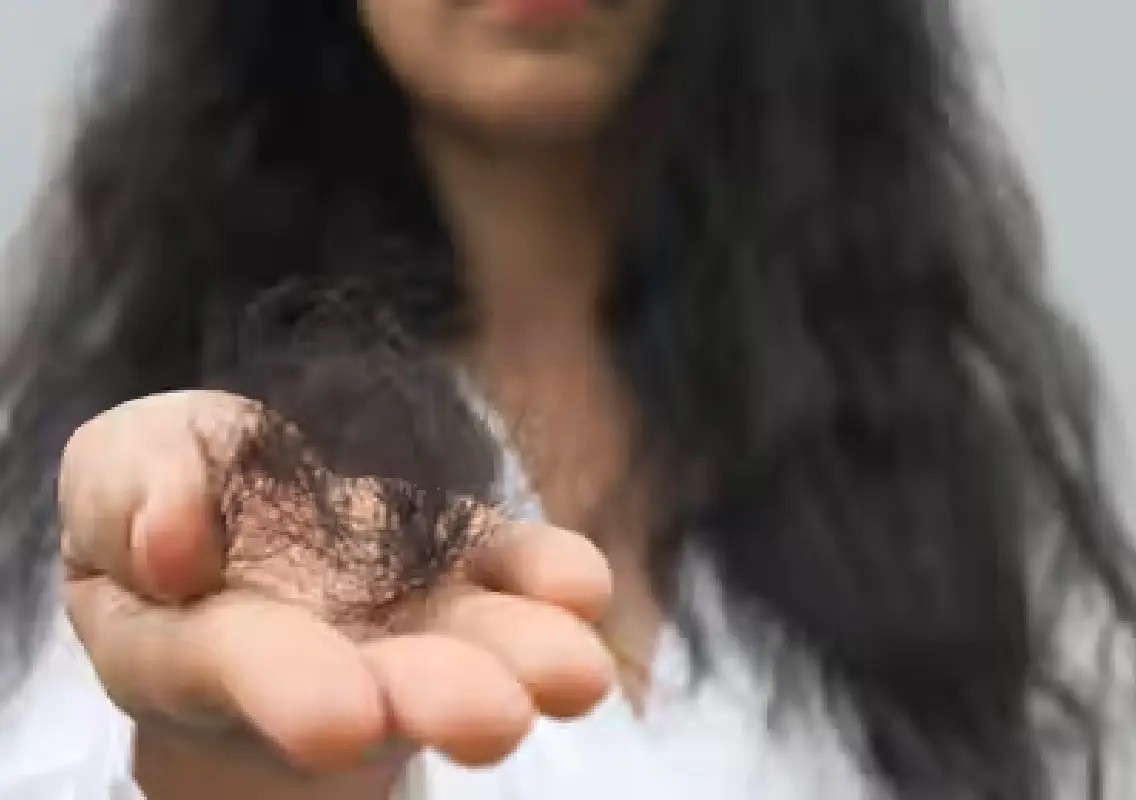


New Delhi : Doctors at a private hospital in Delhi have removed a massive 1.16-kg hairball from the stomach of a 20-year-old woman who had been swallowing her own hair for about 11 years.
The student had reportedly been consuming strands of her hair since she was around nine years old. The behaviour, medically known as trichophagia, eventually resulted in a large mass of accumulated hair filling much of her stomach.
She was brought to Manipal Hospital, Dwarka, after experiencing severe abdominal pain, nausea and repeated vomiting for three days. Doctors said she also had a longer history of poor appetite, weight loss and fatigue.
Severe symptoms led to medical examination
The young woman sought medical attention after her symptoms became severe.
Doctors examining her found a hard lump in the upper part of her abdomen. Further investigations, including an upper gastrointestinal endoscopy, revealed a large trichobezoar — a compact mass formed when swallowed hair accumulates inside the digestive system.
Unlike food, hair cannot be digested by the human body. When a person repeatedly swallows hair, it can gradually collect inside the stomach, trapping food and other material and forming an increasingly dense mass.
In this case, the accumulation had become exceptionally large.
Hairball extended towards small intestine
Doctors found that the hairball had taken a J-shaped form and extended from the junction between the food pipe and stomach towards the beginning of the small intestine.
The mass had caused severe distension of the stomach and occupied so much space that doctors had very little room to safely manipulate it.
Dr Sandeep Aggarwal, Chairman of the Manipal Institute of Minimal Access, Bariatric, GI and Robotic Surgery at Manipal Hospital Dwarka, said doctors initially attempted to fragment the mass using an endoscope.
However, because of its size and extent, the entire hairball could not be removed through the endoscopic procedure.
Surgery required to remove massive mass
After the initial endoscopic attempt proved insufficient, the medical team used laparoscopic guidance to plan the surgical approach.
Doctors made a small abdominal incision and carefully released the hairball from the stomach lining before removing the mass in its entirety.
The extracted trichobezoar weighed 1.16 kg.
The procedure was particularly challenging because the stomach was almost completely packed with the mass, leaving limited space for surgical manipulation.
Doctors also had to take care not to damage the stomach lining while removing the tightly compacted hair.
Patient recovers after surgery
Following the operation, the woman’s health reportedly improved significantly.
Her symptoms eased, her appetite gradually returned and she was able to tolerate food normally again. Doctors said she subsequently gained weight and resumed her studies.
The improvement highlights the extent to which the accumulated hair had affected her ability to eat and maintain her health.
However, doctors stressed that physically removing the hairball addresses the immediate medical complication but does not necessarily eliminate the behaviour that caused it.
What is trichophagia?
Trichophagia refers to the repeated consumption of hair.
It can occur alongside trichotillomania, a condition involving recurrent urges to pull out one’s own hair. People who consume hair may not always recognise the behaviour as a medical problem, and some may feel uncomfortable discussing it with family members or doctors.
Because hair is indigestible, prolonged hair-eating can result in a trichobezoar forming in the digestive tract.
Small accumulations may initially cause few noticeable symptoms. However, larger masses can interfere with digestion and may eventually lead to serious complications.
Symptoms should not be ignored
Doctors said persistent abdominal symptoms should receive medical attention, particularly when they include unexplained weight loss, poor appetite, fatigue, repeated vomiting or an unusual abdominal lump.
In cases where a patient has a history of hair-eating, doctors may consider the possibility of a trichobezoar.
Early diagnosis can potentially prevent the mass from becoming large enough to require complicated surgery.
The case also demonstrates why unusual eating behaviours should be discussed openly with healthcare professionals.
Removing the hairball is only part of treatment
Doctors involved in the case emphasised that surgery treats the physical consequences of hair consumption but does not necessarily address its underlying cause.
Without appropriate support, there can be a risk of the behaviour recurring and another hairball developing.
Psychological assessment and appropriate support can therefore be important after treatment, particularly when hair-eating has continued for many years.
Early recognition of the behaviour may help prevent severe physical complications in the future.
An unusual medical case
The 20-year-old woman’s case attracted attention because of the extraordinary size of the hairball and the length of time over which the behaviour had continued.
Eleven years of swallowing hair had ultimately resulted in a mass weighing more than a kilogram and extending through a significant portion of the upper digestive tract.
The case serves as a reminder that behaviours that may initially appear harmless can sometimes lead to serious health consequences when they continue over a prolonged period.
Doctors urge early attention
The woman’s recovery after surgery is encouraging, but doctors say the focus should now also remain on preventing recurrence.
Families and healthcare professionals can play an important role by recognising unusual behaviours early and ensuring that individuals receive appropriate medical and psychological support.
The Delhi case highlights both the remarkable ability of modern minimally invasive surgery to treat complex gastrointestinal problems and the importance of identifying the underlying behaviour responsible for them.
For the young woman, the removal of the 1.16-kg hairball has relieved a serious physical problem. Continued support will be important to help her maintain her recovery and prevent the condition from returning.