







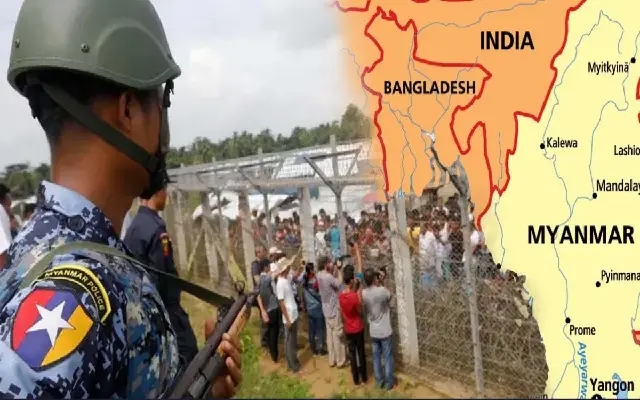


The August 2024 coup in Dhaka has left Bangladesh weak and unstable, creating a security risk for India. Behind the façade of an economist-led administration, a coalition of a militarized army, radical Islamic groups, and criminal elements operates unchecked. Attacks on minorities, desecration of religious sites, and erosion of democratic institutions signal a constitutional collapse. External and domestic forces hostile to India are exploiting this turmoil.
Bangladesh’s instability reverberates across Southeast Asia, impacting the economy, trade, and sea lanes, particularly in the Indian Ocean. The region remains a hub for illicit trade, trafficking, and armed insurgencies, compounded by rogue regimes and private militias.
Meanwhile, Myanmar grapples with a worsening crisis following its 2021 military coup. Armed groups like the Myanmar National Democratic Alliance Army (MNDAA), Ta’ang National Liberation Army (TNLA), and Arakan Army (AA) have mounted offensives, capturing military positions in Shan and Rakhine states. The AA, closely tied to Rakhine’s political movement, clashes with the junta and Rohingya refugees, further destabilizing the region.
India faces challenges at the strategic Sittwe port in Rakhine, a vital link to Southeast Asia. Close ties between Bangladesh’s army and the AA could disrupt operations, jeopardizing India’s Kaladan Multi-modal Transit Transport Project. Meanwhile, China’s Kyaukphyu port fuels its Belt and Road ambitions, adding to regional complexity.
India’s diplomatic efforts aim to mediate Myanmar’s conflict, restore democracy, and curb Bangladesh’s spillover effects. Swift action is crucial to protect India’s strategic interests.
Siliguri Hoteliers Ban Bangladeshi Guests Amid Rising Tensions
BJP to Stage Protest in Mangaluru Against Arrest of ISKCON Monk in Bangladesh
#RegionalCrisis #IndiaSecurity #MyanmarConflict #BangladeshInstability