







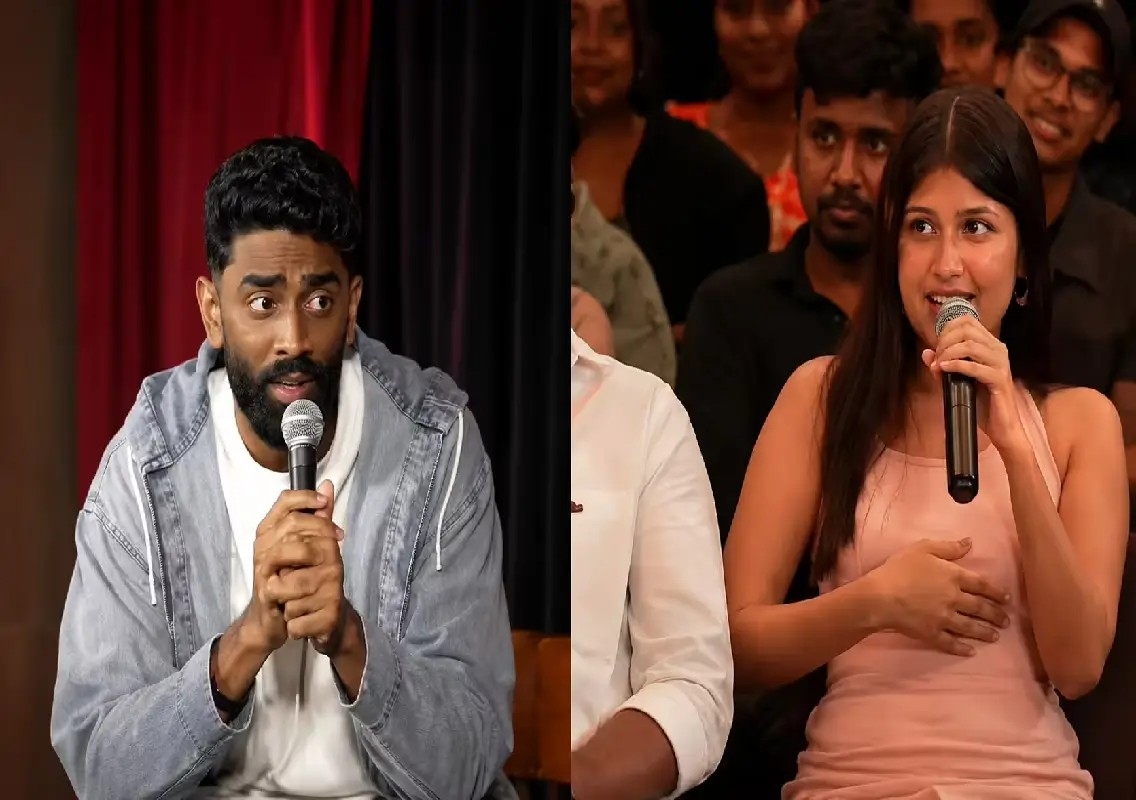


Mumbai: The All India Medical Students’ Association (AIMSA) has strongly condemned remarks made about cadavers and body donors during a crowd-work segment at comedian Pranit More’s live show, calling the comments disrespectful and contrary to the ethical values of the medical profession.
The association has demanded an unconditional apology and appropriate action against those involved, stating that mocking cadavers for entertainment undermines the dignity of individuals who donate their bodies for medical education and research.
Controversy stems from stand-up show interaction
The controversy arose from a crowd-work segment during one of Pranit More’s stand-up performances, where Dr Sejal Pawar, associated with Mumbai’s KEM Hospital, participated in an audience interaction.
During the conversation, Pawar spoke about experiences involving cadavers and allegedly remarked that she and her colleagues would compare the sizes of male cadavers’ private parts. The comments emerged during a discussion on whether medical professionals remain serious while conducting autopsies and working with human bodies or occasionally engage in humour.
The remarks drew laughter from the audience at the venue. More also responded with jokes during the interaction, further amplifying the exchange.
However, after clips from the show circulated on social media, the incident attracted widespread criticism and sparked debate about professional ethics and respect for body donors.
AIMSA calls remarks unacceptable
All India Medical Students’ Association issued a statement condemning the remarks and stressing the importance of maintaining dignity and respect towards deceased individuals.
The association stated that every cadaver used in medical education represents a person who voluntarily donated their body to advance medical science and help train future doctors.
AIMSA said such donations play a vital role in medical education and ultimately contribute to saving lives.
According to the association, any attempt to mock, trivialise or use human remains as a source of entertainment is unacceptable and undermines the values upon which medical education is founded.
Association warns of legal action
The medical students’ body further stated that if appropriate action is not taken by the concerned authorities, it may explore legal avenues to ensure accountability.
The organisation emphasised that medical students and healthcare professionals are expected to uphold ethical standards and show respect towards both patients and donors.
Its statement concluded with a call to honour the contributions of body donors and uphold the principle of respecting those who make such selfless contributions to medical education.
Doctor issues public apology
Amid mounting criticism, Sejal Pawar issued a public apology through her Instagram account, acknowledging responsibility for her comments.
In her statement, she said she was not attempting to justify or explain away her remarks and accepted accountability for her words.
Pawar stated that upon reflection, she recognised that her comments could be interpreted differently from what she had intended and expressed regret over the controversy.
Following the backlash, she reportedly deactivated her social media accounts.
Pranit More deactivates Instagram account
As criticism continued to grow online, comedian Pranit More also deactivated his Instagram account.
The incident has reignited broader discussions about the responsibilities of comedians, audience participants and content creators when addressing sensitive topics in public performances.
Many social media users argued that while comedy often explores difficult subjects, respect for deceased individuals and body donors should remain a non-negotiable ethical boundary.
Debate on ethics and entertainment
The controversy has prompted wider conversations within both medical and entertainment circles about professional conduct, consent and the treatment of human remains.
Medical educators and healthcare professionals have pointed out that cadavers are central to medical training and are treated with respect in institutions across the country. Body donation programmes depend heavily on public trust, and any incident perceived as disrespectful could discourage future donations.
At the same time, the episode has raised questions about the limits of crowd-work comedy and the responsibility of performers when potentially sensitive comments are made during live shows.
Conclusion
The controversy surrounding remarks about cadavers at Pranit More’s stand-up show has sparked widespread criticism and drawn a strong response from AIMSA. While Sejal Pawar has apologised and accepted responsibility for her comments, the incident has highlighted the importance of maintaining dignity, ethics and respect towards body donors whose contributions play a crucial role in medical education and healthcare.