







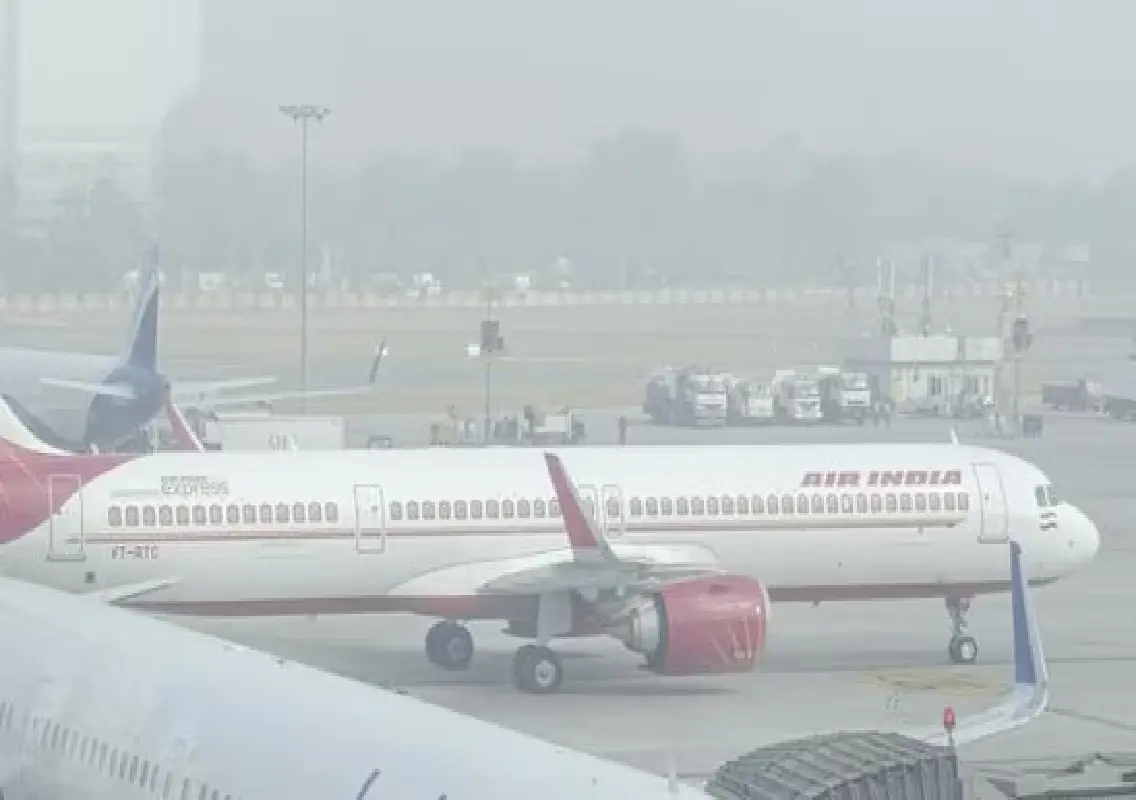


New Delhi: An Air India flight bound for Mumbai was forced to return to Delhi on Monday morning after the flight crew detected a technical issue related to engine oil pressure shortly after take-off. The aircraft, a Boeing 777 operating as flight AI-887, had been airborne for about an hour before making a precautionary return. All 355 passengers and crew on board were reported safe.
Technical issue detected after take-off
According to the Directorate General of Civil Aviation (DGCA), the aircraft experienced an air turnback during the climb phase. While retracting the flaps after take-off, the flight crew observed low engine oil pressure on Engine No. 2, which is the right-hand engine.
The regulator said that shortly thereafter, the engine oil pressure dropped to zero. Following standard operating procedures, the crew shut down the affected engine and decided to return to the departure airport as a precautionary measure.
The aircraft landed safely at Delhi’s Indira Gandhi International Airport (IGI), officials confirmed.
Aircraft and passenger details
The Air India aircraft involved in the incident was a wide-body Boeing 777 and was carrying approximately 355 people, including passengers and crew members. There were no reports of injuries or panic on board during the incident.
Passengers were safely disembarked after landing, and emergency services remained on standby as a precaution, though they were not required to intervene.
Air India’s response
In a statement, an Air India spokesperson confirmed the incident, stating that the crew operating flight AI-887 from Delhi to Mumbai on December 22 decided to return to Delhi shortly after take-off due to a technical issue, in line with established safety procedures.
“The aircraft is undergoing the necessary checks. Our ground team at Delhi is providing immediate assistance to the passengers and alternative arrangements have been made to fly them to their destination shortly,” the spokesperson said.
The airline expressed regret over the inconvenience caused to passengers and reiterated that passenger and crew safety remains its top priority.
DGCA orders inspection and investigation
The DGCA said inspection and rectification work on the aircraft was in progress. The incident will be investigated by the Permanent Investigation Board of the airline under the supervision of the Director of Air Safety (Northern Region), DGCA.
The regulator noted that the crew’s decision to shut down the engine and return to Delhi was taken strictly as per laid-down procedures, underscoring the importance of caution in flight operations.
Civil Aviation Ministry takes note
The Ministry of Civil Aviation also acknowledged the incident in a post on social media platform X, stating that it had taken note of the technical issue involving Air India flight AI-887.
The ministry said it had sought a detailed report from Air India and directed the DGCA to conduct a thorough investigation. It also instructed the airline to extend all necessary assistance to passengers and accommodate them on subsequent flights.
Alternative arrangements for passengers
Responding to the ministry’s post, Air India said it fully empathised with passengers inconvenienced by the precautionary return of the flight. The airline arranged an alternative aircraft to operate a replacement service to Mumbai.
“All passengers were assisted on the ground while they awaited the departure, with refreshments provided to everyone. Senior Air India representatives personally met passengers and were available to provide any required assistance,” the airline said.
The replacement flight later departed with all passengers on board.
Conclusion
The precautionary return of Air India flight AI-887 highlights the importance of strict adherence to safety protocols in civil aviation. While the incident caused delays and inconvenience, prompt action by the flight crew and coordination between the airline and aviation authorities ensured the safe handling of the situation. A detailed investigation by the DGCA is expected to determine the exact cause of the engine oil pressure issue and prevent similar occurrences in the future.